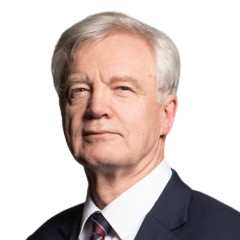
Sir David Davis KCB is the Conservative MP for Goole and Pocklington. He has served as an MP continuously since 1987, previously representing Boothferry (1987-1997) and Haltemprice and Howden (1997-2024).
In the 2024 general election, Davis won 18,981 votes, representing 38.2% of the vote. The Labour candidate, Liam Draycott, received 15,409 votes (31.0%), while the Reform UK candidate, Rich Kelly, secured 9,054 votes (18.2%). Davis was duly elected with a majority of 3,572 votes.
The Goole and Pocklington constituency was newly created for the 2024 election following boundary changes. It covers parts of the East Riding of Yorkshire, including the towns of Goole, Pocklington, and Howden. The areas covered by the seat are considered safe Conservative territory.
Davis was appointed a Knight Commander of the Order of the Bath (KCB) in the 2023 Political Honours for public and political service.
Political Career
At the beginning of the parliament elected in 2024, Davis stood unsuccessfully for election as chair of the public accounts committee. In the contest, the results of which were announced in September 2024, Davis secured 190 votes, placing second. They were eliminated in the second round. They were ultimately defeated by Sir Geoffrey Clifton-Brown, who won the support of 301 colleagues.
Davis served as the secretary of state for exiting the European Union from July 2016 until his resignation in July 2018. He resigned over the so-called Chequers plan – a compromise agreement on the future UK-EU relationship that had been revealed to the cabinet just two days earlier by prime minister Theresa May.
In his resignation letter, Davis told the prime minister he would not be a “reluctant conscript” to the plan agreed at Chequers. He argued that “the current trend of policy and tactics” was making it “look less and less likely” that the UK would leave the customs union and single market.
Davis added: “In my view the inevitable consequence of the proposed policies will be to make the supposed control by parliament illusory rather than real… I am also unpersuaded that our negotiating approach will not just lead to further demands for concessions.”
Davis later told BBC Radio 4‘s Today programme that he had objected to May’s Brexit plan during the Chequers meeting, telling cabinet colleagues at the outset that he was “the odd man out”.
He said he was “unpersuaded” that the government’s negotiating approach “will not just lead to further demands for concessions” from Brussels.
Steve Baker, a junior Brexit minister, resigned alongside Davis.
In her reply to Davis’ resignation letter, May emphasised he had quit “when we are only eight months from the date set in law” for the UK to leave the EU.
Davis’ resignation put his former Brexit-supporting colleagues in the cabinet under significant pressure.
The following day, 9 July, May suffered her second and most significant cabinet resignation when Boris Johnson, the former London mayor, announced his decision to step down as foreign secretary.
During his tenure as Brexit secretary, the government’s critics pounced on a photo that appeared to show Davis without any briefing notes in one 2017 meeting – an approach that contrasted markedly with that of Brussels’ negotiating team, headed by Michel Barnier.
https://x.com/AndrewSparrow/status/886875823856390144
Davis voted against May’s Brexit withdrawal agreement in the first so-called “meaningful vote” in January 2019. He voted for it in the second and third meaningful votes.
A veteran MP and prominent Conservative politician, Davis’ previous government roles include minister of state for Europe under John Major (1994-1997) and parliamentary secretary at the Office of Public Service and Science (1993-1994). He also served as an assistant government whip (1990-1993). One of his responsibilities as whip was to strong-arm government rebels into voting for the Maastricht Treaty, ironically the foundation treaty of the EU.
Following the 1997 general election, which resulted in a historic Conservative defeat, Davis held senior roles including shadow home secretary (2003-2008) and shadow secretary of state for the Office of the Deputy Prime Minister (2002-2003). He was chairman of the Conservative Party from 2001 to 2002.
He also chaired the influential House of Commons public accounts committee from 1997 to 2001.
In June 2008, Davis unexpectedly resigned his seat of Haltemprice and Howden and frontbench post and as shadow home secretary to force a by-election. It came after Gordon Brown’s Labour government narrowly won a House of Commons vote (by a margin of nine) to extend the maximum pre-charge detention period for terror suspects from 28 to 42 days.
On 12 June 2008, Davis stunned Westminster when he announced he was resigning his safe seat and his shadow cabinet post. Davis, a libertarian Conservative, viewed the government’s proposals as a dangerous expansion of state power. Speaking outside parliament (the speaker would not let him make the statement in the commons), Davis said the attempt to block the 42-day terror detention proposals was a “noble endeavour”.
“We defended the freedoms of the British people – or we did, up until yesterday. This Sunday is the anniversary of the Magna Carta [sic] – the right not to be imprisoned by the state without charge or reason.”
As shadow home secretary, David had led his party in opposing 42-day pre-charge detention. But his decision to stand down came without the approval of the shadow cabinet. David Cameron, the Conservative leader of the opposition, said he thought Davis had made a “very courageous and brave decision”, but insisted that it had been a “personal” one.
Davis stood on a “David Davis for Freedom” platform – an attempt to turn the contest into a referendum on civil liberties. He attracted a relatively broad spectrum of support, including from Tony Benn, the left-wing former Labour cabinet minister. Benn argued that “Libertarians from the Left and Right sometimes meet in the middle against an authoritarian state.”
In the end, Davis secured an overwhelming victory, winning 17,113 votes, or 72% of the total. The turnout, 34.5%, exceeded expectations. In October 2008, the Brown government abandoned its 42-day pre-charge detention proposals in the face of opposition from the House of Lords.
Cameron did not reappoint Davis to the shadow cabinet upon his re-election.
Previously, Davis stood in the 2001 and 2005 Conservative leadership contests, finishing fourth and second respectively. He entered the first contest as an outsider, ultimately securing the support of 21 and 18 Conservative MPs in the first and second ballots.
In 2005, having entered the race as the frontrunner, Davis was beaten by Cameron. In the second and final ballot of Conservative MPs, Davis won the support of 57 colleagues (down from 62 in the first round). Cameron secured the backing of 90 fellow Tory MPs (up from 56). The result of the contest was declared on 6 December 2005 following a vote of the Conservative Party membership. Davis, who went into the contest as the frontrunner, secured 32% of the vote. Cameron was elected leader with 68%.
During the campaign, Davis and Cameron clashed in a series of televised debates. During a special edition of the BBC’s Question Time programme, Davis stressed his experience and said voters were tired of the “era of spin”.
He added: “So frankly, this is the worst moment for the Conservative Party to imitate Tony Blair.”
In an article for the Sunday Telegraph, published 5 June 2005, Davis argued that his party “must change” – but he implicitly warned “so-called” modernisers not to “chase an ebbing political tide” by aping New Labour.
He rejected the “phoney” battle between modernisers and traditionalists, adding: “Equally, we should not abandon timeless Tory principles that are universal in their appeal. Why should anyone believe us if we believe nothing ourselves?”
Davis wrote: “It would be extraordinary if we appeared to abandon policies that have transformed Britain so successfully that even our political opponents pay lip service to them. The Conservative Party pioneered the approach of low taxes and free markets that has put this country at the head of Europe’s economic league.”
Davis has remained on the Conservative backbenches since his resignation as Brexit secretary.
In January 2022, Davis publicly called on Boris Johnson, the then prime minister, to resign his office – in what was seen as a symbolic intervention. Speaking at prime minister’s questions, he invoked Leo Amery and his call for Neville Chamberlain, prime minister from 1937-1940, to quit. (Amery was himself adopting a phrase first used by Oliver Cromwell on 20 April 1653 to the Rump Parliament).
In full, Davis stated: “Like many on the government benches, I have spent weeks and months defending the prime minister against often angry constituents.
“I have reminded them of his success in delivering Brexit and the vaccines, and many other things. But I expect my leaders to shoulder the responsibility for the actions they take. Yesterday the prime minister did the opposite of that, so I will remind him of a quotation that will be altogether too familiar to him. Leo Amery said to Neville Chamberlain:
“‘You have sat too long here for any good you have been doing… In the name of God, go.’”
https://x.com/BloombergUK/status/1483782451973529602
An active backbencher, Davis has tabled several bills.
In 1999, he presented the Parliamentary Control of the Executive Bill to the House of Commons under the 10-minute rule procedure. The bill proposed to transfer ministerial exercise of the royal prerogative to the commons.
In his speech introducing the legislation, Davis said: “Executive decisions by the government should be subject to the scrutiny and approval of parliament in many other areas. Much of them arise under Crown prerogative – which, in truth, in modern Britain is a euphemism for the prerogative of the Prime Minister.
“The bill sets out to curb that and to make it subject to parliamentary approval, giving parliament the right of approval over all executive powers not conferred by statute – from the ratification of treaties to the approval of Orders in Council, and from the appointment of European Commissioners, some ambassadors, members of the Bank of England’s Monetary Policy Committee and other senior public posts to the dissolution of Parliament.
“There is no serious reason why the Executive should have the monopoly of control of these issues – they do not have that power in most other modern democracies.”
He added: “If enacted, this small Bill will irrevocably alter the relationship between Parliament and the Executive, and in doing so, will at least check the trend from representative democracy to presidential oligarchy, which is so sadly undermining this great institution.”
In the 2019-2021 parliamentary session, Davis presented the Freedom of Speech (Universities) Bill, which proposed to place a duty on universities to promote freedom of speech and make provision for fining universities that do not comply with that duty.
Davis is listed as a member of the all-party parliamentary groups (APPGs) for reserves and cadets, and trafficked Britons in Syria.
Davis delivered his maiden speech on 5 November 1987. In it, he said: “If the global economy is growing, by definition there will be expansion elsewhere. When we look elsewhere we will run head on into Japanese competition and Japanese products that have been displaced from the United States market.
“We will also face German and American competition, which will be tougher because of that dollar parity change. We will have to battle hard for our market share. That market will not necessarily be in the same products – it certainly will not be in the same place – and we will have to fight for every percentage point of share.”
He added: “How will Britain’s industry cope? The transformation of British industry in the past eight years will ensure that we will win enough battles to maintain our growth rate. How would we have done eight or ten years ago if we had taken on the Japanese or tried to sell Jaguars to Germany? That is the acid test of government policy.”
Political views
Leadership elections and loyalty
Tory leadership 2024: Davis supported Kemi Badenoch’s candidacy in the 2024 Conservative Party leadership election. The contest was triggered by the resignation of Rishi Sunak following the party’s defeat in the 2024 general election.
Badenoch, the then-shadow housing secretary, was seen as a leading figure on the party’s right wing. After finishing first in the final parliamentary ballot with 42 votes, she defeated Robert Jenrick in the membership vote on with 53,806 votes (56.5%). Badenoch was declared Conservative leader on 2 November.
In an article for the Telegraph, published October 2024, Davis argued that Badenoch has a “rare combination of intellect, common sense, and straight-talking.”
He added: “She understands, as Margaret Thatcher did, that conservatism is at its strongest when it speaks to the everyday concerns of people – offering solutions that are practical, not fashionable; enduring, not ephemeral.”
https://x.com/DavidDavisMP/status/1548642911805390849
Tory leadership 2022 (I): Davis supported Penny Mordaunt’s candidacy in the Conservative Party’s July-September 2022 leadership election. The contest was triggered by the resignation of Boris Johnson, following the mass exodus of more than 60 frontbenchers.
Mordaunt, the international trade minister, was described as a “socially liberal Brexiteer”. She was narrowly overtaken by Liz Truss in the final round. Mordaunt was thereby eliminated in the fifth parliamentary ballot on 20 July after receiving 105 votes.
Davis went on to support Rishi Sunak.
Tory leadership 2022 (II): Davis supported Sunak’s candidacy in the Conservative Party’s October 2022 leadership election. The contest was triggered by the resignation of Liz Truss after just 45 days in office, following the financial and political tailspin triggered by her “mini-budget”.
https://x.com/BBCr4today/status/1780991427876364383
Tory leadership 2019: Davis supported Dominic Raab’s candidacy for the party’s leadership in May 2019. The election was triggered by the resignation of Theresa May following her inability to secure a Brexit deal acceptable to the Conservative Party.
Raab, the former Brexit secretary, argued that the UK must be prepared to leave the EU without a deal on 31 October. He notably refused to rule out the prorogation of parliament to prevent MPs from blocking a no-deal exit. Raab was eliminated in the second parliamentary ballot on 18 June 2019, after securing 30 votes.
Davis subsequently supported Boris Johnson’s candidacy. Johnson secured 114 votes in the first parliamentary ballot, and reached 160 votes in the final MP round. In the ballot of the party membership, Johnson won a decisive victory with 92,153 votes (66.4%).
Tory leadership 2016: Davis supported Boris Johnson’s potential candidacy for the party’s leadership in June 2016. The contest was triggered by the resignation of David Cameron following the UK’s vote to leave the European Union.
Johnson, the former mayor of London and a leading figure in the Vote Leave campaign, was widely regarded as the frontrunner to succeed Cameron. However, his campaign was upended when Gove unexpectedly withdrew his support and announced his own leadership bid. Johnson announced on 30 June that he would not enter the race, leaving his supporters to shift their allegiances.
Davis subsequently went on to support Theresa May’s successful candidacy. May, the then-home secretary, secured a commanding lead in the parliamentary stages, receiving 165 votes in the first ballot and 199 in the second. Following the withdrawal of her final rival, Andrea Leadsom, on 11 July, May was declared leader unopposed and was appointed prime minister two days later.
Factional identity and party tradition
European Research Group: Davis has been associated with the European Research Group (ERG). During the Conservative Party’s last stint in government, the ERG emerged as a highly influential Tory faction composed of staunchly eurosceptic MPs. Founded in 1993, the group played a pivotal role in shaping the UK’s exit from the European Union, consistently advocating for a “hard” Brexit.
Its members were generally and often stridently critical of the withdrawal agreement negotiated by Theresa May. Chaired variously by Mark Francois, Jacob Rees-Mogg, Steve Baker and Suella Braverman, the group proved instrumental in May’s downfall as prime minister.
Northern Research Group: In the 2019-2024 parliament, Davis was listed as a member of the Northern Research Group (NRG). The NRG was a faction within the Conservative Party composed of MPs representing constituencies across the north of England. It was founded by Jake Berry, who served as minister of state for the northern powerhouse and local growth from 2017 to 2020. The group’s stated aim was to pressure the Conservative government to deliver on its “levelling up” agenda.
In 2012, together with fellow senior MP Liam Fox, Davis founded Conservative pressure group Conservative Voice to amplify the voice of grassroots members – which they argued was being lost in the party.
Speaking at the group’s launch, Davis said Conservative Voice would provide a “home for the professional and voluntary wings of the Conservative Party and who are united in their belief in popular, radical conservatism”.
He added: “Our aim is to encourage seriously ambitious policy development and to help improve the party’s campaigning edge in really practical ways.”
“Our approach is to work from inside the party and alongside the leadership and to actively engage with think tanks, campaigning organisations, academics and business people.”
Conservative Way Forward: Davis has also been associated with the Conservative Way Forward (CWF) grouping of Thatcherite MPs. CWF was founded in 1991 by supporters of Margaret Thatcher, aiming to “defend and build upon [her] achievements… and to adapt the principles of her era in government to modern concerns and challenges”. In July 2022, the group was relaunched by Tory MP Steve Baker.
Blue Collar Conservatives: Davis was previously listed as a member of the Blue Collar Conservatives group. This faction within the Conservative party was founded in 2012 by the former cabinet minister Esther McVey, but came to greater prominence following the 2019 general election. The group aimed to “champion working people and develop a conservative agenda to benefit the voters and communities most neglected by Labour”. In October 2022, McVey was succeeded by Lee Anderson as the group’s chair.
Brexit and Europe
Brexit referendum: Davis supported Leave in the 2016 referendum on Britain’s membership of the EU, and therefore agreed with a majority of constituents, 55.2% of whom also voted to Leave. A longstanding eurosceptic, he urged then-PM David Cameron to hold a referendum on the UK’s membership of the EU by 2014 in a November 2012 speech.
In that speech, Davis said: “I’m an old fashioned Tory in that I believe the nation state is a moral concept.
“By that I mean that, with its common laws, its common tradition, its common conventions, its common beliefs, and its common understandings, the nation state is actually the highest manifestation of democracy.
“Democracy is not just about casting a vote. Democracy is about being willing to make sacrifices for each other, to allow taxes to be used to support those who cannot support themselves. Democracy means letting our sons and daughters put their lives on the line to defend us.
“The EU, though, is run by the Commission, a group of people – all unelected and mostly unheard of – appointed to represent their nations’ citizens around the top table. It is they who propose new laws, control the budget, implement decisions and manage its day-to-day running.”
Article 50: In February 2017, Davis voted in favour of the European Union (Notification of Withdrawal) Bill. The legislation empowered the prime minister to notify the Council of the European Union of the UK’s intention to withdraw, formally triggering the process set out in Article 50 of the Treaty on European Union. MPs supported the bill by 498 votes to 114 at second reading.
Assisted dying
He voted in favour of the Terminally Ill Adults (End of Life) Bill, better known as the assisted dying bill, at both second reading (November 2024) and third reading (June 2025).
https://x.com/DavidDavisMP/status/1784987268152754639
Speaking in an April 2024 Westminster Hall debate, Davis set out his support for assisted dying in principle – noting he had “changed [his] mind” on the issue.
He said: “I am not a religious man, but I have always viewed life as sacred. For most of my life, I have been disinclined to accept the arguments of people who are in favour of assisted dying, but various events have changed my view in the past several years. Some time ago – a long time ago – my mother died of brain and lung cancer in considerable agony, pain and, I suspect, terror, too.
“I am pretty sure that the doctors in charge of her accelerated her demise. I am glad they did. It was a miserable, miserable time for her, and in my view it was a good thing for her to go more peacefully with an excess of morphine, if you want to put it that way.”
Social values and conscience issues
Abortion decriminalisation (2025): Davis voted against a backbench amendment to the Crime and Policing Bill that sought to decriminalise abortion in England and Wales in June 2025. The amendment, which was passed by a majority of 242 votes, removed women from the threat of prosecution for ending a pregnancy at any stage. As an issue of conscience, MPs were allowed to vote according to their personal beliefs.
Same-sex marriage (2013): In February 2013, Davis was one of the 139 Conservative MPs to vote against the Marriage (Same Sex Couples) Bill at its second reading. The landmark piece of legislation, which received its second reading by 400 votes to 175, legalised marriage for same-sex couples in England and Wales.
At the time, Davis signed a cross-party open letter protesting that the government had no mandate to “redefine marriage”.
The letter stated: “We are sceptical that the proposed protections will prevent the erosion of liberties of religion and conscience. The proposed redefinition of marriage is unnecessary, given the legal rights established through civil partnerships.
“We understand some parliamentarians support freedom for same sex couples to marry, but we support a freedom from the state being able to redefine the meaning of marriage.”
Foreign policy and security
Trident renewal (2016): Davis voted in favour of a government motion calling for the renewal of the Trident nuclear deterrent system in July 2016. The motion, which was passed by 472 votes to 117, committed the UK to constructing a new fleet of submarines to carry the nation’s nuclear weapons.
Syria airstrikes (2015): Davis voted against a government motion to extend UK airstrikes against Isis from Iraq into Syria in December 2015. The motion, which was passed by 397 votes to 223 after a ten-hour debate in the House of Commons, authorised the RAF to conduct strikes against Isis targets in Syria.
Syria airstrikes (2013): Davis voted against the government’s motion on the principle of military intervention in Syria in August 2013. The government motion was defeated by 285 votes to 272, a move which effectively ruled out UK participation in any US-led military strikes.
IPAC: Davis is a member of the Inter-Parliamentary Alliance on China (IPAC) – an international, cross-party network of legislators from democratic countries focused on relations with the People’s Republic of China. The alliance, established on 4 June 2020, the anniversary of the 1989 Tiananmen Square protests and massacre, was formed to unite “lawmakers worldwide, promoting democracy and addressing threats to the rules-based and human rights systems posed by the rise of China.”
Sanctioned (Russia): In April 2022, Davis was among the group of MPs placed on a sanctions list by the Russian government. The measure barred them from entering Russia and was presented by Moscow as a retaliatory response to the UK’s stance on the invasion of Ukraine.
Iraq War authorisation vote (2003): In March 2003, Davis voted in favour of the government motion authorising military action against Iraq. The vote, one of the most contentious in recent parliamentary history, gave the prime minister, Tony Blair, the authority to join the US-led invasion.
Civil liberties
Covid passes vote (2021): Davis was one of 99 Conservative MPs to vote against Covid passes in England in December 2021.
Before Politics
Born David Michael Brown on 23 December 1948 in York, he was raised by his mother and grandparents on a council estate in Tooting, South London. He attended Bec Grammar School.
Davis studied molecular science and computer science at the University of Warwick where he was active in the Federation of Conservative Students, becoming national chairman in 1973.
He later gained a master’s degree in Business from London Business School (1971-1973). He also attended the Advanced Management Program at Harvard Business School (1984-1985).
Before entering parliament, he worked for 17 years at the sugar company Tate & Lyle, becoming a senior executive and serving as a director. Davis’ 1988 book How to Turn Round a Company speaks to his experiences in business.
He served as a reservist in the SAS (21 SAS(R)) during the early 1970s to earn money to resit his A-Levels so that he could get into university.
Personal Life
Davis married Doreen Cook in 1973. They have three children.
Trivia
In December 2023, Davis intervened to stop an attack on a rough sleeper near parliament. Davis said he stepped in when he saw two men “kicking seven bells” out of another man on the floor.
“About 35 years ago, somebody got kicked in the head and he died. Ever since, if I see something like that happening, I intervene”, Davis told the Evening Standard.
“I gave him a sofa for the night and took him to A&E this morning. He was still bleeding”, he added. “It’s fortunately nothing permanent other than a few scars, I think. He was a bit faint this morning which made getting him to A&E a bit difficult.”
He added: “It was messy, but he’s all right. He’s still alive and that’s the important thing”.
Davis was a close personal friend of Alex Salmond, former leader of the Scottish National Party (SNP) and first minister of Scotland. Davis twice used parliamentary privilege, which allows elected representatives to speak freely and debate matters of public interest without fear of legal repercussions, to criticise the Scottish government’s investigation into allegations of sexual misconduct by Salmond.
In March 2021, Davis told parliament that he believed there was a concerted effort in the SNP to encourage women to make complaints. Nicola Sturgeon, the then first minister, rejected this characterisation as “the latest instalment in Alex Salmond’s conspiracy theory”.
Davis told MPs that he had it “on good authority” that there were messages between civil servants “suggesting that the first minister’s chief of staff is interfering in the complaints process against Alex Salmond.”
Upon Salmond’s death in October 2024, Davis referred to the former first minister as “one of the great politicians of his age” and “a great leader for his country”.
https://x.com/DavidDavisMP/status/1845865031176515657
Domini Cummings, the former head of the Vote Leave campaign and onetime senior adviser to Boris Johnson, considers Davis to be as “thick as mince” and “lazy as a toad”.
In a stream of messages on Twitter (now X), posted in 2017, Cummings said Davis was “manufactured exactly to specification as the perfect stooge for Heywood: thick as mince, lazy as a toad and vain as Narcissus”.

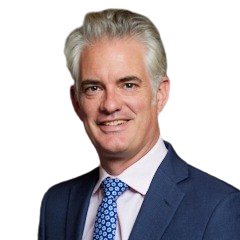

David Davis: The government has let the security services run roughshod over our democracy
15 October 2015