Winston Churchill becomes prime minister after Chamberlain resignation
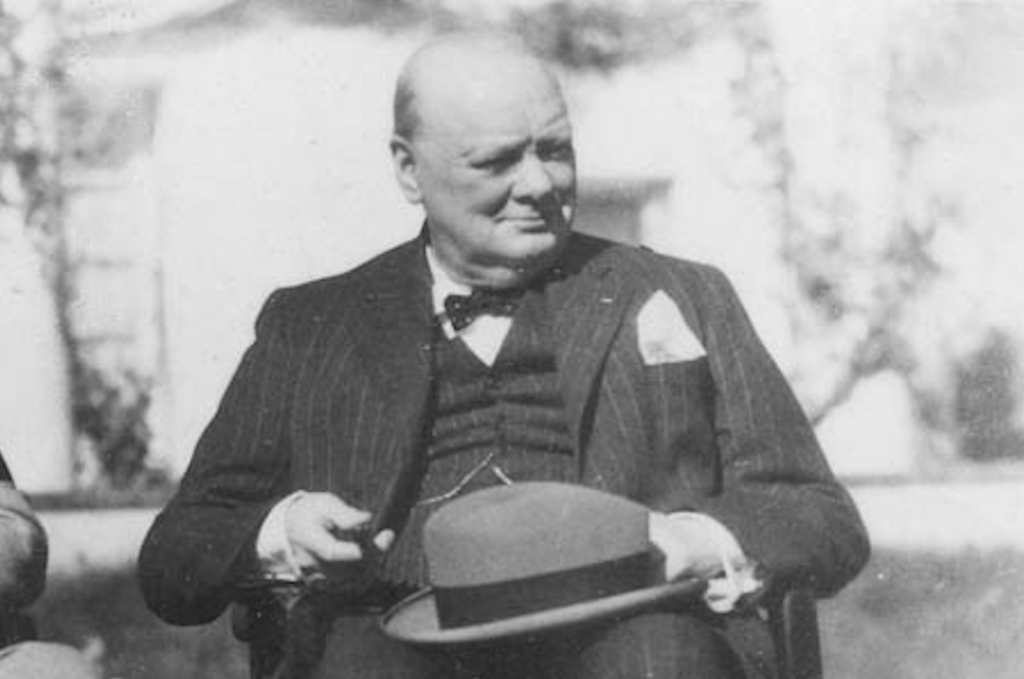
Winston Churchill became the prime minister of the United Kingdom on 10 May 1940, replacing Neville Chamberlain on the same day that Nazi Germany launched its invasion of France and the Low Countries.
The change brought an end to the era of appeasement and ushered in a policy of total war against the Axis powers.
***
Chamberlain’s position came under considerable strain following the failure of the Allied campaign in Norway, when attempts to repel the German forces culminated in the loss of about 4,000 British troops. What followed is today considered one of the most significant events in parliamentary history: the Norway Debate.
Across two days from 7-8 May, in what was ostensibly the adjournment debate for the Whitsun recess, MPs considered the conduct of the war in the House of Commons and turned their fire on Chamberlain. On the second day of debate, the Labour opposition led by Clement Attlee called for a division – an effective vote of no confidence in the government.
Chamberlain responded by appealing to his party. He urged his “friends in the House – and I have friends in the House… to support us in the lobby tonight.”
The vote saw Chamberlain’s majority plummet from over 210 to 81. 41 MPs who normally supported the government voted with the opposition; an estimated 60 other Conservatives abstained.
In a famous intervention during the debate, Leo Amery repeated Oliver Cromwell’s words on 20 April 1653 to the Long Parliament. “You have sat too long for any good you have been doing lately”, Amery told Chamberlain.
“Depart, I say, and let us have done with you. In the name of God, go!”
David Lloyd George, the prime minister from 1916 to 1922, was another to demand Chamberlain’s resignation.
He declared: “It is not a question of who are the prime minister’s friends. It is a far bigger issue. The prime minister must remember that he has met this formidable foe of ours in peace and in war. He has always been worsted. He is not in a position to appeal on the ground of friendship. He has appealed for sacrifice…
“I say solemnly that the prime minister should give an example of sacrifice, because there is nothing which can contribute more to victory in this war than that he should sacrifice the seals of office.”
Ironically, it was Churchill who closed the debate.
He urged the House “to deal with these matters not in a precipitate vote, ill debated and on a widely discursive field, but in grave time and due time in accordance with the dignity of parliament.”
***
The political crisis in Westminster was dramatically overtaken by events on the continent. In the early hours of 10 May, German forces invaded Belgium, the Netherlands, and Luxembourg, beginning the Battle of France.
Chamberlain initially considered remaining in office, but was bound by Labour’s refusal to serve alongside him in coalition.
It remained Chamberlain’s constitutional duty to recommend a successor who could command a majority in the House of Commons. Shortly before the German invasion of the Low Countries, he had summoned the two obvious candidates, Lord Halifax, the foreign secretary, and Churchill.
Halifax responded that, in order to govern effectively, the prime minister should not be a member of the House of Lords. And so Churchill, seen as a lesser candidate in some quarters, emerged as Chamberlain’s heir apparent.
On the evening of 10 May, Chamberlain journeyed to Buckingham Palace to resign and recommend Churchill’s appointment.
In his resignation broadcast, Chamberlain told the nation: “Hitler has chosen a moment when, perhaps, it seemed to him that this country was entangled in the throes of a political crisis and he might find it divided against itself.
“If he has counted on our internal divisions to help him, he has miscalculated the mind of this people.”
Churchill, a long-standing critic of appeasement, accepted the king’s invitation to form a government and set about constructing a cross-party war cabinet. On 11 May, the Labour Party agreed to join the national government under Churchill’s leadership.
Initially, the cabinet consisted of just five members, including Churchill, Chamberlain as Lord President of the Council, Lord Halifax (Conservative) as foreign secretary, Clement Attlee (Labour) as Lord Privy Seal, and Arthur Greenwood (Labour) as a minister without portfolio. The war cabinet later expanded to eight members. Some key additions were Ernest Bevin (Labour), Herbert Morrison (Labour), Anthony Eden (Conservative) and Archibald Sinclair (Liberal).
Attlee formally became the first deputy prime minister in 1942.
In his first speech to the House of Commons as prime minister, Churchill defined the spirit of his new government. “I have nothing to offer but blood, toil, tears and sweat”, he declared.
It came as the commons debated a motion endorsing “the formation of a government representing the united and inflexible resolve of the nation to prosecute the war with Germany to a victorious conclusion.”
The new prime minister spoke of “victory at all costs, victory in spite of all terror, victory however long and hard the road may be.”
The address marked the first of three major speeches given by Churchill around the period of the Battle of France.
The second, delivered on 4 June 1940, featured the famous declaration: “We shall fight on the beaches, we shall fight on the landing grounds, we shall fight in the fields and in the streets, we shall fight in the hills; we shall never surrender.”
Churchill later wrote: “I felt as if I were walking with Destiny, and that all my past life had been but a preparation for this hour and for this trial.”
Chamberlain served briefly in Churchill’s war cabinet as lord president of the council, before retiring through illness in October 1940. He died of cancer the following month.
The few weeks of Churchill’s premiership were marked by military disaster, culminating in France’s official surrender on 22 June 1940. The evacuation of Dunkirk, conducted from 26 May 1940 to 4 June 1940, was deemed a success.
But Churchill famously remarked: “Wars are not won by evacuations.”

Politics.co.uk Newsletters
DAILY
Politics@Lunch
WEEKLY
Week in Review