Churchill leads commons tributes to former prime minister Neville Chamberlain
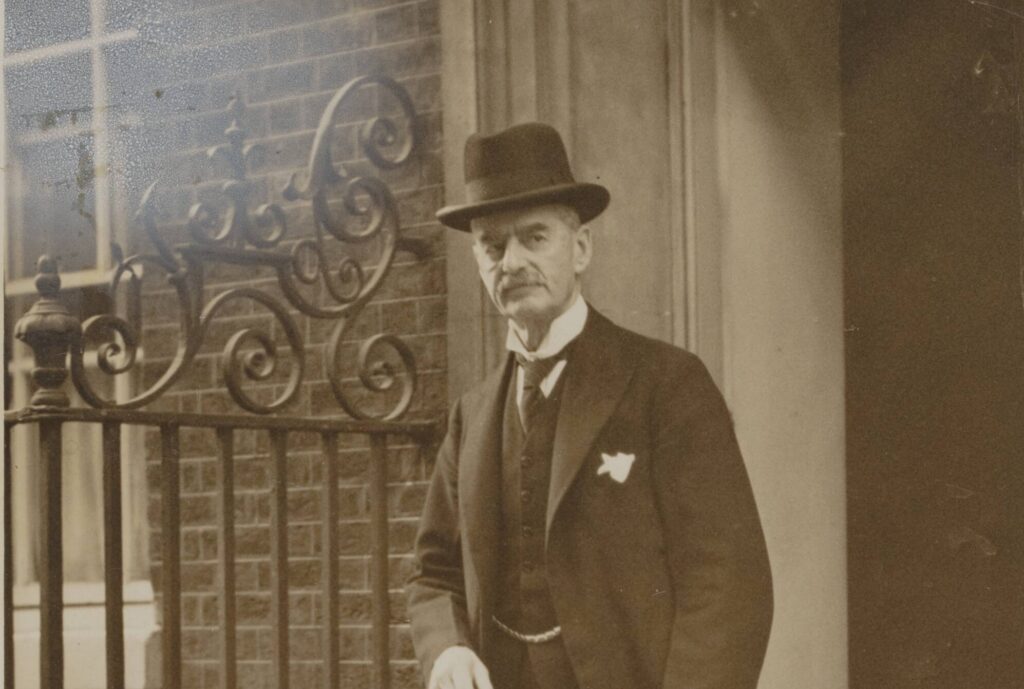
On 12 November 1940, Winston Churchill delivered a eulogy in the House of Commons for his predecessor as prime minister, Neville Chamberlain, who had died three days earlier from bowel cancer.
The short speech, recognised for its faint praise and solemn generosity, is considered one of Churchill’s most tactful parliamentary orations.
***
Churchill began by acknowledging the “fierce and bitter controversies” that surrounded Chamberlain’s premiership – in which he participated so fervently during his so-called wilderness years.
But these controversies, the prime minister added, had been “hushed by the news of his illness and are silenced by his death.”
He told the House: “It is not given to human beings, happily for them, for otherwise life would be intolerable, to foresee or to predict to any large extent the unfolding course of events.
“In one phase men seem to have been right, in another they seem to have been wrong. Then again, a few years later, when the perspective of time has lengthened, all stands in a different setting.
“There is a new proportion. There is another scale of values. History with its flickering lamp stumbles along the trail of the past, trying to reconstruct its scenes, to revive its echoes, and kindle with pale gleams the passion of former days. What is the worth of all this?”
Churchill confronted the defining failure of Chamberlain’s premiership – his appeasement policy – by which posterity will forever remember him.
The prime minister said it fell to his predecessor “in one of the supreme crises of the world to be contradicted by events, to be disappointed in his hopes, and to be deceived and cheated by a wicked man.”
He defended Chamberlain’s motivations as both noble and commendable, asking: “What were these hopes in which he was disappointed? What were these wishes in which he was frustrated? What was that faith that was abused?
“They were surely among the most noble and benevolent instincts of the human heart – the love of peace, the toil for peace, the strife for peace, the pursuit of peace, even at great peril and certainly to the utter disdain of popularity or clamour.”
Churchill said Chamberlain had acted “with perfect sincerity according to his lights and strove to the utmost of his capacity and authority, which were powerful, to save the world from the awful, devastating struggle in which we are now engaged.”
The prime minister appealed to the nation, arguing that – as a consequence of Chamberlain’s policy – Britain entered the war “guiltless of the bloodshed, terror and misery” that had engulfed Europe.
He declared: “Herr Hitler protests with frantic words and gestures that he has only desired peace. What do these ravings and outpourings count before the silence of Neville Chamberlain’s tomb?”
Churchill dealt with his unique relationship with his predecessor at some length, noting the “singular experience of passing in a day from being one of his most prominent opponents and critics to being one of his principal lieutenants.”
Upon Britain’s declaration of war, Chamberlain appointed Churchill – his chief critic – to the post of first lord of the Admiralty. Churchill also referred to the experience of “passing from serving under him to become the head of a government of which, with perfect loyalty, he was content to be a member.”
Following his resignation in May 1940, Chamberlain served in Churchill’s five-member war cabinet as leader of the House of Commons. He stepped down from this post on 22 September 1940 due to his declining health.
Chamberlain’s reputation declined markedly in the months that followed his departure as prime minister. This reaction was catalysed by the publication of a polemic titled Guilty Men (by future Labour leader Michael Foot, former Liberal MP Frank Owen, and the Conservative Peter Howard) in July 1940, which took aim at Chamberlain, alongside his colleagues and predecessors.
Guilty Men argued that years of complacency and misjudgment had left Britain dangerously unprepared for the conflict it now faced.
In 1940, just days before his death, Chamberlain wrote: “So far as my personal reputation is concerned, I am not in the least disturbed about it. Without Munich the war would have been lost and the Empire destroyed in 1938. I should not fear the historian’s verdict.”
The former prime minister’s legacy – defined by Munich and diplomatic miscalculations – had begun to crystallise.
But Churchill praised Chamberlain for his moral toughness.
He said: “He met the approach of death with a steady eye. If he grieved at all, it was that he could not be a spectator of our victory, but I think he died with the comfort of knowing that his country had, at least, turned the corner.”
Chamberlain refused all state honours. “He would die like his father, plain Mr Chamberlain”, his successor said.
The prime minister concluded: “We here assembled this morning, members of all parties, without a single exception, feel that we do ourselves and our country honour in saluting the memory of one whom Disraeli would have called an ‘English worthy’.”
Chamberlain was buried following a service at Westminster Abbey on 14 November. Churchill, his erstwhile political adversary, acted as one of the pallbearers.
***
The day of 12 November 1940 was marked by other parliamentary tributes to the late former prime minister.
Clement Attlee, who served alongside Chamberlain as a member of the war cabinet, said it was “characteristic of the way of life which we are fighting to preserve not to allow political differences to prevent mutual respect and friendship.”
He added: “For all but a few months of his political career, Neville Chamberlain stood for policies in home and foreign affairs to which we of the Labour Party were opposed, and often very bitterly opposed.
“But this is not the time or the occasion to pass any judgment on those controversies.”
Attlee praised Chamberlain for his “great industry, an orderly mind, clarity of exposition and readiness in debate, backed by great tenacity and determination.”
As Chamberlain’s colleague in government, the Labour leader and lord privy seal said he “saw the magnanimity with which he worked with those who had been his severe critics.”
He concluded: “I recognised his devotion to the common cause and his abhorrence of the evil thing which is seeking to destroy our civilisation.
“Above all, I admired the courage with which he faced the physical disabilities which came upon him, the devotion with which he strove to the last to serve his country and the faith in ultimate victory which sustained him.”
In the House of Lords, Viscount Halifax – the man who might have been Chamberlain’s successor – paid a fulsome tribute to the former prime minister.
Halifax referred to the “unfaltering courage and tenacity that he constantly displayed when he thought a thing was right”.
He expressed his belief that on “some sides of his work which excited, and indeed still excite, sharp difference of opinion, it may be that the final judgment of his fellow countrymen at some future time will strike a more true balance than is always possible to be struck today”.
He said that the fact that Chamberlain “did everything in his power to avoid war never meant that for one moment he relaxed any efforts to prepare for war should war come.”
He added: “But it did mean that in his attempt to save Europe from catastrophe he refused to acknowledge defeat; and it also meant that he knew, better, perhaps, than any, not only how ill-prepared for war this country was in 1938…
“He also realised – and again no one more clearly – while he was working for peace how great was the value of time gained.”
Halifax, a pallbearer alongside Churchill at Chamberlain’s funeral, continued: “Of the man himself, it is not easy for me to speak, for the Neville Chamberlain that I knew, and with whom I worked as colleague and intimate friend, was curiously different, I think, from the Neville Chamberlain that many seemed to picture.”
He referred to Chamberlain as a “shy man” who “did not make friends as easily as some”.
He told the House: “It so happened that he asked to see me just 48 hours before he died, and I found him, as your Lordships would naturally conclude, weak – very weak. We had a little talk about the war of which he had so hoped to see the victorious end…
“He faced death with the same courage that he had faced life and for him I do not think there can be any shadow of regret.”
Halifax’s tribute – free of any praise that could be characterised as faint – represented an early and trenchant statement of the revisionist position on Chamberlain’s premiership.
Churchill saved his I told you so analysis of Chamberlain’s premiership – mostly absent from his parliamentary eulogy – for his extensive post-premiership writings.
The Gathering Storm, the first of his six-volume history, further blighted Chamberlain’s standing in our collective memory.
Halifax’s position, however, has found favour in subsequent revisionist scholarship.

Politics.co.uk Newsletters
DAILY
Politics@Lunch
WEEKLY
Week in Review
