Wilson vows to forge Britain in ‘white heat’ of new technological revolution
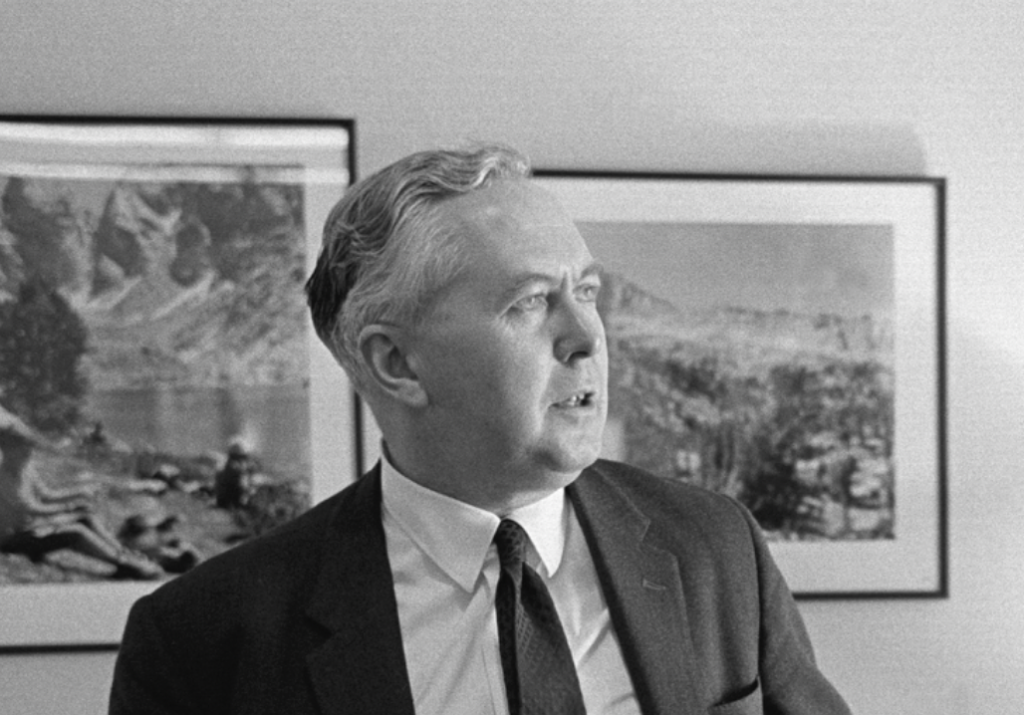
On 1 October 1963, Harold Wilson committed a future Labour government to a programme of radical industrial and social modernisation in a landmark conference speech. Delivered at the party’s conference in Scarborough, the address is remembered for Wilson’s reference to the “white heat of technology”.
Wilson had been elected as Labour Party leader two years previously, succeeding Hugh Gaitskell after his sudden death. His Scarborough speech came at a time when the Conservative government, which had held power for 12 years, was widely perceived to be exhausted. Harold Macmillan, buffeted by scandal, political blunders and suffering from ill-health, was on his way out as prime minister. He would be replaced by Alec Douglas-Home, an aristocratic figure and peer (who would renounce his 14th earldom upon emerging as prime minister).
Foreign secretary hints at leadership bid as Tories face succession crisis
***
Wilson’s speech set about seizing the political initiative, positioning Labour as the party best equipped to mould the future. He cast the ailing Conservative government as unable to manage a modern, rapidly changing economy.
The Labour leader argued that Britain was on the cusp of a new industrial age “greater than in the whole Industrial Revolution of the last 250 years”.
He noted that 97% of all scientists who had ever lived were “alive and at work today”.
Addressing the challenges posed by automation and the sceptics within his party, Wilson warned that there was “no room for Luddites in the socialist party”.
He added: “If we try to abstract from the automative age, the only result will be that Britain will become a stagnant backwater, pitied and condemned by the rest of the world.”
Wilson linked the coming revolution to his vision of socialism. He argued that planning and state action would be essential to harnessing these new forces.
He defined the choice facing the country as between the “blind imposition of technological advance” and the “conscious, planned, purposive use of scientific progress to provide undreamed of living standards and the possibility of leisure ultimately on an unbelievable scale.”
He declared: “In all our plans for the future, we are re-defining and we are re-stating our socialism in terms of the scientific revolution. But that revolution cannot become a reality unless we are prepared to make far-reaching changes in economic and social attitudes which permeate our whole system of society.
“The Britain that is going to be forged in the white heat of this revolution will be no place for restrictive practices or for outdated methods on either side of industry.”
The speech sought to frame the forthcoming general election as a choice between a modernising, dynamic future under Labour and a stagnant, “nostalgic” Conservative Party. He cast aspersions over conservatism’s ability to oversee and hone such rapid societal change.
Wilson denigrated the idea that the “commanding heights of British industry” could be “controlled today by men whose only claim is their aristocratic connections or the power of inherited wealth or speculative finance”.
Wilson later wrote that the address was designed to “replace the cloth cap [with] the white laboratory coat”.
In the short term, the speech helped Wilson define his political vision and unite the Labour Party.
***
Wilson led Labour to a narrow general election victory in 1964, securing a slight majority of four seats. He became the youngest prime minister since the Earl of Rosebery in 1894.
After winning the 1964 election, Wilson fulfilled his pledge to establish a dedicated Ministry of Technology (MinTech). The 1964 Labour manifesto vowed to set up a “Ministry for Technology to guide and stimulate a major national effort to bring advanced technology and new processes into industry.”
But the Wilson government, it has been said, ultimately failed to usher in an era of sweeping scientific and industrial renewal – as promised in the Scarborough speech.
Wilson won a landslide majority of 98 seats two years later in 1966.
As Labour leader, Wilson won four of the five general elections he contested: 1964, 1966, 1970, February 1974 and October 1974.
Reflecting on the Scarborough speech, Alan Johnson, a former Labour home secretary, said Wilson moved his party “forward 40 years in a 40-minute speech.”
Labour wins narrow majority after 13 years of Tory rule

Politics.co.uk Newsletters
DAILY
Politics@Lunch
WEEKLY
Week in Review
