Westland affair: Heseltine’s resignation plunges Thatcher government into crisis
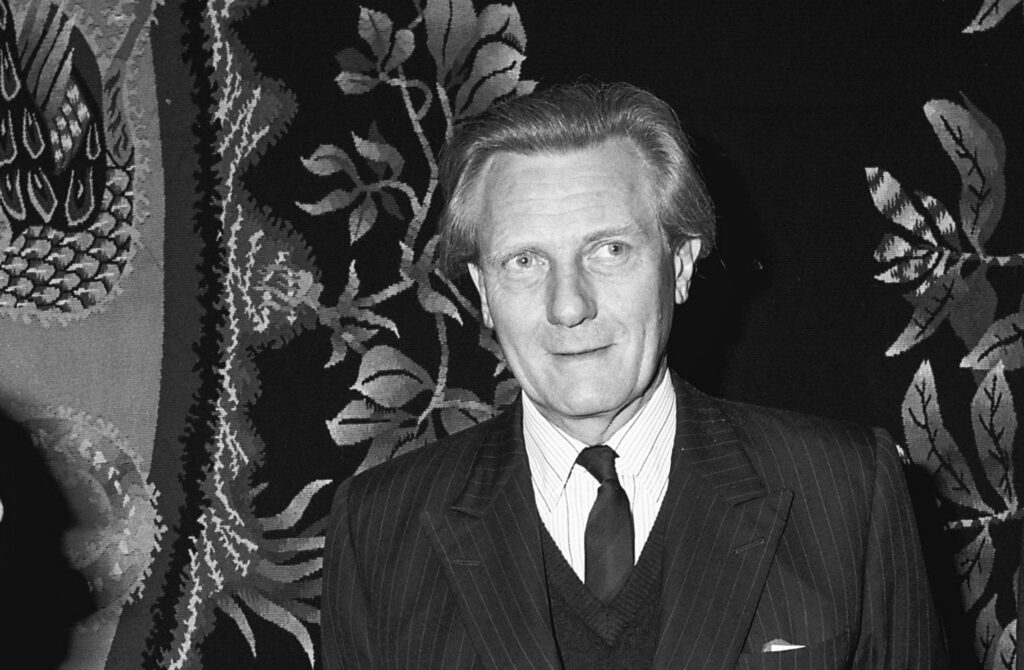
On 9 January 1986, Michael Heseltine resigned as defence secretary, sparking one of the most serious political crises of Margaret Thatcher’s premiership.
The ‘Westland affair’ is remembered as Thatcher’s moment of greatest danger until she was formally defenestrated in 1990. Over a matter of weeks, the disputed future of a mid-sized helicopter manufacturer escalated into a fierce departmental feud that nearly broke the ‘Iron Lady’.
***
Heseltine, in his capacity as defence secretary, had championed a rescue package from a European consortium for the Westland helicopter company – which was suffering severe financial difficulties. In taking this stance, he clashed with Thatcher and Leon Brittan, the trade and industry secretary, who favoured a rival bid by the American Sikorsky Fiat group. Observers were hence treated to the unusual spectacle of a cabinet member (Heseltine) appearing to pursue a policy that was diametrically at odds with the government’s stated intentions.
The position taken by Michael ‘Tarzan’ Heseltine, so-called for his famous mane of golden hair, was supported by MPs on the House of Commons defence select committee.
On 6 January, the crisis deepened markedly after a “confidential” letter from the solicitor general, Patrick Mayhew, was leaked to the press. The letter accused Heseltine of “material inaccuracies” in his lobbying for a European consortium rescue package.
The leak raised questions about the prime minister’s own involvement and integrity.
The affair came as the Conservative Party slipped to third place in the polls behind the Labour Party, led by Neil Kinnock, and the Social Democratic Party (SDP).
The immediate trigger for Heseltine’s departure, however, was a ruling by Thatcher that all public comments on the Westland controversy should be cleared through the Cabinet Office to maintain collective responsibility. Thatcher was at pains to overcome the impression that the government was at war with itself; it is also speculated that she feared Heseltine’s popularity.
Heseltine responded by marching out of the cabinet meeting. The literally outgoing defence secretary is said to have proclaimed: “I can no longer be a member of this cabinet”.
In a subsequent press conference, Heseltine stated: “If the basis of trust between the prime minister and her defence secretary no longer exists, there is no place for me with honour in such a cabinet.”
Heseltine addressed the House of Commons on 15 January during a debate on the Westland affair, called by the Labour Party. It marked his first commons speech since resigning as defence secretary.
Heseltine defined the controversy as revolving around two central issues: Britain’s relationship with its European and American allies – and the government’s proper role in protecting the nation’s “defence industrial base”.
Putting the substantive case for the European consortium, Heseltine warned that maintaining an “uncoordinated, fragmented” industrial base in Europe would ensure that Britain’s “relative decline compared with the United States of America will continue.”
Turning to the events leading up to his resignation, Heseltine claimed that he was the victim of a hostile briefing campaign, pointing to “selective leaks from the Law Officers’ letters, which were used, wrongly, to damage my credibility.”
The senior MP identified the 9 January cabinet meeting as the “culmination of events” when “it was suggested that all answers to questions on Westland should be submitted to the Cabinet Office before release.”
He added: “I had no confidence, in the light of what had already happened, that such a constraint would be used fairly or without prejudice to the interests of the British-European offer.”
***
In a commons statement on 23 January, Thatcher stated that Brittan – Heseltine’s main cabinet antagonist on Westland – had authorised the leaking of the 6 January letter. An inquiry, requested by Mayhew, accused Brittan of conspiring against his cabinet colleague.
The prime minister said Brittan “took the view that the fact that the solicitor general had written to [Heseltine], and the opinion he had expressed, should be brought into the public domain as soon as possible.”
Thatcher confirmed that her office was “accordingly approached” and made aware of Brittan’s scheme. But she insisted she had not been consulted by her senior staff members. “Had I been consulted”, she added, “I should have said that a different way must be found of making the relevant facts known.”
The prime minister was repeatedly asked when her office informed her of its role in the leak; opposition MPs suspected that Thatcher had personally authorised the selective disclosure. She was unable to give a clear answer.
Thatcher also confirmed that the solicitor general did not agree to having his letter leaked to the press. “I deeply regret that”, she added.
The Daily Express described Thatcher’s performance in the commons as “excruciatingly embarrassing for her friends.”
Brittan resigned as trade and industry secretary on 24 January, after his conduct was roundly criticised during a meeting of the 1922 committee of Conservative backbenchers. In his letter of resignation, Brittan said he had come to the conclusion that he could “no longer command the full confidence of my colleagues.”
He wrote: “Since your statement in the House yesterday it has become clear to me that I no longer command the full confidence of my colleagues.
“In these circumstances my continued membership of your Government would be a source of weakness rather than strength and, as I have explained to you, it is for this reason that I have tendered my resignation.”
Brittan resigned despite Thatcher’s pleas for him to stay on. In her response to the resignation letter, Thatcher expressed regret that she could not “dissuade you this afternoon from resigning”.
Brittan’s departure meant the prime minister was the only major actor in the affair who remained in government.
Thatcher added: “It was my wish that you should remain as a member of the cabinet. But I have to respect your decision… I hope that it will not be long before you return to high office to continue your ministerial career.”
Revelations since have suggested that Downing Street was, after all, behind the leak.
In 2015, Thatcher’s official biographer, Charles Moore, said the prime minister’s hands “were not entirely clean” in respect of the leaking of the letter.
In her own memoirs, Thatcher records her confession to friends 27 January 1986 – the day of a crucial commons debate on the Westland affair – that “I may not be prime minister by 6pm tonight.”
***
Thatcher’s survival is said to have been secured by a faltering and unfocused performance by Neil Kinnock, the then Labour leader.
Addressing the commons on 27 January, Kinnock accused Thatcher of “basic duplicity”.
He added: “We want the facts. We want them now. We want only the one version that will be believed – the truth, the whole truth and absolutely nothing but the truth. If the prime minister cannot tell that truth, she cannot stay. If she will not tell that truth, she must go.”
The speech was ridiculed by Heseltine, who responded: “If there are men born for whom the highest attainment is to remain leader of Her Majesty’s opposition, the leader of the opposition is such a man.”
In a speech to the commons on 19 October 1986, Brittan accused Heseltine of having consistently “undermined” the government over the Westland affair.
The former industry secretary said he accepted “full responsibility” and “profoundly regretted” the means by which he disclosed the solicitor general’s letter. Turning to Heseltine’s conduct, he argued that the crisis “illustrated beyond peradventure that the doctrine of collective ministerial responsibility is, and must still be, very much part of our constitution.”
He added: “If it is ignored, the result is likely to be, and was, disaster.”
Brittan accused Heseltine of “relentless media briefing and tendentious disclosures”, which he said put the government in “a position of unparalleled difficulty”.
Heseltine’s posturing, he said, “led to things happening which unquestionably should not have happened”.
Brittan told MPs that “after the Westland affair, I have no doubt that any future government, whatever their political complexion, will and should insist that the decisions of the government should have the support of all members, and should not be undermined from within.”
In a final swipe at his former cabinet colleague, Brittan spoke of the “proper context, which shows a government reaching a considered view on their policy, finding the implementation of that policy thwarted at every turn by one of their own members, but emerging with the essential rationale of that policy amply vindicated by subsequent events.”
***
The Westland affair became a lightning rod for criticism of Thatcher’s political style and approach to government. While the US takeover was generally seen as successful, Thatcher’s reputation for straight-talking was damaged.
Meanwhile, Heseltine’s conduct fuelled rumours as to his political ambitions. He would continue in this disruptive vein until November 1990, when he unsuccessfully challenged Thatcher for the Conservative leadership. The contest nonetheless triggered the prime minister’s downfall, after she failed to secure the wholehearted support of Tory MPs.
Brittan resigned as an MP in 1989 to take up the post of European commissioner. He was succeeded as the Conservative MP for Richmond by William Hague.
During his time in Brussels, Brittan appointed one Nick Clegg to his private office.
Brittan initially attempted to recruit Clegg to the Conservative cause – but later recommended him to Paddy Ashdown, the then leader of the Liberal Democrats.

Politics.co.uk Newsletters
DAILY
Politics@Lunch
WEEKLY
Week in Review
