Wellington’s government fatally weakened as election opens door to reform under Whigs
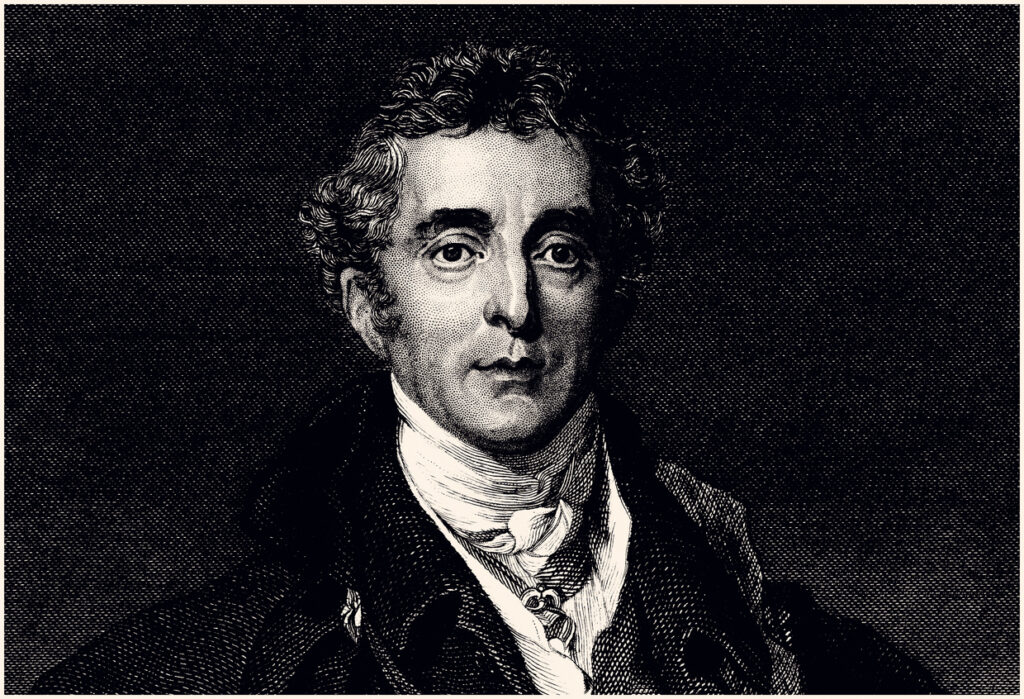
The general election that commenced in July 1830 destabilised the Tory government under the Duke of Wellington and paved the way for the political crisis that culminated in the Great Reform Act of 1832.
The election was triggered by the death of King George IV in June and the accession of his brother, William IV. Polling took place over several weeks under the existing unreformed electoral system, beginning on 29 July and concluding on 1 September.
***
The contest arrived at a deeply precarious political moment.
During the 1826-1830 parliament, the Tory party fractured; the 1827 retirement of Lord Liverpool, who had served as prime minister since 1812, precipitated a Tory succession crisis. George Canning, prime minister for a matter of months in 1827, governed with the support of the Whigs. Wellington and Robert Peel both declined to serve in his ministry. When Canning died in office on 8 August 1827 after 119 days as prime minister, Lord Goderich took over. But his continuity ‘Canningite’ coalition composed of moderate Tories and Whigs collapsed in January 1828 – at which point Wellington assumed office.
Wellington, the fourth Tory prime minister in three years, was weakened after he reluctantly legislated for Catholic emancipation in 1829. Wellington and Peel had been forced into action after the 1828 Clare by-election returned Irish ‘liberator’ Daniel O’Connell.
The Roman Catholic Relief Act 1829 was only passed with Whig support, and it led to a further split in the Tory party.
The ‘Ultra-Tories’, consolidated under Edward Knatchbull and Richard Vyvyan’s leadership, styled themselves as protectors of the ‘Protestant constitution’. In February 1829, Peel lost his seat to Ultra-Tory Robert Inglis after forcing a by-election of his own. The Anglican graduates of Oxford University, the relevant electorate, were not as enthusiastic about Catholic emancipation as their Clare counterparts.
Peel returned to parliament as the MP for Tamworth at the 1830 general election.
Catholic emancipation also sparked another, more literal, confrontation. The Ultra-Tory Earl of Winchilsea, in a letter to The Standard newspaper dated 14 March 1829, accused Wellington of “an insidious design for the infringement of our liberties and the introduction of Popery into every department of the State”. Wellington challenged the anti-Catholic peer to a duel. It was a bloodless affair – and the last duel fought by a sitting prime minister.
Meanwhile, the news of the July Revolution in France, the August Revolution in Belgium, a series of bad harvests and industrial distress galvanised the parliamentary reform movement.
Tory peer Lord Lyndhurst later argued that public interest in reform had lapsed until it was reignited by the July Revolution. “After the news arrived of the successful resistance of the military force by the people of Paris”, he told the Lords on 7 October 1831, “the cry was changed, and the universal demand was for reform”.
The news of the 1830 Revolution likely arrived too late to influence voting. But the distance between the people and parliament was undoubtedly growing – symbolised by the support for pro-reform organisations like Thomas Attwood’s Birmingham Political Union, founded in January 1830.
The outbreak of the Swing Riots, which emerged in late August 1830, added to an increasingly febrile political situation and raised the spectre of social upheaval.
Pressure was mounting on ministers to deliver political reform.
***
In the end, Wellington’s party lost over 170 seats, returning around 250 MPs. Outside of the unreformed “rotten boroughs”, the Tories performed poorly.
The Whigs under Earl Grey campaigned on the slogan “Peace, Retrenchment and Reform” and maintained their standing.
The recalcitrant Ultra-Tories won 60 seats, depriving Wellington of a reliable majority.
In Ireland, several Catholics were returned.
Wellington, possessing the support of around 50 more seats than the Whigs, returned as prime minister. But the diminished, divided standing of the Tories strengthened the reformers. Wellington was too weak to mount a robust defence of the status quo, and the demand for reform showed no sign of fading.
When parliament reconvened on 2 November 1830, Grey argued that the government could restore order by “securing the affections of your fellow subjects, and by redressing their grievances, and – my Lords, I will pronounce the word – by reforming parliament.”
Grey proclaimed that “preparation ought to be made to revise the constitution, to extend its blessings, and to secure the affection of the people, to ensure their tranquillity, and to confirm their confidence in the legislature, and in a King who only lives for the good of his subjects.”
Wellington responded with a statement of trenchant opposition to any form of parliamentary reform. He told the House of Lords that the current system “answered all the good purposes of legislation” and “possessed the full and entire confidence of the country”.
Wellington said that, were he challenged to construct an ideal political system, he doubted he could “form such a legislature as they possessed now, for the nature of man was incapable of reaching such excellence at once”.
He insisted that “as long as he held any station in the government of the country, he should always feel it his duty to resist such measures”.
The speech, a principled defence of the unreformed electoral system, was at odds with the times. Mere days later, Wellington’s administration was defeated on a motion concerning the civil list in a debate undoubtedly infused by the surrounding tumult. The Canningites and Ultras combined against Wellington, who interpreted the motion as a matter of confidence.
Wellington resigned, anticipating further defeats – including over reform – to come.
Grey was invited by William IV to form the first Whig-led government since the “ministry of all the talents” (1806-1807).
Grey entered office with the support of leading Canningites, including future prime minister Lord Palmerston, as well as several Ultra-Tories who were divided over the question of political reform. Some Ultra-Tories argued that Catholic Emancipation had been imposed against the wishes of the public and believed that a fairer system of parliamentary representation would fortify Protestantism as a pillar of the constitution. Apparently among them was the Duke of Richmond, a leading Ultra-Tory who joined Grey’s cabinet.
(The Ultra-Tories would largely return to the Conservative Party during Peel’s first premiership, before ousting him over the abolition of the Corn Laws).
***
Grey embraced the cause of parliamentary reform.
In his first speech as prime minister, Grey referenced his address on 2 November, his first of the parliamentary session.
He told peers: “I then stated, and I now repeat my conviction that it is necessary that the government… should take into immediate consideration the state of the representation, with a view to the correction of those defects which have been occasioned in it by the operation of time, and with a view to the re-establishment of that confidence upon the part of the people, which I am afraid parliament does not at present enjoy to the full extent that is essential for the welfare and safety of the country and the preservation of the government.”
The 1830 election thus set in motion the tumultuous events of the next two years: the introduction of the first Reform Bill, its defeat via a ‘wrecking amendment’, the dissolution of parliament, and the Whigs’ landslide victory in the 1831 election; the rejection of the second Reform Bill by the House of Lords, the obstruction of the third Reform Bill, the ‘Days of May’ crisis, and the constitutional showdown over the threat to create reform-supporting new peers.
Then, finally, the passage of the Great Reform Act in June 1832.

Politics.co.uk Newsletters
DAILY
Politics@Lunch
WEEKLY
Week in Review