Catholic Emancipation Act receives royal assent
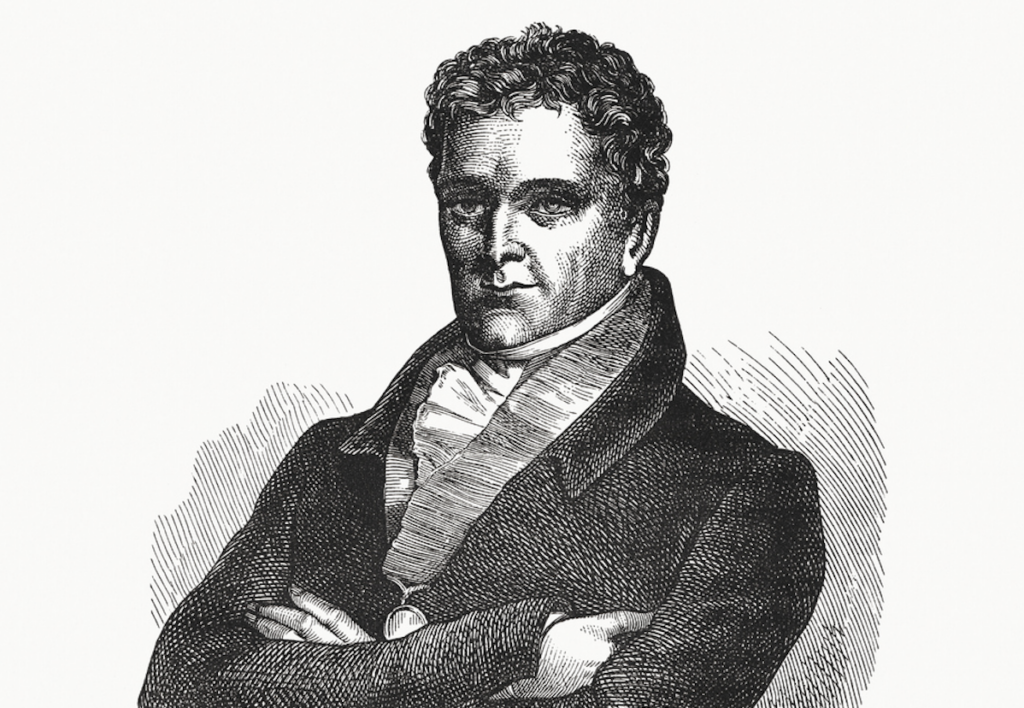
On 13 April 1829, the Roman Catholic Relief Act received royal assent, marking the culmination of a long struggle for Catholic emancipation. The landmark legislation removed the majority of the substantial restrictions on Roman Catholics in public life, allowing them for the first time in over a century to sit as MPs and, in theory, hold senior state offices.
The act was passed by the Tory government of the Duke of Wellington and his home secretary, Sir Robert Peel, both of whom had been staunch opponents of the measure. They ultimately brought the bill forward only after concluding it was necessary to prevent rebellion in Ireland in the wake of Daniel O’Connell’s sensational victory in the 1828 County Clare by-election. Peel concluded that “though emancipation was a great danger, civil strife was a greater danger.”
***
The Roman Catholic Relief Act 1793 granted Catholics the right to vote in elections, and the Act of Union, passed seven years later, brought Irish MPs to Westminster. But while Catholics made up the vast majority of the Irish population (around 80%), they themselves could not serve in parliament.
Critically, Catholics could not take the Oath of Supremacy at Westminster. The oath, which required that MPs acknowledge the king as “supreme governor” of the Church and reject the spiritual authority of the Pope, was incompatible with Catholicism, effectively barring its adherents from parliament.
William Pitt the Younger, prime minister at the time of the Act of Union, had sought to secure Catholic emancipation in 1800/1801. But King George III refused, prompting Pitt’s resignation.
This settlement was challenged and ultimately broken by the victory of O’Connell in the 1828 County Clare by-election. There was no law preventing Catholics from standing for election and O’Connell’s campaign – exploiting this apparent loophole in the Act of Union – galvanised the Irish Catholic population.
The by-election was triggered when the incumbent MP, William Vesey FitzGerald, was appointed president of the Board of Trade, an office of profit, in the Duke of Wellington’s government. FitzGerald was a relatively popular figure among both Protestants and Catholics, and was widely regarded as having a credible record on the central issue of political rights. But O’Connell’s Catholic Association had vowed to oppose any member of the government since its founding in 1823. As such, the barrister and Irish nationalist leader decided he would stand.
In his election manifesto, O’Connell denied the suggestion – apparently circulated by supporters of FitzGerald – that he was “not qualified to be elected”.
He conceded that “as a Catholic, I cannot, and of course never will, take the oaths at present prescribed to members of parliament”, maintaining that he was not willing to stain his “soul with such an oath.”
However, O’Connell contended that the “authority which created these oaths (the parliament), can abrogate them: and I entertain a confident hope that, if you elect me, the most bigotted of our enemies will see the necessity of removing from the chosen representative of the people, an obstacle which would prevent him from doing his duty to his King and to his country.”
He promised that his victory would lead to a “universal shout of the nations of the earth” that would “overpower every opposition”. This global pressure, he argued, would make it “impossible for [home secretary Robert] Peel and Wellington any longer to close the doors of the constitution against the Catholics of Ireland.”
The result was a landslide.
O’Connell, 27 years after the Acts of Union came into effect, became the first Catholic to be returned in a parliamentary election since 1688. He won 2,057 votes (67.7%) while Fitzgerald secured just 982 votes (32.3%). In an open ballot, Catholic voters roundly defied their Protestant landlords to elect O’Connell.
Fitzgerald, reporting to Peel in July, spoke of a “hopeless contest” and wondered how he had “not been beaten by a greater majority.”
As promised during the Clare campaign, O’Connell refused to take the Oath of Supremacy and assume office. The surge of public support generated by his agitation now raised the prospect of civil unrest.
***
Wellington and Peel, both long-time opponents of emancipation, felt compelled to resolve the constitutional contradiction that Catholics could stand for parliament but not take their seats. They also recognised that the success of the Clare by-election for the Catholic Association would inspire further such campaigns; there was nothing to stop O’Connell standing repeatedly for re-election.
On 2 April 1829, introducing the Roman Catholic Relief Bill in the House of Lords, Wellington acknowledged that the situation in Ireland had become dangerously unstable.
The prime minister pointed to the activities of O’Connell’s Catholic Association and the mobilisation of voters during the Clare election as evidence that there was an “organisation and direction of the people, proceeding from some superior authority.” This organisation, he said, had created “a state of society in Ireland which we have not heretofore witnessed, and an aggravation of all the evils which had before afflicted that unfortunate country.”
Wellington warned that escalating the conflict would mean “civil war”.
Citing his military experience, the prime minister insisted that civil war “destroys property and prosperity, and demoralises character… by it the hand of man is raised against his neighbour, against his brother, and against his father; the servant betrays his master, and the whole scene ends in confusion and devastation.”
Wellington insisted that he would make almost any sacrifice to avoid even “one month of civil war in the country to which I am attached.”
Wellington believed that granting civil equality to Catholics would stabilise Irish society. He cited the example of Scotland, where the removal of religious disabilities had eventually produced a “happy and peaceful state of things”. The prime minister called on his fellow peers to “consider the subject with the coolness, moderation, and temper”.
In the end, the government forced Catholic emancipation through parliament against staunch opposition from the ‘Ultra-Tory’ wing of their own party, led by Edward Knatchbull, and a reluctant King George IV.
The legislation repealed the Test Act 1673 and the last vestiges of the penal laws passed after the Glorious Revolution of 1688 which discriminated against the Catholic majority in Ireland. With the Roman Catholic Relief Act 1829, therefore, these linchpins of the Anglican supremacy in politics and public life were summarily torn down.
But the act was passed alongside a second piece of legislation that raised the property qualification for voting in Irish counties, disenfranchising many of O’Connell’s poorer supporters. The Parliamentary Elections (Ireland) Act 1829 resulted in a five-fold decrease in the Irish electorate, from 216,000 voters to just 37,000. Nor did the 1829 act remove all legal disabilities placed on Catholics; certain offices, such as the role of lord chancellor, remained off limits.
***
O’Connell was elected unopposed in the subsequent July 1829 Clare by-election and took up his seat in the commons on 4 February 1830, at the beginning of a new parliamentary session.
His first contribution came in a debate on the king’s speech. The newly elected MP denigrated the government’s legislative programme, arguing that “anything so unsatisfactory in its propositions, and so meagre in its details, could scarcely have been concocted or conceived.”
O’Connell reserved particular scorn for the chancellor of the exchequer Henry Goulburn’s claim that Ireland was an “Oasis in the desert” free from distress. He declared this news “astonishing” given that “there were seven thousand registered persons in Dublin alone actually living on three half-pence a day”.
He said he looked forward to the “existing distress with satisfaction in one point of view [as] it would cause the people to raise their voice aloud, and demand a radical and complete reform.”
Following his election, O’Connell began a campaign to repeal the Act of Union and restore the Kingdom of Ireland under the old Constitution of 1782.
A total of 42 MPs were elected on O’Connell’s Irish Repeal platform at the 1832 general election – the first since the passage of the Great Reform Act. Five Catholic MPs were returned in 1832.
O’Connell officially launched the Repeal Association in 1840.
In 1841, O’Connell became lord mayor of Dublin, the first Catholic to hold the office since the reign of James II/VII.

Politics.co.uk Newsletters
DAILY
Politics@Lunch
WEEKLY
Week in Review