Treasury chief David Laws resigns over expenses claims
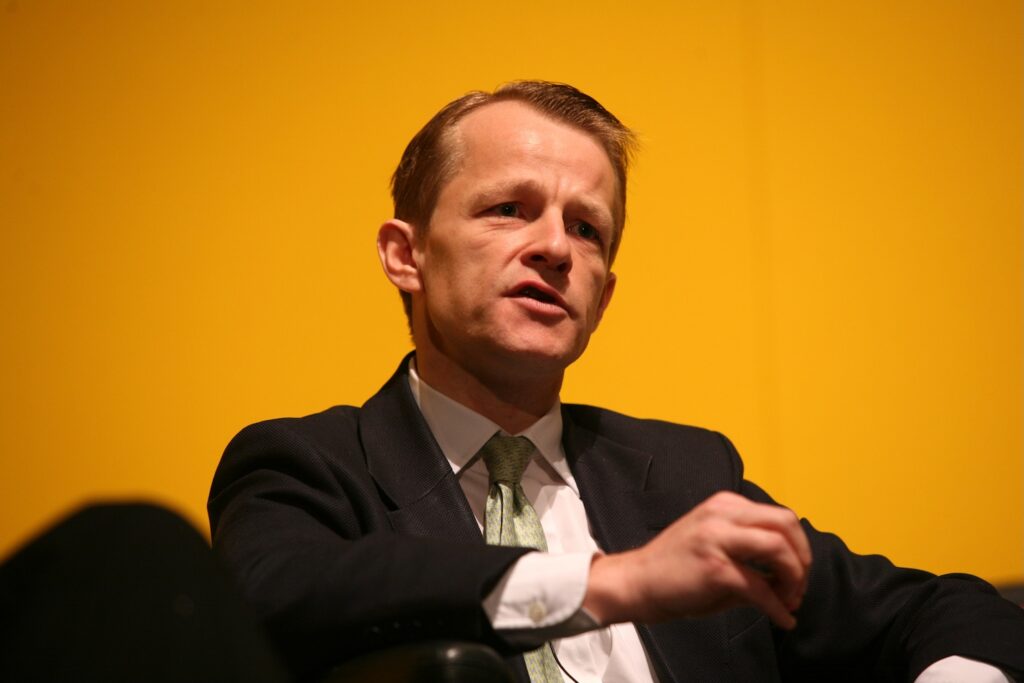
On 29 May 2010, the chief secretary to the Treasury, Liberal Democrat David Laws, resigned from the cabinet just 17 days after being appointed, making him one of the shortest-serving ministers in modern history.
Laws’ departure came after revelations that he had claimed tens of thousands of pounds in parliamentary expenses to rent a room in a property owned by his long-term, but secret, partner.
The disclosures, published in the Daily Telegraph on 28 May, revealed that Laws had claimed up to £950 a month between 2004 and 2009, totalling around £40,000, for the room in his partner’s London flat. A change to parliamentary rules in 2006 barred MPs from “leasing accommodation from a partner”.
***
The resignation was a major blow to the newly formed Conservative-Liberal Democrat coalition, of which Laws was a key architect.
Laws co-edited the famous collection of essays known as the Orange Book (published September 2004). The volume, curated by a school of Liberal Democrat rising stars, broadly championed greater personal choice and market solutions.
Laws, who was first elected to parliament in 2001, was also one of four Lib Dem negotiators who agreed the coalition deal during the “five days of May” crisis.
As chief secretary to the Treasury, Laws famously received a note from his direct predecessor, Labour’s Liam Byrne. “Dear Chief Secretary, I’m afraid there is no money. Kind regards – and good luck! Liam”, it read. This note echoed chancellor Reginald Maudling’s message to James Callaghan, “Good luck, old cock… Sorry to leave it in such a mess”, after the Conservative Party’s defeat in the 1964 general election.
Laws performed well at the government dispatch box on 26 May, when he detailed plans to deliver more than £6 billion of in-year spending cuts. In a notable exchange, Conservative MP Edward Leigh, a longstanding Thatcherite, praised the Liberal Democrat minister for his “unbending Gladstonian Liberalism”. Laws responded that he believed not only in “Gladstonian Liberalism, but liberalism tinged with the social liberalism about which my party is so passionate.”
In his resignation statement, Laws said that he was motivated, in part, by a “desire to keep my sexuality secret”. But he acknowledged that he could not continue in his role overseeing public spending cuts.
He said: “I do not see how I can carry out my crucial work on the budget and spending review while I have to deal with the private and public implications of recent revelations.”
Laws had previously announced his intention to “immediately” pay back the money.
Responding to his resignation, the prime minister, David Cameron, said that Laws was a “good and honourable man”, adding: “I hope that, in time, you will be able to serve again.”
Nick Clegg, the deputy prime minister, described him as a “man of enormous integrity”.
Clegg said: “I very much hope that when [these] questions are answered there will be an opportunity for him to rejoin the government because, as everyone has seen in recent weeks, he has so much to contribute to national life.
“When all is said and done, this has come about because of David’s intense desire to keep his own private life private. His privacy has now been cruelly shattered.”
Laws was replaced as chief secretary by his fellow Liberal Democrat, Danny Alexander.
***
In May 2011, the parliamentary commissioner for standards reported to the standards and privileges committee on the investigation into Laws’ conduct. Laws was found guilty of breaking six rules with regard to expenses.
The committee concluded that “the rental agreements submitted [by Laws] between 2003 and 2008 were misleading and designed to conceal the nature of the relationship. They prevented any examination of the arrangements that in fact pertained over the entire period”.
As a result, Laws was suspended from the House of Commons for seven days following a vote by MPs on 16 May 2011. He was also instructed to apologise to the House by way of a personal statement.
On 12 May 2011, Laws told the House that he took “complete and personal responsibility for the mistakes I made.”
He added: “This last year has been a difficult one for me, and I am grateful for all the support I have received, particularly from my constituents in Yeovil, who have been extremely generous in their understanding, tolerance and encouragement.
“Each of us should be our own sternest critic. Everyone in this place wants to see the reputation of the House restored after the past few disastrous years. If by my actions I have contributed to further undermining the House’s reputation, I can only apologise without reservation.”
In September 2012, Laws returned to government as minister of state for schools in the Department for Education and minister of state in the Cabinet Office. He was permitted to attend cabinet.
Also in 2012, Laws wrote that without the Orange Book, it would be “much more difficult to imagine the governing Liberal Democrat-Conservative coalition being formed and sustained.”
Laws added: “We felt that the Liberal Democrats had moved too far away from the small ‘l’ ‘liberal’ inheritance of the party, particularly in relation to economic policy and our attitude to public service reform.
“Bluntly, we believed that the Lib Dems were not sufficiently liberal.”
During the 2015 general election campaign, Cameron regularly brandished the “I’m afraid there is no money” note.
Laws, however, lost his seat alongside the vast majority of his Liberal Democrat colleagues. The Conservative candidate in Yeovil, Marcus Fysh, won a majority of 5,293 votes over Laws.

Politics.co.uk Newsletters
DAILY
Politics@Lunch
WEEKLY
Week in Review
