Slavery Abolition Act comes into force across British Empire
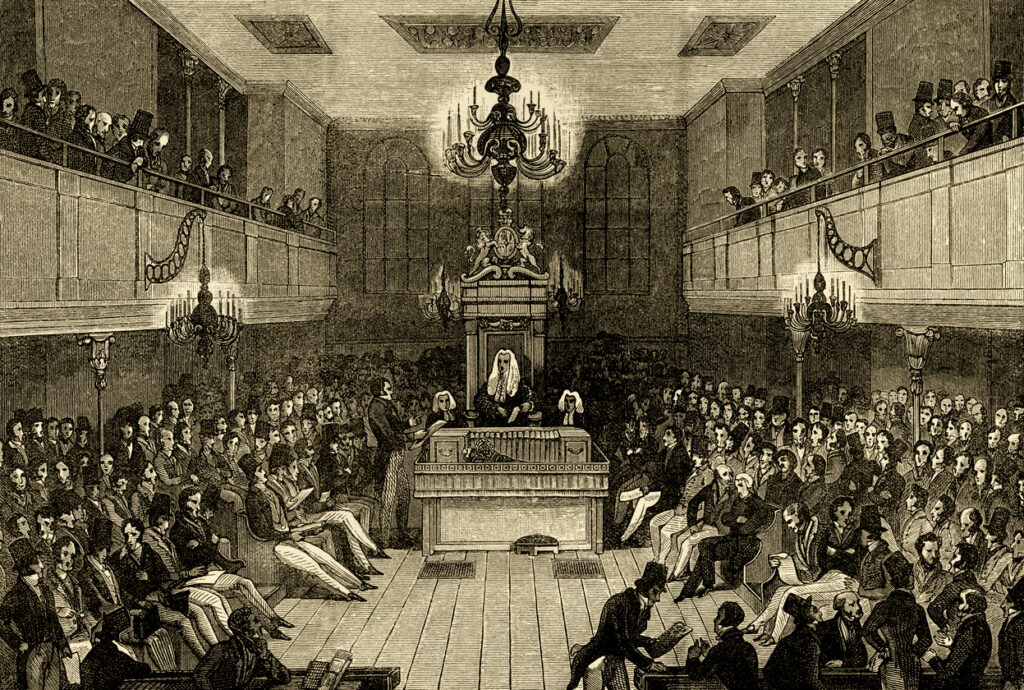
On 1 August 1834, the Slavery Abolition Act 1833 formally came into effect. Passed by Earl Grey’s Whig government, the act was the culmination of a decades-long campaign by abolitionists, including parliamentary figures such as William Wilberforce.
The Society for the Abolition of the Slave Trade, Britain’s first dedicated abolitionist group, was established in May 1787 by Thomas Clarkson and Granville Sharp. It led nationwide petition campaigns, promoted boycotts, circulated pamphlets and conducted speaking tours.
The written recollections of Olaudah Equiano, which detailed his enslavement and transportation, were another weapon for the abolitionist movement. In 1789, Clarkson encouraged the sale of Equiano’s memoirs and arranged for him to tour Britain delivering lectures, often to packed audiences. English poet and philosopher Samuel Taylor Coleridge later referred to Clarkson as a “moral steam engine”.
Wilberforce, the best known of the anti-slave trade campaigners, introduced anti-slavery motions in parliament every year from 1791 to 1807. The MP had been approached by Clarkson and persuaded to embrace the abolitionist cause. They formed an effective alliance: Clarkson supplied the evidence; Wilberforce supplied the oratory.
Wilberforce’s first bill won the support of prime minister William Pitt the Younger – but was rejected by 163 votes to 88. His next effort, in 1792, was supported by over 500 petitions with a combined total of around 390,000 signatures.
The Slave Trade Act 1807 made it illegal to trade enslaved people throughout the British colonies, but it did not outlaw slavery in the colonies. Abolitionist leaders had hoped the 1807 act would spell the end of slavery. It did not.
***
In 1823, the Society for the Mitigation and Gradual Abolition of Slavery Throughout the British Dominions (Anti-Slavery Society) was formed with the support of abolitionists including Clarkson, Wilberforce, Elizabeth Heyrick, Henry (later Lord) Brougham and Joseph Sturge.
The group was led in the commons by Thomas Fowell Buxton.
In a debate on the abolition of slavery in May 1823, Buxton moved that that “state of slavery is repugnant to the principles of the British constitution, and of the Christian religion”.
Buxton called for “the extinction of slavery – nothing less than the extinction of slavery – in nothing less than the whole of the British dominions”. He advocated a ‘gradualist’ approach to the termination of slavery – “nothing rash, nothing rapid, nothing abrupt, nothing bearing any feature of violence”.
The gradualism of the mainstream abolitionist movement was challenged by a more assertive strand of anti-slavery activism.
In 1831, a new anti-slavery group was formed which supported entire and immediate emancipation – in line with Heyrick’s 1824 pamphlet Immediate, not Gradual, Abolition. Heyrick, who led the formation of 70 female anti-slavery societies across the UK, argued that abolitionists had “shown a great deal too much politeness and accommodation” to planters.
The Agency Committee, founded by Sturge and George Stephen, was initially a more vigorous faction within the Anti-Slavery Society. But it cut ties with the original organisation in 1832 and orchestrated a successful “immediatist” lecture tour. The group canvassed opinions of parliamentary candidates during the 1832 election, the first since the Great Reform Act. Over 200 MPs are said to have stated their support for the abolitionist cause.
The Great Reform Act of 1832 reconfigured the political landscape and opportunities for abolitionist campaigners proliferated.
It created a more reform-minded electorate, and therefore a more amenable parliament. MPs like William Cobbett, previously critical of abolition, now expressed his support for the anti-slavery cause “in deference to the wishes of his Manchester supporters”. Moreover, the abolition of “rotten boroughs” under the Representation of the People Act 1832 weakened the so-called “West India Interest” – a parliamentary planter lobby that was directly vested in the continuation of slavery.
***
Revolts among enslaved people played a critical role in advancing the cause of emancipation.
An uprising in the French colony of St Domingue resulted in the establishment of Haiti, the first republic governed by men of African descent in the Western Hemisphere, in 1804.
In his 1823 speech, Buxton referenced the example and influence of Haiti, “the late emperor [Henri] Christophe, and the president [Jean-Pierre] Boyer”, as having consequences for British interests in the West Indies.
Henry Tancred, an advocate of gradual abolition, told the House in May 1833 that the example of St Domingue/Haiti “was an instance of what might be expected if the amelioration of the condition of the slave, and the means of making him free were longer refused.”
Speaking in June 1833, the Irish “liberator” Daniel O’Connell – a supporter of immediate and total emancipation – declared that the case of St Domingue “presented an awful example of the danger of delay”.
He stated: “Who put an end to that war? A slave, Toussaint [Louverture], one of the greatest and most humane men that ever lived”.
In his address, O’Connell also pointed to public demand for abolition – citing the 1.5 million signatures put to anti-slavery petitions. He argued that there “could not be a more complete expression of public opinion than those petitions presented”.
The decades that followed Haiti’s independence saw further direct resistance in Barbados (1816), Demerara (1822) and Jamaica (1831).
This latter case, known as the Baptists War, was especially significant in the passage of the Slavery Abolition Act. Initially organised as a peaceful strike by the Baptist minister Samuel Sharpe, the revolt resulted in the killing of 540 enslaved persons. This case catalysed parliamentary action and anti-slavery sentiment.
For these reasons, when parliament reconvened after the 1832 election, the question was when the enslaved would be freed and under what terms.
***
The 1833 act declared slavery unlawful, emancipating approximately 800,000 enslaved people, primarily in the British Caribbean colonies (700,000), but also in Mauritius (20,000) and South Africa (40,000). However, it explicitly excluded “the Territories in the Possession of the East India Company, or to the Island of Ceylon [modern day Sri Lanka], or to the Island of Saint Helena”, where slavery persisted under separate legal frameworks for several more years.
The act also implemented a system of “compensated emancipation” for former slave owners. Its full title was “An Act for the Abolition of Slavery throughout the British Colonies; for promoting the Industry of the manumitted Slaves; and for compensating the Persons hitherto entitled to the Services of such Slaves”.
The legislation authorised the British government to raise the enormous sum of £20 million – equivalent to approximately 40% of the government’s total annual expenditure at the time – to compensate the slave owners for the loss of their claimed human ‘property’.
This sum, financed through government borrowing, was not fully repaid until 2015. The act provided no compensation whatsoever to the formerly enslaved people.
These measures embedded the wealth derived from slavery into the fabric of British society for generations.
Additionally, the legislation did not grant immediate, absolute freedom to all. While children under the age of six were freed outright, all formerly enslaved people over that age were forced into a system of ‘apprenticeship’ and compelled to work for up to six years for three-quarters of the week in return, in theory, for basic provisions. They were compensated for any additional labour and could purchase their own freedom, by paying off the rest of their “apprenticeship”.
This indentured servitude scheme would be monitored by a new mode of commissioners referred to as “stipendiary magistrates”. Intended as a transition to wage labour, the act’s apprenticeship provisions met with sustained resistance from the newly ‘freed’ population and criticism from abolitionists.
In his June 1833 speech, as the Slavery Abolition Bill made its way through parliament, O’Connell rubbished the notion of “a nation of masters and apprentices”. He ridiculed the idea of an 80-year-old woman becoming an apprentice until age 92.
At the time of O’Connell’s address, the term of apprenticeships stood at 12 years. It was an intervention from Thomas Buxton on 24 July that limited the scheme.
Buxton told the commons in July 1833 that while he was ready “to give the planters £20,000,000 as a compensation, provided that the slaves received complete emancipation in return”, the apprenticeship policy ensured the “planters would get much more than in common justice they were entitled to receive”.
He condemned the scheme as a “gross invasion of equity, and a direct robbery”, saying it gave the enslaved “neither hope nor wages”.
As such, Buxton called for the duration of these restrictions to be limited to “the shortest period which may be necessary to establish, on just principles, the system of free labour for adequate wages.”
Edward Smith-Stanley, the colonial secretary and future prime minister, insisted that “apprenticeships were as necessary for” the enslaved as they were for the enslavers. He argued in favour of the scheme from a gradualist perspective – going as far as to quote from Buxton’s 1823 speech.
Smith-Stanley said the enslaved “should not make that sudden and violent transition from slavery to freedom, which would ruin all who had embarked capital in the West Indies”. It was not desirable, he said, “that [they] should see the strong hand which weighed so heavy and so long upon him was at once removed”.
The minister called on Buxton to sacrifice some of his “abstract principles”.
However, MPs backed Buxton’s motion to consider this matter in committee by 158 votes to 151 – establishing a majority for limiting the interim apprenticeship period.
***
The realities of the “apprenticeship” scheme were exposed in A Narrative of Events, since the First of August, 1834 – a first-hand account by James Williams, an apprenticed labourer in Jamaica. Williams’ narrative detailed the severe punishments endured by apprentices, including floggings and forced “dancing” on treadmills, which were described as instruments of extreme torture.
This account was recorded and published in 1837 by abolitionists led by Joseph Sturge. Lord Brougham, lord chancellor when the 1833 act was passed, had complained of the difficulty in procuring evidence relating to the apprenticeship system. Sturge, having resolved to travel to the West Indies, responded: “Then I must supply thee with proof”.
In his devastating account, James Williams, aged 18, wrote: “Apprentices get a great deal more punishment now than they did when they was slaves… since the new law begin, I have been flogged seven times, and put in the house of correction four times.”
The Narrative concludes with Williams meeting Quaker abolitionists Sturge and Thomas Harvey, who arrange for his freedom to be purchased (funded by the former).
Williams’ claims prompted the Colonial Office to launch an investigation, the Gordon & Daughtrey commission, which largely corroborated his account.
Its report, published in October 1837, concluded “that the allegations of James Williams’s narrative have received a few inconsiderable contradictions, whilst every material fact has been supported and corroborated by an almost unbroken chain of convincing testimony”.
It referred to the treadmill as “an instrument rather of torture than of just and salutary punishment.”
On 29 March 1838, George Strickland moved a resolution declaring that the apprenticeship system should end immediately on 1 August 1838. The promise of the Slavery Abolition Act, the Whig MP argued, had not “been carried into effect, but that it has been passed over, slurred, totally neglected”.
He questioned whether there was “ever a piece of legislation which gave greater promise of dissatisfaction, irritation, and discontent”. He cited previous promises that the apprentices would be in the “precise condition of workmen in England” – and declared them demonstrably false.
The speech referenced the Narrative extensively and the official Colonial Office commission which corroborated “every material fact”. Strickland, successor to both Brougham and the late Wilberforce as an MP in Yorkshire, refuted the idea that abuses were confined to Jamaica. He referred to Sturge’s eye-witness account of women being brutally flogged on a treadmill in Barbados.
Strickland also expressed regret about the £20 million compensation measure, asserting the “universal feeling” of opposition, rooted in principle that “personal freedom was one of the first of the rights of man, and that no price ought to have been paid for it, and that it ought never to be bought or sold.”
In his peroration, Strickland asserted: “I now conclude by expressing a hope that as long as life and energy may be spared to me I shall be found to devote them to the abolition of the horrors of slavery.”
Colonial minister George Grey countered that apprenticeship was central to the “solemn engagement” that had been set out in the 1833 act between government and planter. But he conceded that the evidenced abuses required remedy, and spoke to an amendment bill which proposed greater regulation of the scheme “from home”.
Whig MP Lord Glenelg was the original architect of these measures to remedy the system’s “material defects” and strengthen the position of the stipendiary magistrates.
In the end, continued pressure – informed by further revelations about the true nature of the apprenticeship scheme – created a majority in parliament for further action.
On 1 August 1838, the policy was brought to an end – four years after the implementation of the 1833 act and two years before the six-year ‘contracts’ were scheduled to cease.
In a July 1838 speech, Lord Brougham acknowledged Sturge’s critical role in rousing British anti-slavery opinion. But for the efforts of him and his allies, the peer reflected, abolition “would not have dawned”.
***
The anti-slavery movement intersected and interacted with a range of contemporaneous reform campaigns.
Sturge, who was active in the later Anti-Corn Law League (ACLL) and the Chartist movement, exemplified this overlap. Moreover, the ACLL – which was recognised for pioneering new methods of political agitation – borrowed tactics from abolitionist organisations such as the Anti-Slavery Society.
During the 1840s, Sturge sought – ultimately unsuccessfully – to reconcile the political demands of the political reform and anti-Corn Law movements, attempting to forge a unified, cross-class campaign.
Sturge, a serial supporter of good causes, considered the “alienation” of the reform movement to be a “serious misfortune”.
To this end, he founded the Complete Suffrage Union (CSU) on 5 April 1842, which demanded the “extension of the elective franchise to every man twenty-one years of age, who has not been deprived of his citizenship in consequence of a verdict of his countrymen; the abolition of the property qualification for members of parliament; the adoption of voting by ballot; the dividing the country into equal electoral districts; the payment of all the legal election expenses, and a reasonable remuneration to members of parliament; and that annual parliaments are a proper means for securing responsibility of members to their constituents.”
A Complete Suffrage Union petition expressing these demands – a “moral force” Chartist platform in substance and style if not in name – was debated in the House of Commons on 21 April 1842.
Radical MP William Sharman Crawford, who led the commons debate, described the CSU’s inaugural convention in Birmingham, attended by 87 delegates drawn from 51 towns, as a “fair representation” of the “middle and working classes”.
Richard Cobden, the leader of the Anti-Corn Law League (ACLL), argued the “middle classes could not fight the aristocracy single-handed”, who “had trampled on one class, and had plundered another.”
He called upon MPs “to be consistent, and to unite with [Sturge] to improve the condition of their countrymen, as they had united with him to give freedom to the Africans in the West Indies.”
However, the call for a parliamentary inquiry into the failure of the Reform Act of 1832 and the exclusion of the working and middle classes from the franchise was rejected by 226 votes to 67. William Gladstone and Benjamin Disraeli, architects of later Reform Acts, united in the “No” lobby.
In April 1839, Sturge led a small group in founding the British and Foreign Anti-Slavery Society (BFASS), expressly to campaign for the worldwide eradication of slavery. The BFASS organised the first World Anti-Slavery Convention in London in 1840, with representatives from Haiti, Jamaica, Guyana and Barbados. Sturge was himself in attendance, alongside Thomas Clarkson (the key speaker) and Daniel O’Connell. (The BFASS still operates today as Anti-Slavery International.)
In August 1842, Sturge stood, unsuccessfully, in a parliamentary by-election on a Chartist-free trade platform. He lost by 1,885 votes to 1,801.
Sturge’s CSU ultimately failed to achieve its objective.
Its collapse reflected both internal divisions within Chartism and suspicion among its more militant “physical force” wing, led by Feargus O’Connor, who distrusted cooperation with the ACLL. The league leadership, not wanting to evolve beyond its demand for free trade, was similarly sceptical.

Politics.co.uk Newsletters
DAILY
Politics@Lunch
WEEKLY
Week in Review
