Shadow Northern Ireland secretary Airey Neave assassinated

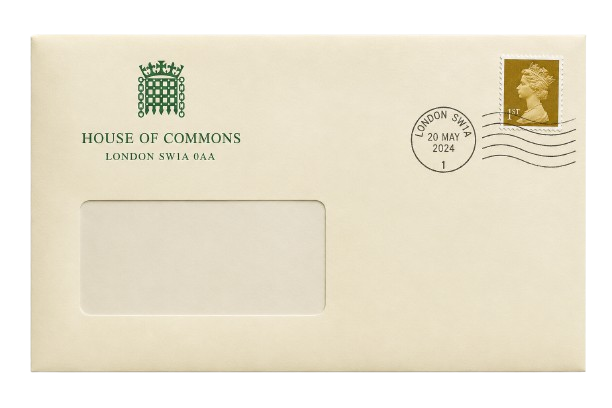
On 30 March 1979, the Conservative MP and shadow Northern Ireland secretary, Airey Neave, was assassinated when a bomb exploded in his car as he drove out of the underground House of Commons car park.
Neave, a decorated Second World War hero and a key architect of Margaret Thatcher’s rise to the Tory leadership, was fatally wounded when a mercury-tilt bomb attached to his car detonated as he drove up the exit ramp.
Responsibility for the murder was claimed by the Irish National Liberation Army (INLA), a republican-socialist paramilitary group. The INLA claimed Neave, 63, was targeted for his hardline stance on security in Northern Ireland. No one has ever been convicted for his killing.
***
The assassination came just days after the commons, by 311 votes to 310, expressed no-confidence in James Callaghan’s Labour government. Parliament was in the process of being dissolved ahead of the 1979 general election.
The commons was still sitting when the government chief whip, Michael Cocks, announced that someone had been injured. Cocks informed the House that an explosion had occurred “within the precincts of the Palace, which has involved a car and a person, as yet unidentified, who has sustained serious injuries, although the extent of these is not yet known.”
He added: “The whole House will join me in expressing the utmost abhorrence of this outrage. We have marked our condemnation by suspending the sitting. But the work of parliament must continue, and the sitting will be continued as soon as possible.”
Norman St. John-Stevas, the shadow leader of the commons, condemned the “interference with the work of the House of Commons, which is the symbol of our liberties.”
The assassination was a devastating personal blow to Thatcher as Conservative leader. Neave, a close friend and ideological ally, served as her campaign manager during the 1975 Conservative leadership election. He was widely expected to be appointed secretary of state for Northern Ireland in Thatcher’s incoming government, having written the Conservative Party’s NI manifesto commitments just hours before his assassination.
At the time, Thatcher was preparing for a party political general election broadcast at BBC headquarters. Her first thought was reportedly: “Please God, don’t let it be Airey”.
In a statement, an emotional Thatcher said that Neave was “one of freedom’s warriors.”
She added: “No one knew what a great man he was, how great a man he was, except those nearest to him.
“He was staunch, brave, true, strong. But he was very gentle, kind and loyal. It’s a rare combination of qualities. There’s no one else who can quite fill them. I, and so many other people, owe so much to him and now we must carry on for the things he fought for and not let the people who got him triumph.”
Speaking later, Thatcher said that “some devils got him and they must never, never, never be allowed to triumph, they must never prevail.” Asked if the assassination would impact her campaign, Thatcher said it would make her party “more resolute”.
***
The House of Commons paid tribute to Neave on 2 April.
Thatcher expressed her party’s “grief and horror at the contemptible assassination of a greatly esteemed colleague and, for many of us, a very dear friend.”
The Conservative leader said that Neave was “absolutely tenacious in the pursuit of everything he believed in and strong to root out injustice. In wartime his valour and courage were unsurpassed. It is partly because of men like him that we meet to assemble in this place in free debate.”
Callaghan associated himself with Thatcher’s words and condemned Neave’s assasination as a “tragic, violent and despicable murder.”
He insisted that “nothing that has happened – these violent and evil happenings – must be allowed to deflect any of us from endeavouring to secure peace and justice for all the people of Northern Ireland.”
At the 1979 general election, the Conservative Party achieved a decisive victory. The result saw Thatcher become the first female prime minister in British and European history. The Conservatives won 339 seats (up 62), securing a comfortable working majority of 43, while the Labour slumped to 269 seats (down 50). The swing of 5.2 points from Labour to the Conservatives was the largest since 1945.
On the steps of 10 Downing Street following her victory, Thatcher famously quoted St Francis of Assisi.
Thatcher remarked: “Where there is discord, may we bring harmony. Where there is error, may we bring truth. Where there is doubt, may we bring faith. And where there is despair, may we bring hope.”
She added: “And finally, one last thing: in the words of Airey Neave, whom we had hoped to bring here with us, ‘There is now work to be done’.”
In August 1979, Neave’s wife, Diana Airey, was elevated to the peerage as Baroness Airey of Abingdon.

Politics.co.uk Newsletters
DAILY
Politics@Lunch
WEEKLY
Week in Review