MPs back Brady and Spelman amendments in Brexit ‘Plan B’ votes
On 29 January 2019, the House of Commons voted on a series of amendments to a motion tabled by the prime minister, Theresa May, relating to the government’s Brexit strategy.
On 15 January, May’s Brexit withdrawal agreement suffered a catastrophic defeat in the House of Commons, in the first of three so-called “meaningful votes”. The government’s motion was rejected by 432 votes to 202 – the largest defeat for a sitting government in modern parliamentary history.
The 585-page draft withdrawal agreement, the product of protracted negotiations with European Union (EU) officials and representatives, was first published on 14 November 2018.
Opposition to May’s Brexit deal centred on the Northern Ireland backstop – the agreement’s proposed solution to the Irish border problem. The mechanism, designed to maintain an open border on the island of Ireland in any Brexit scenario, provided for a UK-wide customs union with the EU, covering all goods (except for fish). The backstop would apply indefinitely, until the UK and EU agreed on a different arrangement.
The measure, described by its proponents as an “all-weather insurance policy”, was a safety net in the event that no formal deal could be reached on trade and security arrangements. It avoided a customs border down the Irish Sea – an outcome May insisted that no prime minister “could ever agree”.
Speaking after her agreement was rejected, May conceded that the government would “listen” to the views of MPs.
The prime minister then set out a process for the government to follow. She stated the need “to confirm whether the government still enjoy the confidence of the House”. The following day, on 16 January, the House rejected Labour’s ‘no confidence’ motion by a vote of 325 to 306. Both the Democratic Unionist Party (DUP), which had voted against the agreement, and eurosceptic Conservative MPs rallied behind May.
***
On 21 January, May set out the government’s “Plan B” proposals. She stated the government’s intention to table a neutral, amendable motion as a “fulfilment of the process following the House’s decision” to reject her withdrawal agreement. The motion would provide a mechanism by which the commons could express a majority in favour of a path forwards.
On 29 January, the commons speaker, John Bercow, selected seven amendments for debate – all of which were moved by their respective MP backers.
Opening the debate, May said: “Over the past few weeks, this House has left no one in any doubt about what it does not want. It does not want to leave the EU without a deal…
“Today, we need to send an emphatic message about what we do want.”
She reiterated the government’s willingness to address the “concerns of this House over the nature of the Northern Ireland backstop”.
May added: “The fundamental concern is that what is supposed to be a temporary arrangement could in fact become permanent. The message has been unequivocal: this House wants changes to the backstop before it will back a deal.”
May said the Brady amendment would give her the “mandate I need to negotiate with Brussels an arrangement that commands a majority in this House”.
However, she warned that there was “limited appetite among our European partners” for reopening the withdrawal agreement.
***
An amendment in the name of the leader of the opposition, Jeremy Corbyn, would have required ministers to find time for parliament to consider and vote on options which prevent the UK leaving the EU without a deal.
Corbyn stated: “We are witnessing the long, slow decline of this government as they run down the clock. They put off the vote then lost the vote… using the fear of no deal as opposed to the prime minister’s deal.”
Labour’s amendment was rejected by 327 votes to 296.
A Scottish National Party (SNP) and Plaid Cymru amendment called for an extension of the Article 50 period, ruled out no deal, and stated that “the people of Scotland should not be taken out of the EU against their will”.
Ian Blackford, the SNP Westminster leader, said Scotland had been “silenced, sidelined and shafted by the Tories”.
The nationalist amendment was rejected by 327 votes to 39.
An amendment proposed by former Conservative cabinet minister and serial ‘Remain’ rebel Dominic Grieve sought to create time for MPs to vote on different options for the Brexit withdrawal process.
The amendment was rejected by 321 votes to 301.
Senior Labour backbencher Yvette Cooper tabled an amendment that would have made time for MPs to debate the EU Withdrawal Bill, and called for the Article 50 period to be extended if a deal is not agreed before 26 February.
Cooper warned that “the drift and the chasing of unicorns” could mean that the country ended up “with no deal by accident”.
Her amendment was rejected by 321 votes to 298.
An amendment proposed by Labour backbencher Rachel Reeves would have required the government to request an extension to Article 50 if the commons had not approved the deal by 26 February.
It was rejected by 322 to 290.
The most significant product of May’s neutral motion process was the passage of the so-called “Brady amendment”.
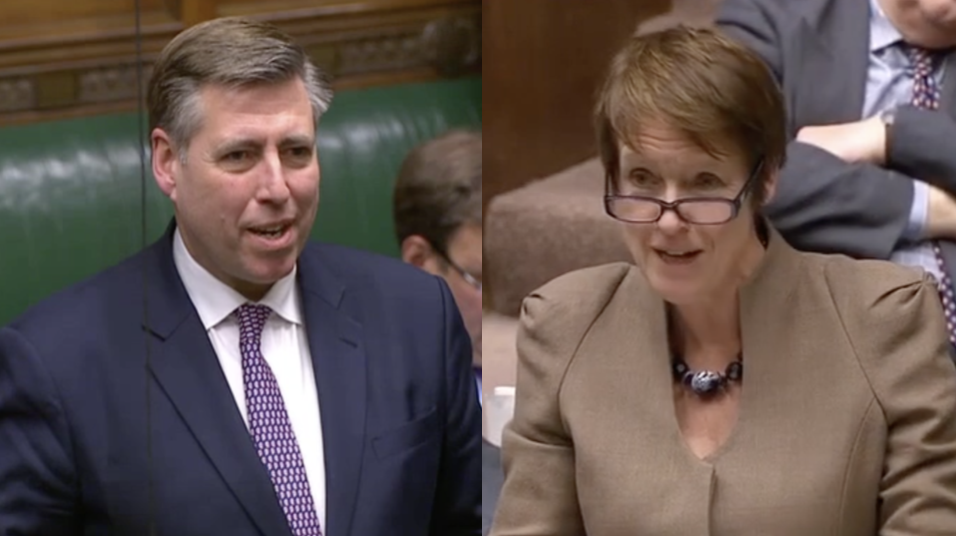
The amendment, proposed by Sir Graham Brady, the chair of the 1922 committee of Conservative, was supported by the government. It called for the Northern Ireland backstop to be replaced with “alternative arrangements to avoid a hard border [on the island of Ireland]” and expressed support for the prime minister’s withdrawal agreement “subject to this change”.
The Brady amendment passed by 317 votes to 301
In another vote, MPs backed the so-called “Spelman amendment” – tabled by Conservative MP Dame Caroline Spelman. The amendment rejected leaving the EU without a deal and was not supported by the government.
Spelman told the House: “I am a peacemaker, and I urge all parties in the House to come together in an outbreak of pragmatism and to agree a deal. To vote for my amendment commits us all to that quest.”
The Spelman amendment was backed by 318 votes to 310.
***
The motion as amended the Brady and Spelman amendments was approved by the House of Commons without division. Crucially, the two successful amendments did not possess the force of law – nor the power to alter the withdrawal agreement as agreed between the UK and EU.
In the end, six out of the seven votes went in favour of the government’s position – with the “Spelman amendment” as the exception.
Speaking after the votes, May hailed the “substantial and sustainable majority” in favour of a deal with changes to the Northern Ireland backstop.
The prime minister added: “We will now take this mandate forward and seek to obtain legally binding changes to the withdrawal agreement that deal with concerns on the backstop while guaranteeing no return to a hard border between Northern Ireland and Ireland.”
The Brady amendment, however, did not illuminate a sustainable path through the Brexit impasse.
Following the votes, the EU immediately reiterated that the withdrawal agreement was “not open for re-negotiation”.
Jean-Claude Juncker, the European commission president, stated: “The withdrawal agreement remains the best and only deal possible.
“The EU said so in November, we said so in December, we said so after the first meaningful vote in the Commons in January. The debate and votes in the commons yesterday do not change that. The withdrawal agreement will not be renegotiated.”
Simon Coveney, Ireland’s Tánaiste (deputy prime minister), responded: “We have a deal. The British government was part of that.
“It’s an extraordinary situation when a prime minister and a government negotiates a deal, and then goes back and, during the ratification process, votes against their own deal – which is what happened yesterday – and now wants to go back to their negotiating partner and change everything.
“It’s like saying: ‘Give me what I want, or I’m jumping out the window.’ We owe it to the people of Ireland, north and south: we cannot approach this negotiation on the basis of threats.”

Politics.co.uk Newsletters
DAILY
Politics@Lunch
WEEKLY
Week in Review