MPs back assisted dying bill in historic vote
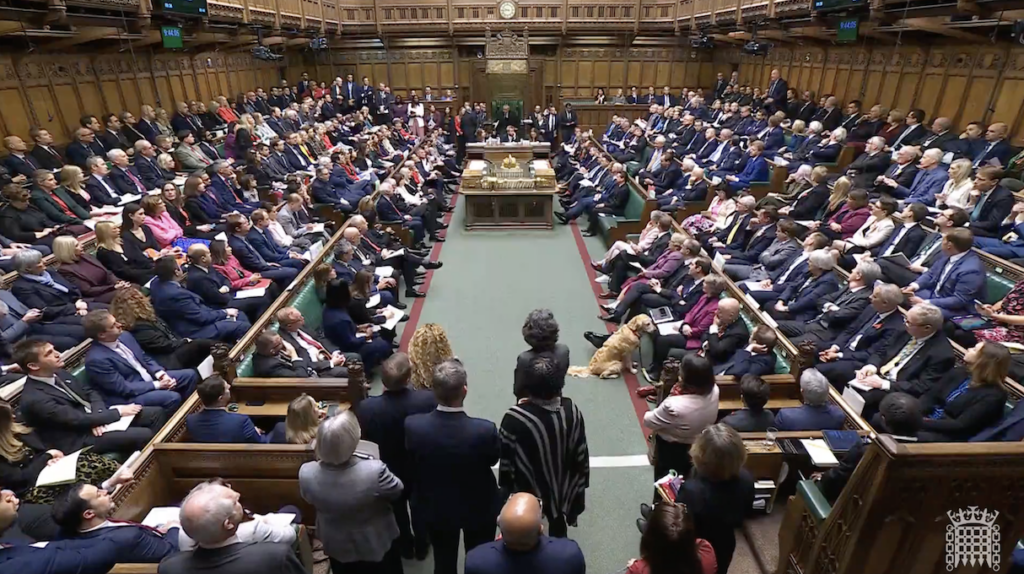
On 29 November 2024, the House of Commons voted to back the Terminally Ill Adults (End of Life) Bill. This proposed legislation, a private member’s bill introduced by Labour MP Kim Leadbeater, proposes to legalise assisted dying for terminally ill adults in England and Wales. It passed its second reading by 330 votes to 275 – a majority of 55.
The bill would allow terminally ill adults with a prognosis of six months or less to request assistance to end their own lives “subject to safeguards and protections”. The fault lines of the debate transcended party divides and collective responsibility. The bill was subject to a “free vote” as a conscience issue – meaning party leaderships did not whip their MPs into voting either in favour or against assisted dying.
***
As such, while leading parliamentarians including the prime minister, Keir Starmer, his predecessor, Rishi Sunak, and the chancellor of the exchequer, Rachel Reeves, all voted in favour – several senior cabinet ministers, including the deputy prime minister Angela Rayner, the health secretary, Wes Streeting, and the justice secretary, Shabana Mahmood, voted against.
Speaking ahead of the debate, Streeting expressed concerns about the potential burden on the NHS and ordered a review of the costs associated with assisted dying.
Kemi Badenoch, the Conservative leader, voted against the bill alongside the majority in her party.
In total, 23 Conservative MPs voted in favour at second reading, versus 92 who voted against. 234 Labour MPs voted in favour at second reading; 147 voted against.
Ed Davey, the leader of the Liberal Democrats, voted against the bill. 61 Lib Dem MPs backed the legislation, with 11 opposed.
Addressing the commons, Leadbeater said the bill was “not about people choosing between life and death”. She argued the proposed legislation was “about giving dying people with six months or less to live autonomy about how they die and the choice to shorten their deaths.”
She maintained that the current law was “failing” and that, as legislators, MPs had a “duty to do what is right to fix it.”
Leadbeater said her bill addressed “one of the most significant issues of our time – an issue that people across the country clearly want us to address, none more so than the many families who are facing the brutal and cruel reality of the status quo.”
She added: “Today is the beginning, not the end, of that process, but the debate can continue only if colleagues join me in the aye lobby today. I wholeheartedly encourage them to do so, and I commend the bill to the House.”
During the debate, the de facto opposition to the assisted dying bill was led by Danny Kruger, then a Conservative MP. He argued that it would fundamentally alter the relationship between the state and the citizen, creating a “state suicide service.”
Kruger described the proposed six-month prognosis as “arbitrary” and expressed his view that the bill’s safeguards would be eroded over time.
He referred to the “voices of those we cannot hear: the frail and elderly and the disabled”, arguing that MPs must “do better than this bill”.
Kruger added: “Let us have a debate in which we remember that we have intrinsic value; that real choice and autonomy means having access to the best care possible and the fullest control over what happens to us while we live; and that true dignity consists in being cared for to the end.”
Conservative MP Kit Malthouse, supporting the bill, described the current legal framework as condemning people to “lonely” deaths in “horrible circumstances”.
He told the House: “Whatever happens to the bill today, people with a terminal illness will still take their lives… If the bill falls today, we will be consigning those people to taking their lives in brutal, violent ways.”
Labour MP Meg Hillier, expressing her opposition to the bill, spoke of her daughter’s recovery from illness to argue. “I did not know for five days, in fact many months, whether she would live or die… But I saw what good medicine can do that palliated that pain”, she said.
Hillier urged MPs to reject the bill: “If we have a scintilla of doubt about allowing the state that power, we should vote against this today.”
Diane Abbott, the veteran Labour MP and mother of the House, was one of several contributors to the debate who raised concerns over coercion. She warned that that coercion could be undetectable by doctors or judges.
Abbott told MPs: “We are told that there is no evidence of coercion in jurisdictions where assisted suicide is possible, but people do not generally write letters to sick relatives urging them to consider assisted suicide and then put those letters on file.
“Coercion in the family context can be about not what you say but what you do not say – the long, meaningful pause.”
Andrew Mitchell, a Conservative former cabinet minister, said he had changed his mind on assisted dying and shifted his stance from opposition to strong support after hearing the testimonies of constituents. “I want this choice for my constituents”, he said. “I want it for those whom I love; and I want it, perhaps one day, for myself.”
***
The vote reflected a shift in parliamentary opinion. A similar bill providing for assisted dying was defeated in the commons at its second reading in 2015, with 330 voting against and 118 in favour.
Second reading sees MPs agree to the principle behind the proposed legislation. Leadbeater’s bill, having secured its second reading, proceeded to committee stage.
The bill was subjected to detailed scrutiny in a public bill committee; accounting for the contentious nature of the legislation, the committee stage was unusually prolonged and, in an unprecedented step, heard evidence from witnesses. The public bill committee of 18 cross-party MPs, holding a range of views on assisted dying, sat for almost 90 hours of debate across 29 sittings between 21 January 2025 and 25 March 2025.
Over three days of evidence sessions, from 28 January to 30 January, over 50 expert witnesses gave testimony.
In total, 29 amendments to the bill were considered. A significant change came as MPs changed the previous provision which said applications for assisted dying would be subject to the approval of two doctors and a high court judge. Under the amended bill, applicants’ submissions would be considered by a multi-disciplinary “assisted dying review panel”, consisting of a senior legal figure, a consultant psychiatrist, and a social worker. The requirement for two doctors to approve the request first remains in place.
This change was tabled by Leadbeater, the sponsor of the bill
The commencement period was also increased from two years to four years in England.
The amended bill returned to the commons for its report stage and third reading in June 2025, where it passed by a narrower margin of 23 votes (314 votes to 291). In total, research has found that 56 MPs changed their position between the assisted dying bill’s second and third reading.
14 MPs went from in favour to against, while one MP, Labour’s Jack Abbott, went from against to in favour. 15 went from in favour to abstaining. Of the 20 MPs who abstained at second reading, 10 voted in favour at third reading, and 10 voted against.

Politics.co.uk Newsletters
DAILY
Politics@Lunch
WEEKLY
Week in Review
