Independent Labour Party founded in Bradford
On 13 January 1893, a conference of delegates from socialist societies, trade unions and local labour groups gathered in Bradford to form the Independent Labour Party (ILP).
The new party was formed in an atmosphere of growing disillusionment with the Liberal Party, which many in the labour movement felt was failing to adequately represent working-class interests in parliament.
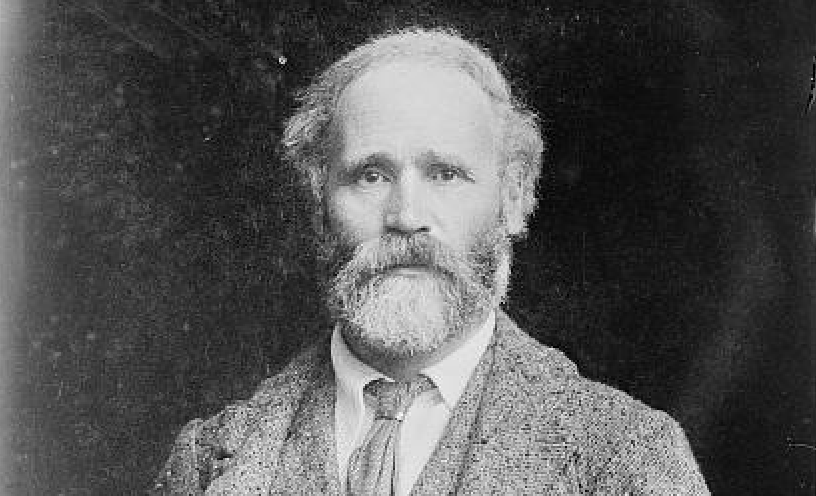
The conference was attended by around 120 delegates, including the trade unionist Ben Tillett, the journalist Robert Blatchford, Karl Marx’s son-in-law Edward Aveling, author George Bernard Shaw, and German Socialist leader Edward Bernstein. Keir Hardie, who had won a seat in parliament as the independent MP for West Ham South the previous year, was elected its first chairman.
Hardie, alongside two other independent candidates (John Burns in Battersea and Havelock Wilson in Middlesbrough), was first elected to parliament in 1892. Hardie and Burns were elected with the support of the Liberal Party.
The ILP’s programme was explicitly socialist, with its primary objective being “to secure the collective ownership of the means of production, distribution and exchange”.
Katharine Glasier, a founder member of the ILP who won election to its National Administrative Council, wrote in her diary: “On January 13th, 1893, the Independent Labour Party sprang into being, and, as a child of the spirit of Liberty, claims every song that she has sung – in whatever land – as a glorious heritage. Life, lover, liberty, and labour make liquid music.
“The Labour Party is in league with life, and works for liberty that man may live. The Socialist creed of the ‘One body’ is a declaration that liberty grows with love, and that therefore life is love’s child.”
The 1895 general election marked the first challenge for the ILP.
It fielded 28 candidates but failed to win any seats. Ramsay MacDonald, the future Labour prime minister, fought his first parliamentary election in Southampton. He won just 867 votes (4%) and finished fifth – in last place. Hardie, meanwhile, lost his seat after three years as MP for West Ham.
In total, the party won 44,325 votes.
The party would help found the Labour Representation Committee (LRC ) in 1900, the forerunner of the modern Labour Party.
The LRC was formed after a special congress of 126 delegates, meeting on 27 February 1900, passed Hardie’s motion to establish “a distinct Labour group in Parliament, who shall have their own whips, and agree upon their policy, which must embrace a readiness to cooperate with any party which for the time being may be engaged in promoting legislation in the direct interests of labour.”
The LRC was effectively a federal body, uniting the financial and organisational power of the trade unions, the intellectual heft of the Fabian Society and the activist base of the ILP – among other socialist groupings.
Ramsay MacDonald was elected as the committee’s first secretary.
In 1906, having secured 29 MPs at the recent general election, the LRC was reconstituted as the Labour Party and Hardie was narrowly elected as its chairman.
The ILP immediately affiliated with the Labour Party.
By the end of 1910, there were 42 Labour MPs.

Politics.co.uk Newsletters
DAILY
Politics@Lunch
WEEKLY
Week in Review