Gordon Brown signs Lisbon Treaty after skipping official gathering
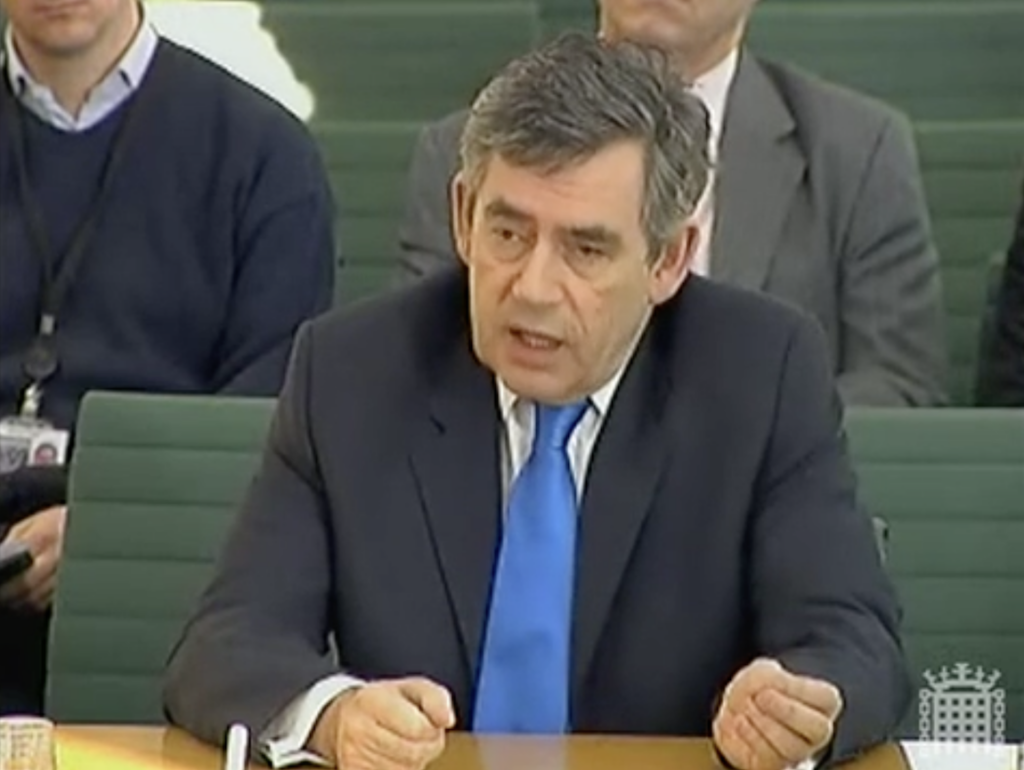
On 13 December 2007, Gordon Brown formally signed the Treaty of Lisbon – committing the United Kingdom to the European Union’s reformed constitutional framework. However, the event was overshadowed by the dire diplomatic choreography as Brown arrived two hours late. The British prime minister was the only one of the 27 national leaders to miss the official televised signing ceremony.
The treaty was a controversial and contested document in and of itself. Labour’s 2005 general election manifesto had featured a pledge to hold a referendum on the proposed, but later discarded, EU constitution.
The manifesto stated: “It is a good treaty for Britain and for the new Europe. We will put it to the British people in a referendum and campaign whole-heartedly for a ‘Yes’ vote to keep Britain a leading nation in Europe.”
However, after French and Dutch voters rejected that text in 2005, the proposed EU constitution was repackaged as the Reform Treaty (later the Lisbon Treaty).
The 250-page treaty overhauled the EU’s institutional architecture. It created a permanent president of the European Council, a high representative for foreign affairs, empowered the European parliament, and embraced qualified majority voting in the Council of Ministers, as opposed to unanimity. The treaty also made the EU’s bill of rights, the Charter of Fundamental Rights, legally binding.
***
In a commons statement on the new treaty, Brown suggested that there was no need for a referendum as the “constitutional concept” set out in the original European constitution had been abandoned in the Lisbon treaty.
Addressing MPs on 22 October 2007, he said that parliament would “have the opportunity to debate this amending treaty in detail and decide whether to ratify it.”
Brown insisted he had secured legally binding “red lines” to protect British sovereignty. He cited a “legally binding opt-in on all justice and home affairs measures”.
The distinction between EU constitution and amending treaty was the subject of some debate. David Cameron, the Conservative leader of the opposition, responded by quoting European leaders who appeared to contradict Brown’s position.
Cameron declared: “The Irish prime minister says that it is 90% the same. The Spanish foreign minister says that it is 98%. The German chancellor says: ‘The substance of the constitution is preserved’.
He added: “Why does the prime minister think all of them are wrong and he is right?”
Cameron argued that Brown was “breaking one of the most important manifesto commitments of all.”
The Conservative leader said: “He has absolutely no democratic mandate to sign this treaty without a referendum. If he breaks his trust with the British people, they will rightly say, ‘How can we ever trust him on anything else again?’”
The Liberal Democrats, with Vince Cable standing in as interim leader, urged Brown to “come out of his bunker” and hold a referendum on EU membership itself. Cable argued that the public “should decide whether Britain should remain a committed member of the European Union”.
He said the time had come for “consultation with the British public on the cumulative effect” of past treaties.
***
As the symbolic signing date approached – with the government suffering in the polls – Brown appeared somewhat reluctant to be associated with the “amending treaty”. It was announced that he would not attend the televised signing ceremony alongside the other 26 national leaders because of a “diary clash”.
The “clash” pertained to Brown’s appearance before the liaison committee of senior cross-party MPs. The session was reportedly agreed after the signing date became known.
On the morning of 13 December, Brown made his first appearance at the liaison committee as prime minister. He opened with a joke, telling the assembled MPs: “I think you can see the priority I attach to attending this committee.”
Meanwhile, in Lisbon, 26 heads of state and government gathered at the 16th-century Jerónimos Monastery to sign the treaty amid orchestral music and europhile fanfare. The foreign secretary, David Miliband, was tasked with standing in for Brown.
At one point, Miliband reportedly checked his watch and assured the Portuguese prime minister, José Sócrates, that “he’s coming.”
Brown finally flew to Lisbon more than two hours late, arriving as the other leaders were finishing a celebratory lunch. By the time he arrived, many of the other leaders – including German chancellor Angela Merkel and Italian prime minister Romano Prodi – had already left. Brown was ushered into a side room, where, flanked by Miliband, he signed the document.
Brown’s attitude was generally seen as “sulky”.
A senior EU diplomat, speaking anonymously, described the reaction in Brussels as a mix of “mirth”, “horror” and “pity”.
They stated: “[Brown has] ended up with the worst of all worlds… To anti-Europeans he’s simply run away and accepted the signing of the treaty, to pro-Europeans he has simply refused to stand his ground and fight, and for the rest he has opted out.
“His reputation in Europe among heads of government is hanging by a thread. He has no position in Europe, he occupies no ground. If he wants to send a Euro-signal that he’s indecisive, he’s just sent it.”
William Hague, the shadow foreign secretary, branded Brown’s behaviour as “gutless”.
Hague told BBC News: “If he believes this treaty is the right thing for the country then he ought to have the guts to go to the actual signing ceremony…
“Does he think that other European prime ministers don’t have diary commitments, too? Instead of leadership we have indecision, gutlessness and broken election promises. Britain deserves better.”
Kenneth Clarke, the europhile former chancellor, said Brown’s “stunt” proved he was “not very good at international diplomacy”. The veteran Conservative MP accused the PM of “behaving rather childishly”.
Chris Huhne, a candidate in the 2007 Liberal Democrat leadership contest, condemned the “inept and peevish behaviour that leaves Gordon Brown’s reputation for honest dealing with our EU partners hanging by a thread”.
Nigel Farage, the UK Independence Party (Ukip) leader and MEP, said: “This is just about the most thoroughly dishonest political process I have ever been witness to.
“This is a constitutional treaty with profound, far-reaching implications and for the British government to pretend it is something it isn’t and deny us a referendum is monstrous.”
EU trade commissioner Peter Mandelson suggested Brown should have made the case for the EU more positively. “In politics you don’t win an argument by putting yourself on the back foot”, he said.
“If you have a case you make it confidently, you present it with conviction.”
Asked repeatedly about Brown’s late-show in Lisbon, the PM’s official spokesman said it was all a “fuss about nothing” that “did not matter to the average person.”
The Lisbon Treaty was ratified by parliament in July 2008.
Politics.co.uk Newsletters
DAILY
Politics@Lunch
WEEKLY
Week in Review