Four regicides executed at Charing Cross by restored monarchy
On 17 October 1660, four men who had signed the death warrant of King Charles I were executed at Charing Cross, London. The executions of these regicides – Thomas Scot, Gregory Clement, John Jones Maesygarnedd, and Adrian Scrope – were a central feature of the political settlement following the return of King Charles II.
***
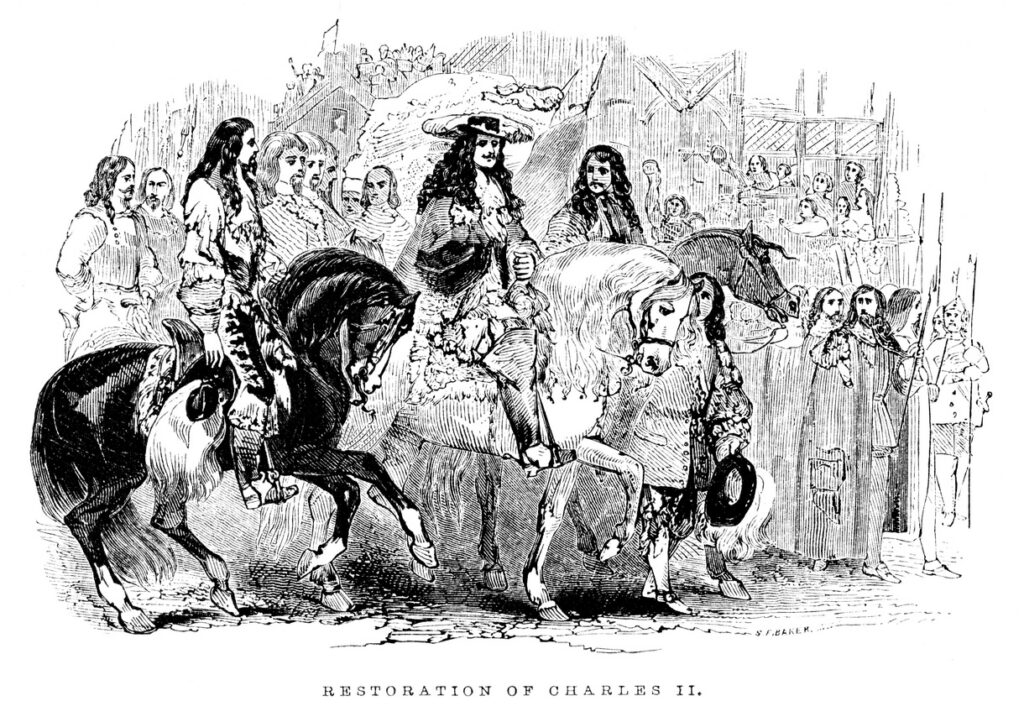
The Stuart monarchy was restored on 8 May 1660. After eleven years of republican rule under the Commonwealth and Protectorate, the Convention Parliament proclaimed that King Charles II had been the lawful monarch since the execution of Charles I in January 1649.
The Restoration regime granted a general amnesty for treasonous acts under Indemnity and Oblivion Act, with the notable exemption of Charles I’s “regicides” – those deemed to have directly participated in or sanctioned his execution in 1649.
A previous proclamation by Charles II, issued on 6 June 1660, stated that the 1649 execution was the “most horrid and execrable Treason and Murder committed on the Person, and against the Life, Crown and Dignity of Our Late Royal father Charles the First of Blessed Memory.” The king commanded that the named regicides should “personally appear and tender themselves” under pain of being excepted from pardon.
The regicides were rounded up from their places of hiding, and a court was convened to try them for treason.
The first of a series of executions took place between 13 and 19 October 1660. Thomas Harrison was the first to be executed on the 13th.
The condemned men were hanged, drawn and quartered.
On 17 October, addressing spectators from the scaffold, an unrepentant Thomas Scot stated: “I say again; to the Praise of the Free Grace of God; I bless His name He hath engaged me in a Cause, not to be Repented of, I say, Not to be Repented of.”
The diarist John Evelyn wrote of the killing that took place on 17 October: “I saw not their execution, but met their quarters, mangled and cut and reeking as they were brought from the gallows in baskets on the hurdle.”
Charles II thus exacted his revenge on those he held responsible for his father’s execution. The executions also re-enforced the Restoration narrative that the killing of a king was an unthinkable crime against God and state, consolidating the new regime’s legitimacy.
***
Some months later in January 1661, the bodies of prominent regicides Oliver Cromwell, Henry Ireton, and John Bradshaw (the president of the court that tried Charles I), who had been interred in Westminster Abbey, were exhumed under parliament’s orders.
The corpses were brought to Tyburn, where they were posthumously executed. Their heads were displayed on the roof of Westminster Hall, the scene of Charles I’s execution and trial.
Charles II was crowned king at Westminster Abbey on 23 April 23 1661.

Politics.co.uk Newsletters
DAILY
Politics@Lunch
WEEKLY
Week in Review