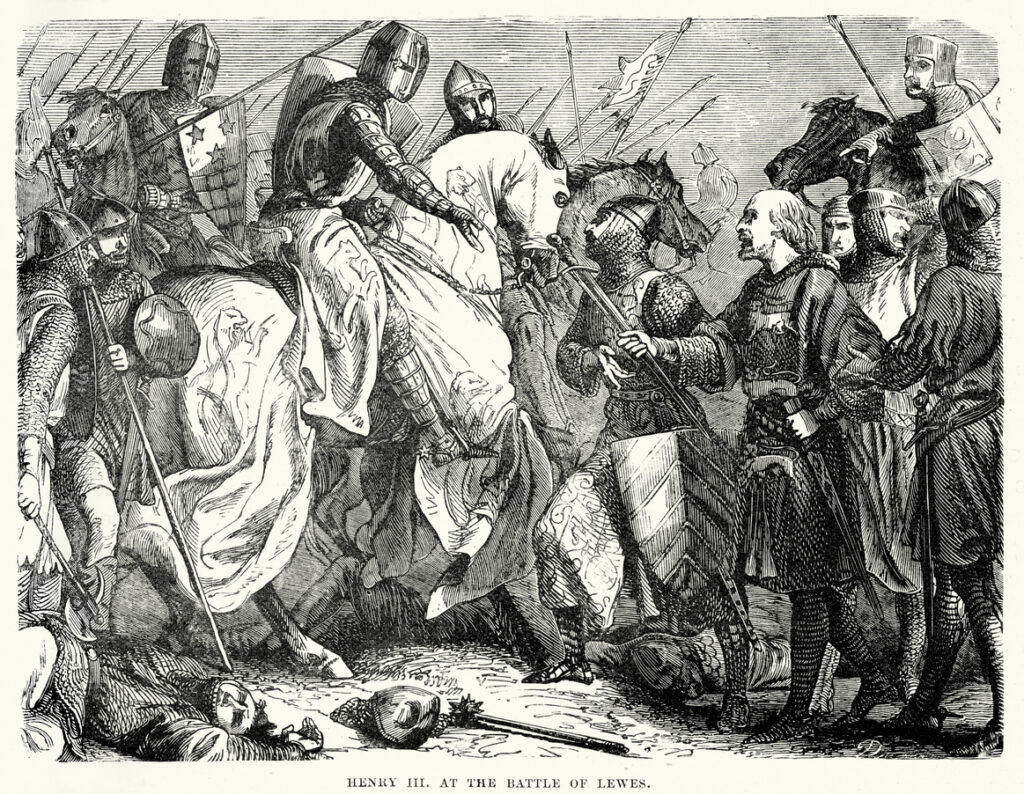
A parliament summoned by the rebel baron Simon de Montfort assembled at the Palace of Westminster on 20 January 1265.
This gathering is considered a crucial moment in the development of parliamentary democracy in Britain and is sometimes referred to as “the House of Commons in embryo”.
The parliament sat from 20 January until 11 March.
Montfort was an English nobleman of French origin who led the baronial opposition to the rule of King Henry III of England. Having defeated and captured King Henry at the Battle of Lewes in May 1264, he summoned an assembly to consolidate his authority over the kingdom. For the first time, in addition to the great barons and senior clergy, knights of the shires and, crucially, from the towns (burgesses) were commanded to attend.
Montfort, cognisant of his regime’s lack of legitimacy, wanted to build as wide a base as possible for his regime. He thereby required every major town to send two representatives to this assembly. This later became known as the “summoning of the commons”.
De Montfort’s gathering was not the first English parliament, but its composition marked it out as unprecedented.
Montfort’s tenure as de facto ruler of England was short-lived. He was defeated at the Battle of Evesham on 4 August 1265. Montfort was mutilated and dismembered.
The model of including a “commons” to grant consent to the ruler was later adopted by King Edward I, Henry’s son, with his Model Parliament.