Dominic Cummings calls for ‘weirdos and misfits’ to join No 10
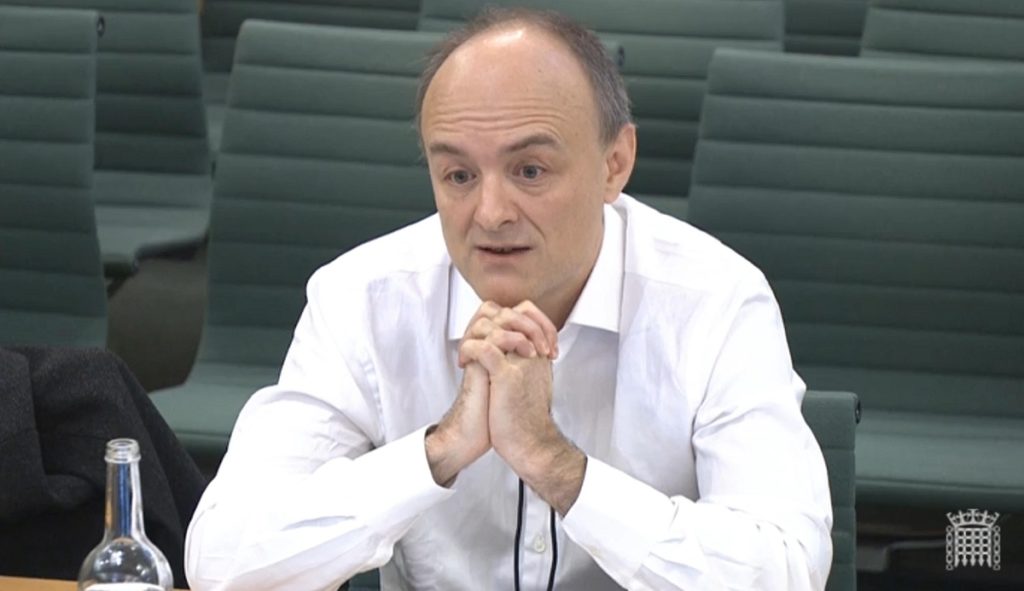
On 2 January 2020, Dominic Cummings, the chief adviser to the prime minister Boris Johnson, published a lengthy blog post calling for “weirdos and misfits with odd skills” to apply for jobs in 10 Downing Street.
In the post, which ran to nearly 3,000 words, Cummings wrote that he wanted to bring in “super-talented weirdos” with “genuine cognitive diversity”. He advertised for data scientists, software developers, economists and policy experts, alongside those he termed “true wild cards, artists, people who never went to university and fought their way out of an appalling hell hole”.
Cummings argued that the “confluence” of Brexit and the large Conservative majority delivered by the 2019 general election created a unique opportunity for a radical overhaul.
He derided “confident public school bluffers” and “Oxbridge English graduates who chat about Lacan at dinner parties with TV producers and spread fake news about fake news”, arguing that Westminster-dwellers “talk a lot about ‘diversity’ but they rarely mean ‘true cognitive diversity’”.
He added: “They are usually babbling about ‘gender identity diversity blah blah’.
“What SW1 needs is not more drivel about ‘identity’ and ‘diversity’ from Oxbridge humanities graduates but more genuine cognitive diversity.”
Cummings declared: “We want to hire an unusual set of people with different skills and backgrounds to work in Downing Street with the best officials, some as spads [special advisers] and perhaps some as officials.
“If you are already an official and you read this blog and think you fit one of these categories, get in touch.”
The prime minister’s chief adviser concluded by paraphrasing Paul Graham and Peter Thiel, writing: “most ideas that seem bad are bad but great ideas also seem at first like bad ideas – otherwise someone would have already done them.”
Referring to his blog activities, Cummings added: “It is all upside, there’s no downside if you don’t mind a bit of noise and it’s a fast cheap way to find good ideas.”
***
Cummings was an integral and controversial staple of Boris Johnson’s inner circle during this period.
The ‘Vote Leave’ supremo had masterminded the official campaign during the 2016 referendum on Britain’s membership of the European Union (EU). He was subsequently seen as crucial force in the government’s decision to advise Queen Elizabeth II to prorogue parliament in August 2019, at the height of the parliamentary impasse of Brexit.
In February 2020, Johnson’s first major cabinet reshuffle since the 2019 general election resulted in the resignation of Sajid Javid as chancellor. Javid had been ordered to dismiss his entire team of special advisers and replace them with ones selected by 10 Downing Street.
The ultimatum was widely seen as an attempt by Cummings to diminish the Treasury’s traditional independence and political influence. Following his departure, Javid said the conditions were something “I don’t believe any self-respecting minister would accept and so I felt I was left with no option other than to resign.”
The ultimatum came after Cummings dismissed Javid aide Sonia Khan without informing the chancellor – an episode which played out in August 2019.
Javid was swiftly replaced as chancellor by his deputy, chief secretary to the Treasury Rishi Sunak, who was considered to be a Johnson loyalist.
***
In late March 2020, reports revealed that Cummings had driven 260 miles from London to his parents’ farm near Durham with his family, while his wife had Covid-19 symptoms. During their stay, he also made a 60-mile round trip to the town of Barnard Castle, which he claimed was to test his eyesight before the long drive back to London.
These journeys were in apparent breach of the government’s own strict ‘stay at home’ guidance. The prime minister, Boris Johnson, stood by his adviser. This prompted a fierce political backlash – with widespread anger that there appeared to be one rule for senior government figures and another for the public.
Steve Baker, the chair of the influential European Research Group (ERG) of eurosceptic Conservative MPs, said: “The country can’t afford this nonsense, this pantomime, Dominic should go and we should move on and deal with things that matter in people’s lives.”
Jeremy Hunt, the former cabinet minister, claimed that Cummings had breached the lockdown rules on three occasions: upon returning to work after he spent time with his wife when she was ill, and in visiting both Durham and Barnard Castle.
Cummings held an extraordinary press conference in the Downing Street rose garden to defend his actions.
During the press conference, Cummings offered no apology and insisted he had acted “reasonably and legally”. He argued that there was “no regulation covering the situation I found myself in”.
Cummings said: “I don’t regret what I did… I think what I did was actually reasonable in these circumstances. The rules made clear that if you are dealing with small children that can be exceptional circumstances.”
He added: “I don’t think I’m so different, and I don’t think there’s one rule for me and one rule for other people… there is no regulation covering the situation I found myself in.”
Cummings, seen as a key architect of Johnson’s 2019 ‘Get Brexit Done’ general election victory, ultimately departed Downing Street in November 2020 – the culmination of a protracted power struggle between him and other members of the prime minister’s inner circle.

Politics.co.uk Newsletters
DAILY
Politics@Lunch
WEEKLY
Week in Review