Disraeli becomes prime minister for a second time
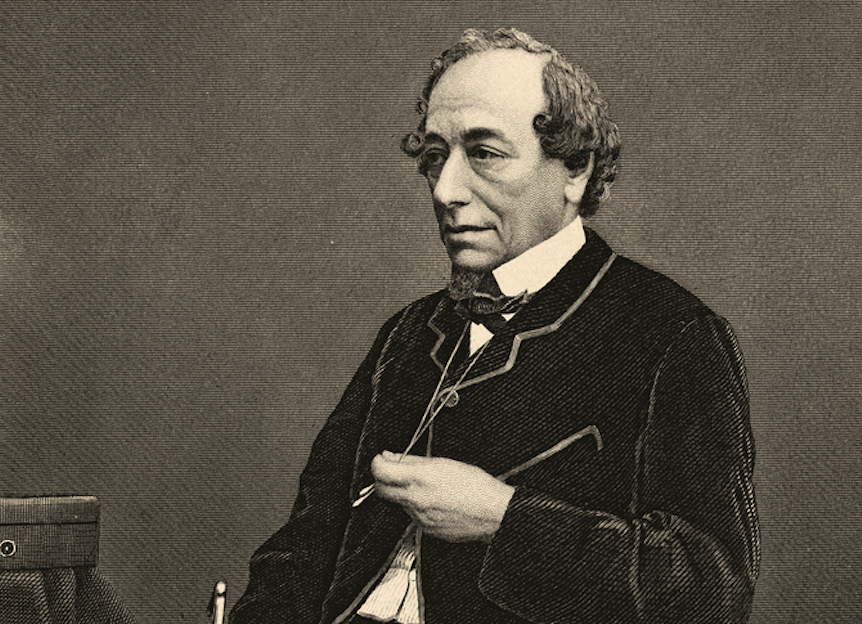
On 20 February 1874, Benjamin Disraeli was appointed prime minister by Queen Victoria, beginning his second and most significant period in office.
The appointment followed the Conservative party’s decisive victory over William Gladstone’s Liberals in the recent general election, which gave the party its first overall majority since 1841. The Conservatives under Disraeli’s leadership secured 350 commons seats.
This was the first time Disraeli had commanded a majority in the House of Commons. His previous, brief tenure as prime minister in 1868 had been as head of a minority government. Now aged 70, he finally had a secure mandate to govern.
***
Disraeli’s second ministry, which lasted six years, was defined by a twin-track policy of domestic social reform and an assertive, expansionist foreign policy. At home, his government passed landmark legislation, including the Public Health Act 1875, which codified sanitation laws; the 1875 Climbing Boys Act, which reinforced the ban on employing juvenile chimney sweeps; the Factory Act 1874, which raised the minimum working age to nine and limited the working day for women and young people in textile factories to 10 hours; and the Conspiracy, and Protection of Property Act 1875, which together with the Employers and Workmen Act 1875, fully decriminalised the work of trade unions.
Commenting on the impact of these reforms, early Liberal-Labour MP Alexander Macdonald told his constituents in 1879 that the Conservative Party had “done more for the working classes in five years than the Liberals have in fifty.”
An early Fabian Society paper, meanwhile, referred to Disraeli’s domestic programme as “Tory socialism”.
In foreign affairs, his standout achievement was the surprise purchase of a significant stake in the Suez Canal in 1875.
The Royal Titles Act 1876, meanwhile, conferred the title of Empress of India upon Queen Victoria, reflecting Disraeli’s close personal and political relationship with the monarch.
The latter part of Disraeli’s premiership was dominated by the so-called “Eastern question” – the general European response to the waning power of the Ottoman Empire in the Balkans. Disraeli and his foreign secretary, Lord Salisbury, attended the 1878 Congress of Berlin, which aimed to settle affairs in the Balkans and curb the Russian Empire’s influence in the region.
Disraeli was said to have charmed German chancellor Otto von Bismarck, who remarked: “Der alte Jude: das ist der Mann” (The old Jew, that is the man). Disraeli is the only British prime minister to have been born Jewish.
The congress resulted in the Treaty of Berlin.
Upon returning to Britain, Disraeli said: “Lord Salisbury and myself have brought you back peace – but a peace I hope with honour, which may satisfy our sovereign and tend to the welfare of our country.”
***
Disraeli was made Earl of Beaconsfield by Victoria in 1879, and therefore governed from the House of Lords until the 1880 general election. The result of that election, won by Gladstone’s Liberals, led to Disraeli’s resignation on 21 April 1880.
Disraeli died from bronchitis on 19 April 1881.

Politics.co.uk Newsletters
DAILY
Politics@Lunch
WEEKLY
Week in Review
