Chief whip Andrew Mitchell resigns over ‘Plebgate’
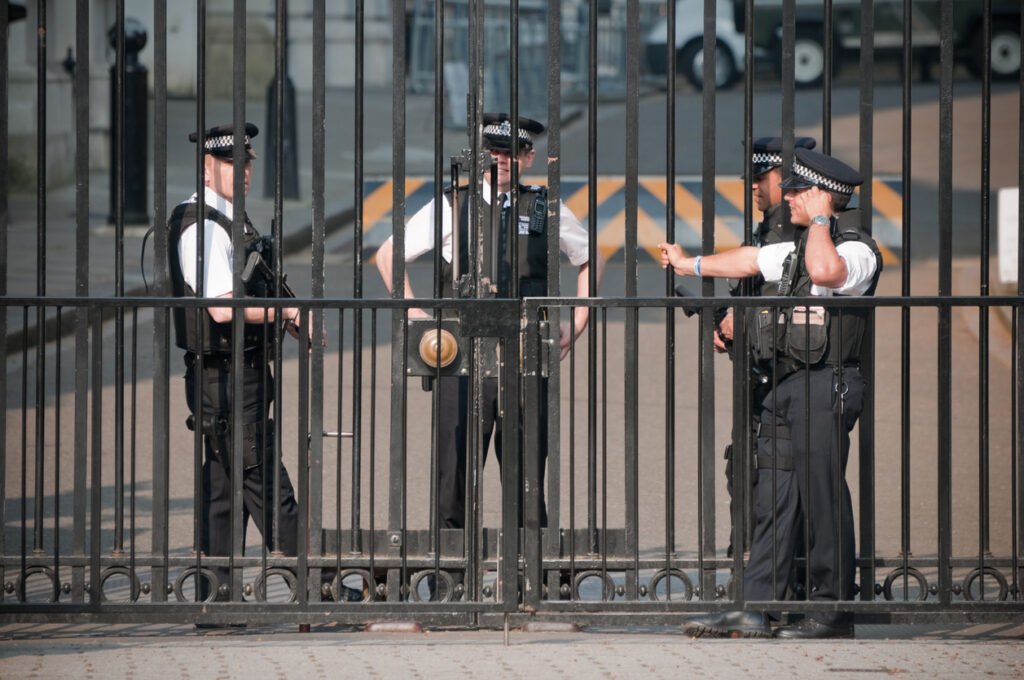
Andrew Mitchell resigned as government chief whip on 19 October 2012, abandoning a month-long battle to save his job. Mitchell’s resignation represented the latest development in a long-running saga dubbed “Plebgate”.
The controversy stemmed from an apparent altercation between the senior Conservative and police officers outside the main gates of Downing Street on 19 September 2012. Having attempted to cycle out of Downing Street, Mitchell was refused permission by the police officers on duty, who referred him to the adjacent pedestrian gate instead.
An angry verbal exchange is said to have followed. A police log detailing the incident was leaked to the Sun, which reported that Mitchell had sworn at officers and told them to know their “f***ing place”. The report alleged that Mitchell had used the pejorative term “pleb” to describe the police officers.
***
Mitchell publicly apologised for using inappropriate language, but vehemently and repeatedly denied using the word “pleb”.
In a statement on 21 September, he said: “While I do not accept that I used any of the words that have been reported, I accept I did not treat the police with the respect they deserve.
“I have seen the supervising sergeant and apologised, and will also apologise to the police officer involved.”
Criticism of Mitchell’s initial apology prompted a second statement, in which he admitted losing his temper after a “long and extremely frustrating day”.
He added: “I am very clear about what I said and what I did not say. I want to make it absolutely clear that I did not use the words that have been attributed to me.
“I’m now going to go in and get on with my work.”
Michael Gove, the education secretary, referred to Mitchell’s reported outburst as a moment of “very human exasperation”. The opposition parties, however, together with police representatives and the media, maintained a relentless focus on the perceived elitism of the episode.
The government and Conservative Party, led by David Cameron as prime minister, were politically exposed to allegations of elitism.
Mitchell resigned a month after reports emerged of the incident. In his letter addressed to Cameron, he wrote that “whatever the rights and wrongs of the matter I will not be able to fulfil my duties as we both would wish.”
Mitchell reiterated: “I have made clear to you – and I give you my categorical assurance again – that I did not, never have, and never would call a police officer a ‘pleb’ or a ‘moron’ or used any of the other pejorative descriptions attributed to me.”
He added: “The offending comment and the reason for my apology to the police was my parting remark ‘I thought you guys were supposed to f***ing help us’.”
George Young, the former leader of the House of Commons, was appointed as the new chief whip.
Mitchell’s resignation followed a tense session of prime minister’s questions, in which Labour leader Ed Miliband majored on Plebgate (also referred to as “Gategate”).
Miliband said that if a “yob in a city centre” spoke to a police officer in the way Mitchell was alleged to have done, “the chances are they would be arrested and placed in the back of a police van – and rightly so.”
He added: “The prime minister would be first in the queue to say it was right. But while it’s a night in the cell for the yob, it’s a night at the Carlton Club for the chief whip. Isn’t that the clearest case there could be of total double standards?”
***
Plebgate, however, did not end with Mitchell’s resignation. The Metropolitan Police later launched an investigation, known as ‘Operation Alice’, after questions arose about the authenticity of the police log and subsequent corroborating evidence. This included an email supposedly sent by a member of the public, which was later revealed to have been sent by a police officer who had not been present.
One officer, PC Keith Wallis, was sentenced to 12 months in prison for misconduct in public office for falsely claiming to have witnessed the altercation.
The Metropolitan Police commissioner, Sir Bernard Hogan-Howe, apologised to Mitchell that an “officer clearly lied about seeing him behaving in a certain manner.”
In total, seven police officers were found to have committed misconduct in relation to Plebgate.
Mitchell sued News Group Newspapers for libel in 2014 over the Sun newspaper’s Plebgate coverage.
The presiding judge ruled that “at least on the balance of probabilities… Mr Mitchell did speak the words attributed to him, or so close to them as to amount to the same, the politically toxic word pleb.”
Responding to the verdict, Mitchell said: “Obviously I am bitterly disappointed by the result of the judgment today.
“This has been a miserable two years but we now need to bring this matter to a close and move on with our lives.”
Mitchell returned to government as international development minister in October 2022, serving for the duration of Rishi Sunak’s government. In April 2024, he took on the title of deputy foreign secretary.
In this capacity, Mitchell deputised in the House of Commons for the newly ennobled Lord (David) Cameron.
Andrew Mitchell on aid, rebellion and not telling the Treasury

Politics.co.uk Newsletters
DAILY
Politics@Lunch
WEEKLY
Week in Review
