Chartists present mass petition for political reform to parliament
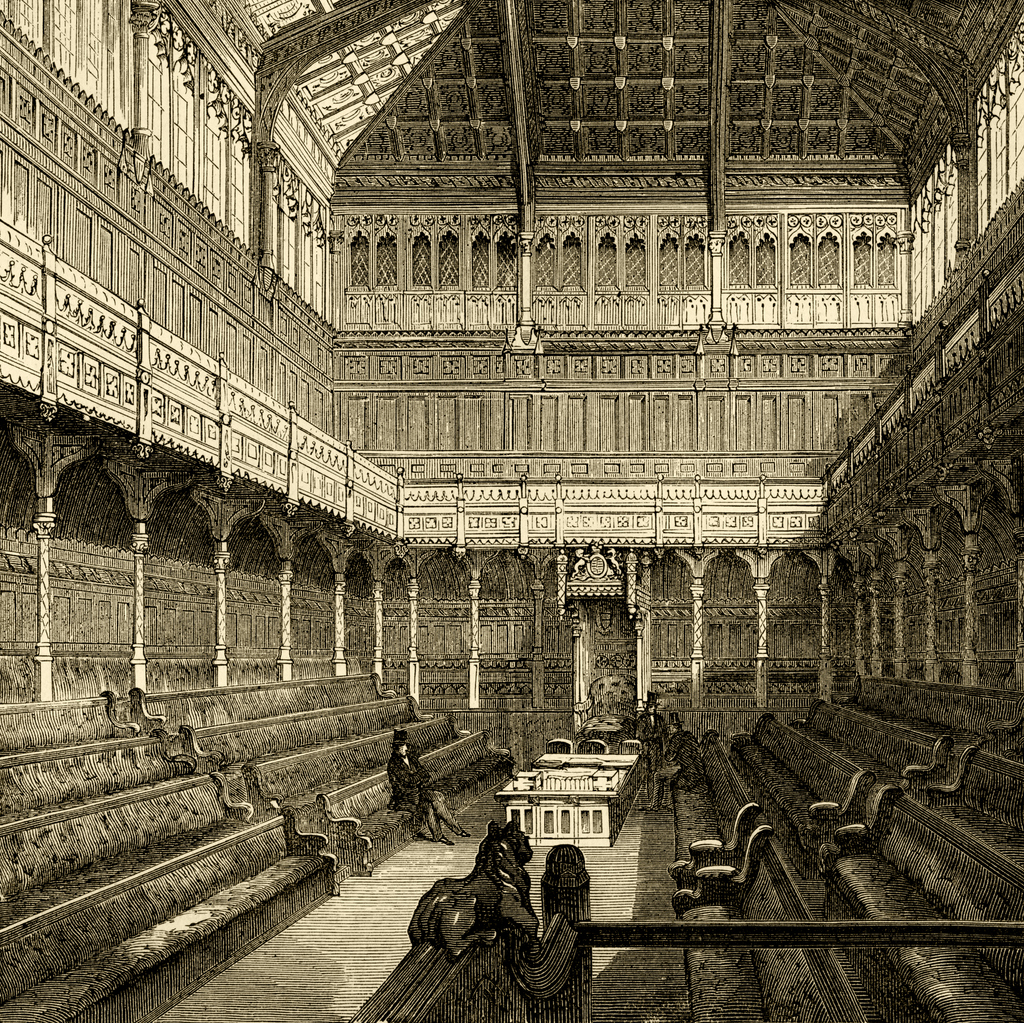
On 14 June 1839, the first national Chartist petition, a document calling for radical democratic reform, was presented to the House of Commons by the Birmingham MP, Thomas Attwood. The petition, which was almost three miles long, contained the signatures of 1,280,958 people from across the country.
The episode represented the first great act of the Chartist movement.
***
The presentation was co-ordinated by a National Convention of Chartist delegates which had assembled in London earlier that year. The Convention saw itself as a rival parliament, and its members used the title ‘MC’ for Member of Convention. The petition’s demands were drawn from the six points of the People’s Charter:
- Universal suffrage for all men over 21
- The secret ballot
- An end to property qualifications for MPs
- Payment for MPs
- Equal-sized constituencies
- Annual parliamentary elections.
The charter, published on 8 May 1838, had originally been drawn up by six radical MPs and six members of the London Working Men’s Association (LWMA). It embodied the anger felt by those who had been excluded by the Great Reform Act of 1832. The 1833 Factory Act and 1834 Poor Law Amendment Act strengthened the feeling of disillusionment.
The petition stated: “It was the fond expectation of the people that a remedy for the greater part, if not for the whole, of their grievances, would be found in the Reform Act of 1832…
“They have been bitterly and basely deceived.
“The fruit which looked so fair to the eye has turned to dust and ashes when gathered. The Reform Act has effected a transfer of power from one domineering faction to another, and left the people as helpless as before.”
It added: “If the self-government of the people should not remove their distresses, it will at least remove their repinings.
“Universal suffrage will, and it alone can, bring true and lasting peace to the nation; we firmly believe that it will also bring prosperity.”
On 12 July, Attwood addressed the House of Commons, calling for a parliamentary committee to consider the petition.
Attwood argued that the petition “was produced by the long sufferings, the injuries, the wrongs, the distress of the working classes of the people – not only of the working classes, but of the merchants, the manufacturers, the tradesmen, the farmers, and the labouring classes of England generally.”
Attwood’s Birmingham Political Union had played a key role in agitating for the 1832 Reform Act, but he portrayed the petition as a direct consequence of its deficiencies – and its failure to improve the condition of the people. He questioned the “fruits of the Reform Bill”, referencing the New Poor Law Bill – which he described as “more odious than any measure which had been passed since the Norman conquest”.
Attwood deprecated the use violence, but insisted that “1,200,000 hearts that felt, and 1,200,000 heads that thought, ought not to be disregarded. Nothing would satisfy them but some large and generous measure.”
He referenced the French Revolution of 1789 and warned of the eruption of a “social volcano”.
The pro-petition case was vociferously opposed by Lord John Russell, the Whig home secretary and principal force behind the Great Reform Act.
Russell welcomed Attwood’s condemnation of “those who have recommended the use of arms and physical force”. But he contrasted this position with other Chartist leaders, who have used “the most violent and revolutionary language – language not exceeded in violence and atrocity in the worst times of the French Revolution”.
He argued that the Charter did not represent “the sentiments and opinions of the people at large”.
Russell told the House: “In my opinion, the great majority of the people do not seek the objects contained in this petition.
“In my belief, the great majority of the people… would be alarmed at the prospect of the prayer of this petition being granted by the House.”
MPs voted by 235 to 46 not to consider the petitioners’ grievances.
Benjamin Disraeli, the future Conservative prime minister, expressed cautious support for Attwood’s position. He argued that if the Whig government “persisted in their present system of cheap and centralised government, they would endanger not only the national character but also the national throne.”
***
The rejection of the petition marked a crucial turning point for the Chartist movement. It precipitated divisions between the “moral force” strategy of peaceful persuasion and protest advocated by leaders like Attwood and the “physical force” variant, championed by figures such as Feargus O’Connor, James Rayner Stephens and George Julian Harney.
The failure of the petition thus fomented a mood for rebellion, leading to riots around the country (including the Bull Ring Riots in Birmingham), talk of a general strike (a “sacred month”), and the Newport Rising on 4 November 1839.
The proposal of a “sacred month” was ultimately rejected at a meeting of the National Convention, which was then prorogued on 6 August. And in September, the Convention was dissolved by the remaining 23 delegates.
The petition’s defeat marked, in effect, the end of the first phase of Chartism. Greater emphasis was now placed on local activism and leadership – although the unifying force of the Charter was retained.
A second petition, with over three million signatures, was presented to parliament in May 1842. But it was summarily rejected and further unrest followed.
In April 1848, a third petition was presented. It contained 1,975,496 signatures, including those of Queen Victoria, Sir Robert Peel and the Duke of Wellington – obvious forgeries. This third, and final, petition was rejected.
Chartism declined rapidly after this latest setback.
By the 1860s, Chartism had given way to more targeted movements for franchise reform – notably John Bright’s Reform Union (founded 1864) and the Reform League, established in 1865 to the delight of contemporary Karl Marx.
The Representation of the People Act 1867 (or Second Reform Act), crafted by Disraeli, enfranchised part of the urban male working class for the first time.
Disraeli’s measures and concessions produced an act that granted the vote to all male householders who paid rates, as well as to male lodgers paying £10 or more in annual rent. In the counties, the franchise was extended to occupiers of property valued at £12 per year and owners of land worth £5 per year.
The Representation of the People Act 1884 (Third Reform Act) provided for a uniform franchise, meaning agricultural labourers in the counties received the vote for the first time.
The Representation of the People Act 1918 (Fourth Reform Act) granted the vote to all those aged over 21.
By 1918, therefore, five of the Chartists’ six demands had been achieved – only its ask for annual parliaments remained unfulfilled.

Politics.co.uk Newsletters
DAILY
Politics@Lunch
WEEKLY
Week in Review
