Charles I dissolves parliament and begins 11 years of ‘Personal Rule’
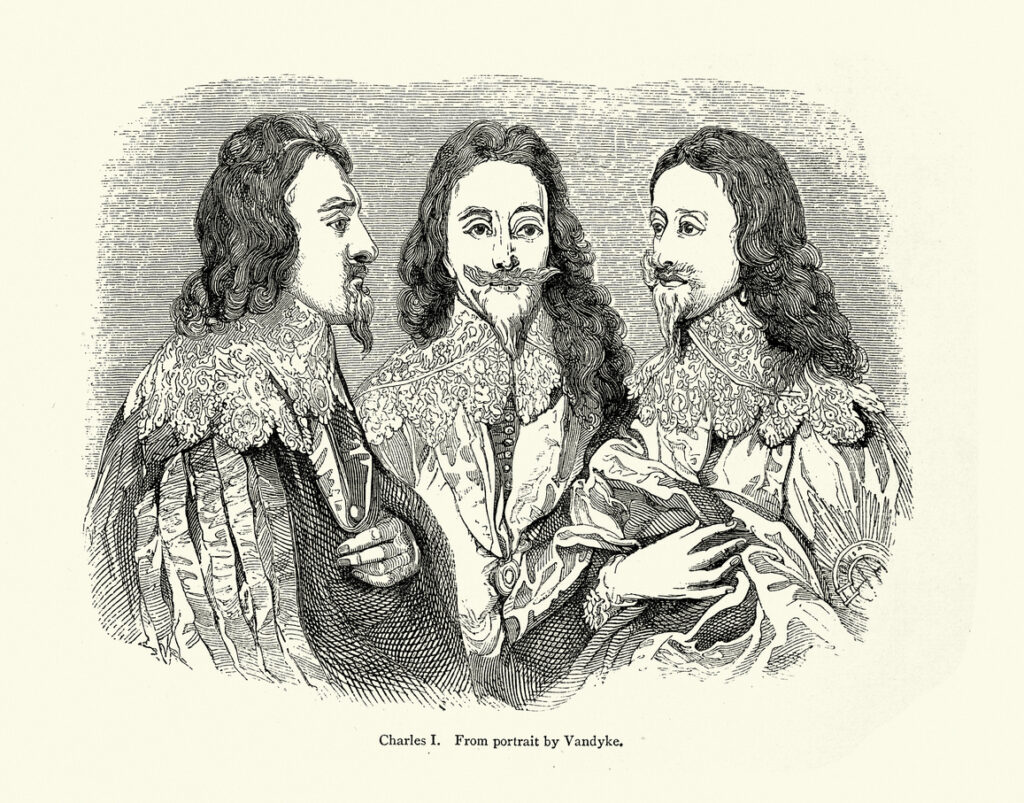
On 10 March 1629, King Charles I formally dissolved parliament, beginning an 11-year period of governing without it, known as the “Personal Rule”. The move was the culmination of years of mounting tension between an obstinate monarch and a parliament determined to assert its authority.
Since coming to the throne in March 1625, Charles had been in near-constant conflict with MPs over his right to collect customs duties, known as tonnage and poundage.
On 26 May 1628, parliament adopted the Petition of Right, calling upon Charles to acknowledge that he could not levy taxes without parliament’s consent, imprison without cause, impose martial law to punish ordinary offences, or quarter troops in their homes. The king, after attempting to water down the petition, eventually assented.
***
The immediate trigger for the dissolution in March 1629 was an unprecedented act of defiance in the House of Commons.
On 2 March, Sir John Finch, the commons speaker, was forcibly held down in his chair by two MPs, Denzil Holles and Benjamin Valentine, when he tried to adjourn the House for a week on the king’s command. This was to prevent the session ending before three resolutions, drafted by Sir John Eliot, the king’s chief opponent in parliament, could be passed.
Finch sought to justify his actions, declaring: “I am none less the king’s servant for being yours.”
Holles, holding the speaker in place, asserted: “By God’s wounds you shall sit till we please to rise”.
He added: “Are we a parliament, or no parliament?
“Are we assembled by the king, trusted for the good and safety of the king? The laws and liberties? Or are we not?”
Eliot declared: “Mr Speaker, there was never the like of this done in this House. It is the fundamental liberty of this House that we have ever used to adjourn ourselves.”
The House went on to debate and agree the resolutions in defiance of the royal order to adjourn – before voting, of its own accord, to adjourn of itself. All the while, the doors of the commons were locked, preventing the gentleman usher of the black rod, James Maxwell, from disrupting proceedings on the orders of Charles.
The resolutions condemned the collection of taxes without parliamentary consent and denounced the doctrine, practice and promotion of anti-Calvinist Arminianism – a swipe at the King’s religious policies (his “innovation in religion”). Any individual supporting such policies should be declared “a betrayer of the liberty of England” and “a capital enemy to this kingdom and commonwealth”, the resolutions read.
The third resolution stated: “If any merchant or person whatsoever shall voluntarily yield, or pay the said subsidies of Tonnage and Poundage, not being granted by parliament, he shall likewise be reputed a betrayer of the liberties of England, and an enemy to the same.”
In the immediate aftermath, Eliot, Holles and Valentine were among nine parliamentary leaders imprisoned. Eliot died in the Tower of London three years later under suspicious circumstances.
***
This act of open rebellion marked a breaking point in an already-fractured relationship between sovereign and parliament.
Charles responded by proclaiming his intention to dissolve parliament.
In the proclamation, issued on 2 March, Charles insisted he had exercised patience in tolerating the activity of the commons, and praised those parliamentarians who were “well affected to Religion and government and desirous to preserve unity and peace in all parts of Our Kingdome.”
The king explained that on 25 February he had ordered parliament to be adjourned temporarily. This pause, he said, was intended to give time for a “better and more right understanding” to prevail between king and commons.
However, he argued that certain MPs had behaved in a “disobedient and seditious” manner and had openly challenged the king’s authority. Charles argued that this behaviour amounted to an unprecedented attack on the dignity of the monarchy.
Charles proclaimed: “It hath so happened by the disobedient and seditious carriage of those said ill affected persons of the House of Commons, That we and Our Regal authority and commandment, have been so highly condemned, as Our Kingly Office cannot bear, nor any former age can parallel.”
The king appeared before parliament one week later on 10 March to dissolve parliament in person.
Addressing the House of Lords, Charles acknowledged the historical significance of his decision to oversee the dissolution of parliament. The king explained that he had chosen to attend personally because he wanted to make clear where he believed responsibility lay, blaming the “undutiful and seditious Carriage in the Lower House”.
That said, the king stressed that he did not blame every member of the lower house. He acknowledged that some MPs were as “dutiful subjects as any in the World”. But he hit out at those “vipers” in the commons “that did cast this mist of Undutifulness over most of their Eyes.”
Charles concluded by warning that those responsible would face punishment. At the same time, he promised favour and protection to the loyal nobility.
He declared: “To conclude, As those Vipers must look for their Reward of Punishment, so you, my Lords, may justly expect from me that Favor and Protection that a good King oweth to his loving and faithful Nobility. And now, my Lord Keeper, do what I have commanded you.”
Parliament would not meet for another 11 years.
***
The Personal Rule, or “eleven years tyranny”, ended with Charles’ attempt to extend his religious policies and doctrines to Scotland. In doing so, Charles sparked the Bishops’ Wars – a conflict he did not have the financial means to win. Charles, in desperate need of funds, was forced to summon parliament in early 1640.
The Long Parliament, convened in 1640, took advantage of the king’s weak position to dismantle the instruments of his Personal Rule. The parliament legislated to increase its power, using the king’s financial desperation as leverage to force a series of hostile measures upon him.
One law, the Triennial Act, mandated that parliament must convene at least once every three years, even without the king’s summons.
Over the winter of 1641-1642, relations between king and parliament broke down further, leading to the outbreak of civil war.

Politics.co.uk Newsletters
DAILY
Politics@Lunch
WEEKLY
Week in Review