Charles I’s failed arrest of five MPs sparks constitutional crisis
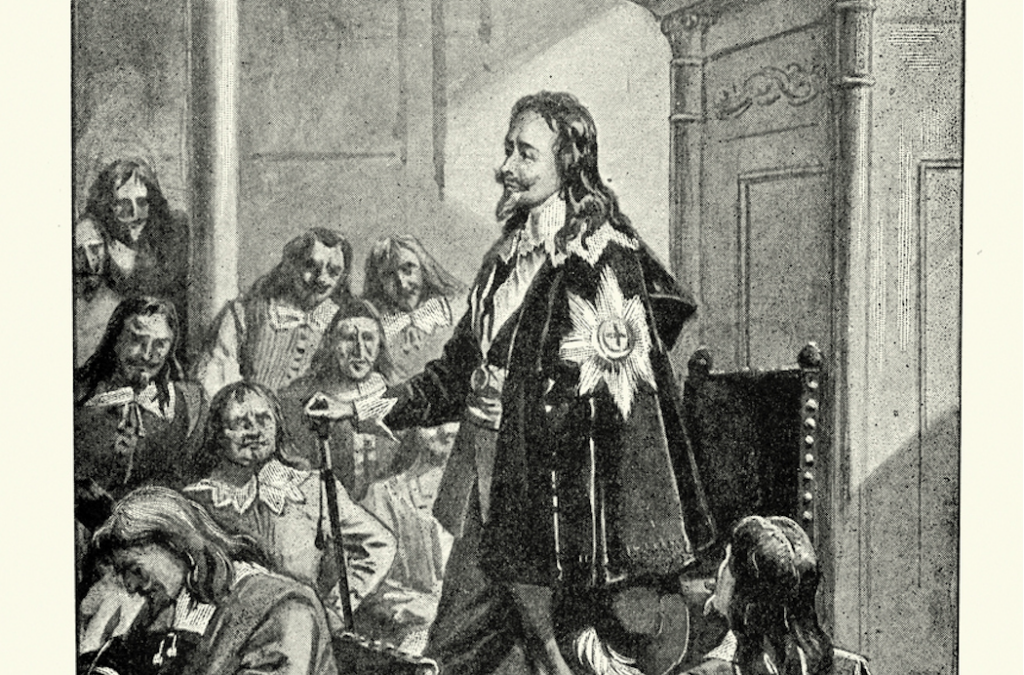
On 4 January 1642, King Charles I took the unprecedented step of entering the chamber of the House of Commons with an armed guard to arrest five of his leading parliamentary critics.
With Charles having governed for most of the last two decades without parliament (a period known as the ‘Personal Rule’), relations between MPs and the king were at an all time low.
The Personal Rule ended with Charles’ attempt to extend his religious policies and doctrines to Scotland. In doing so, Charles sparked the Bishops’ Wars – a conflict he did not have the financial means to win. Charles, in desperate need of funds, was forced to summon parliament in early 1640.
***
In 1642, the king accused five MPs – John Pym, John Hampden, Denzil Holles, Sir Arthur Haselrig and William Strode – of high treason.
Addressing MPs from the speaker’s chair, Charles declared: “Gentleman, I have accused these persons of no slight crime, but treason, I must have them wheresoever I find them.”
“Well, since I see the birds have flown, I do expect from you that you shall send them unto me as soon as they return hither.”
Pym, Hampden, Holles, Haselrig and Strode had been informed of the king’s intentions and fled.
Supported by 500 troops, Charles then requested that the speaker, William Lenthall, give some indication as to the MPs’ whereabouts.
In response, Lenthall delivered a historic defence of parliamentary privilege.
Lenthall replied: “May it please your Majesty, I have neither eyes to see, nor tongue to speak in this place, but as the House is pleased to direct me, whose servant I am here, and I humbly beg your Majesty’s pardon that I cannot give any other answer than this to what your Majesty is pleased to demand of me.”
Lenthall’s defiant stance is said to be the first time a speaker declared his allegiance to the liberty of parliament. Previously, the speaker had been seen as an agent of the crown.
As the king left the commons chamber, MPs chanted in chorus: “Privilege! Privilege!”
The king’s armed intrusion was an artless act of provocation – a clear and egregious constitutional breach.
Both king and parliament began preparing for war. Charles left London and established his court in York.
On 22 August 1642, Charles I formally raised his royal standard on Castle Hill in Nottingham, signalling the beginning of the first English Civil War.
***
Charles I’s 1642 incursion, the last of its kind, is now commemorated at the state opening of parliament. The sovereign, having assumed the throne in the House of Lords, sends their messenger, Black Rod, to summon the members of the House of Commons to attend.
The doors to the chamber are then slammed in Black Rod’s face – a symbolic statement of the independence of the commons.

Politics.co.uk Newsletters
DAILY
Politics@Lunch
WEEKLY
Week in Review