Acts of Union create United Kingdom of Great Britain and Ireland
On 1 January 1801, the Acts of Union came into effect, formally merging the Kingdom of Great Britain and the Kingdom of Ireland into a single political entity “by the name of the United Kingdom of Great Britain and Ireland”.
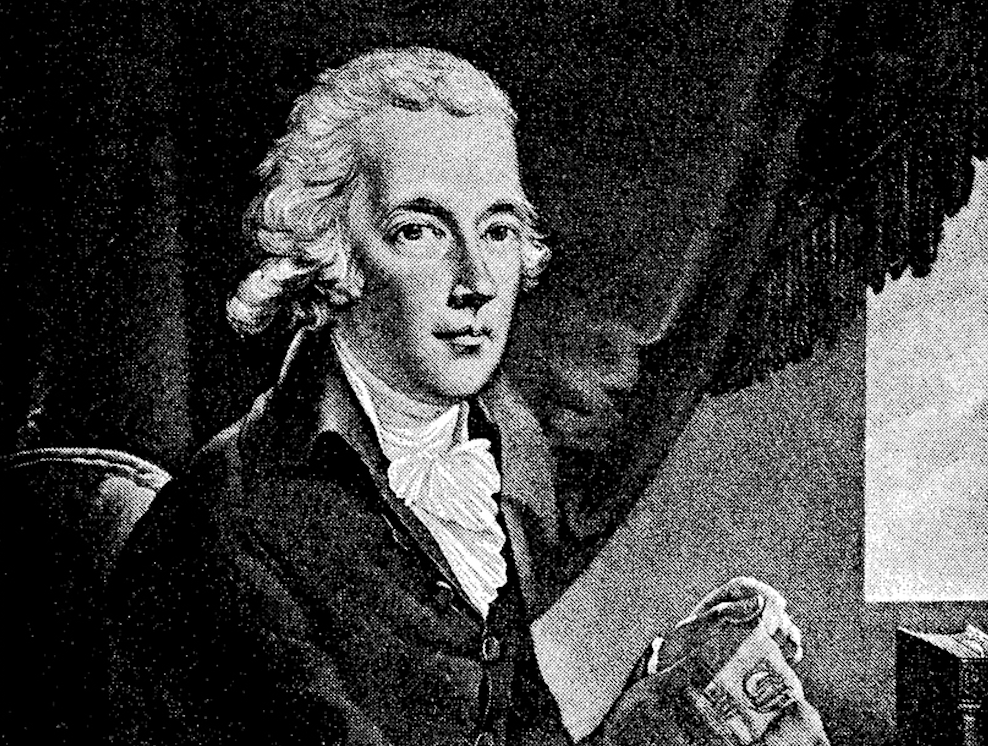
The measure was driven by the British government of William Pitt the Younger, largely as a security response to the 1798 Irish Rebellion and fears of French revolutionary influence. A central, though unwritten, component of the deal was the promise of Catholic emancipation – the abolition of various political restrictions under which Irish Catholics suffered. At the time, Catholics formed a 75% majority of the population in Ireland.
Popular anti-Catholic sentiment continued to flourish in the centuries that followed the Glorious Revolution of 1688/1689, initially amid fears of a restoration under a Stuart ‘pretender’.
***
Catholic emancipation was blocked by King George III – a decision that helped ensure the Union would be an intractable source of political conflict and nationalist resistance for the next 120 years. The king protested that acquiescing to Catholic emancipation would violate his coronation oath, in which he vowed to maintain “the Protestant reformed religion established by law”.
The move provoked William Pitt the Younger’s resignation as prime minister on 16 February 1801.
Lord Castlereagh, in his capacity as chief secretary for Ireland, played a critical role in suppressing the 1798 rebellion and stewarding the Act of Union through the Irish parliament. Catholic emancipation had been key to his advocacy of Anglo-Irish union; he also resigned.
Lord Cornwallis, lord lieutenant of Ireland, wished that England could “make a union with the Irish nation, instead of making it with a party in Ireland”. In the face of George III’s intransigence, he resigned too.
The acts of union, passed in the British and Irish parliaments, abolished the semi-autonomous Irish legislature in Dublin and integrated Ireland into the British political system.
The first attempt to pass the legislation was defeated in the Irish House of Commons by 109 votes to 104. The second vote, held in 1800, passed by 158 votes to 115. The bill’s passage was secured by the bestowal of sinecures, promises of peerages, threats of dismissal and various other financial inducements.
“My occupation is now of the most unpleasant nature”, Cornwallis wrote at the time, “negotiating and jobbing with the most corrupt people under heaven. I despise and hate myself every hour for engaging in such dirty work.”
The Irish parliament (or ‘Grattan’s parliament’), empowered by the Constitution of 1782, voted itself out of existence. It met for the last time on 2 August 1800.
Henry Grattan, the eminent member of Irish parliament in its final years, observed: “I have heard of parliament impeaching ministers, but here is a minister impeaching parliament.”
***
The terms of the Union were set out in eight articles. The first four dealt with the political and constitutional settlement. The fifth dealt with the position of the church, the sixth with trade, the seventh with finance, and the eighth with law.
Under article four of the Act of Union 1800, Ireland was granted 100 seats in the House of Commons and 32 representative peers in the House of Lords at Westminster. Of the 100 MPs, there would be “Two for each County of Ireland, Two for the City of Dublin, Two for the City of Cork, One for the University of Trinity College, and One for each of the Thirty-one most considerable cities, towns, and boroughs”.
The Anglo-Irish Union thus brought the total number of MPs to 658.
The fifth article stated that the Church of England and the Church of Ireland would “be united into one Protestant Episcopal Church… called the United Church of England and Ireland”.
The article stipulated that the “continuance and preservation” of this united church “shall be deemed and taken to be an essential and fundamental part of the Union.”
This ecclesiastical settlement thus preserved and safeguarded the Protestant Ascendancy in Ireland. It lasted for 70 years, until the Irish Church Act 1869 passed by William Gladstone’s government. The legislation, separating the Church of Ireland from the Church of England and disestablishing the former, came into force on 1 January 1871.
The sixth article of the Act of Union established that all subjects of the new kingdom would “be entitled to the same privileges, and be on the same footing” in respect of trade and navigation.
***
Catholics received the right to vote in Ireland under the Roman Catholic Relief Act 1793. But while the 1800 Acts of Union brought Irish MPs to Westminster, Catholics could not serve in parliament. The Oath of Supremacy required that MPs acknowledge the king as “Supreme Governor” of the Church.
This language effectively forced any prospective Catholic legislators to renounce their faith.
Daniel O’Connell, the vigorous and skilled Irish nationalist leader, established the Catholic Association in 1823. The association inspired a mass movement in Ireland for greater political rights.
The Roman Catholic Relief Act 1829 provided for Catholic emancipation. It came after O’Connell won the 1828 County Clare by-election, sparking a constitutional crisis. O’Connell, 27 years after the Acts of Union came into effect, became the first Catholic to be returned in a parliamentary election since 1688.
Upon re-entering parliament in 1830, O’Connell began a campaign to repeal the Act of Union and restore the Kingdom of Ireland under the old Constitution of 1782. 42 MPs were elected on the Irish Repeal platform at the 1832 election.
In April 1834, O’Connell brought the issue of repeal before the commons via a petition. The Irish ‘Liberator’ moved for a parliamentary select committee to investigate the 1800 Act of Union as a “first step to national independence”.
He denounced the Union as an illegitimate act, secured through bribery and constitutional impropriety. He argued the Union “was floated into the temple of the British constitution on the blood of Irishmen.”
O’Connell referred to the financial terms of the Union as “a gross and shameless corruption”.
The MP also argued the Union had not brought the protection of the British constitution.
He stated: “During twenty of the thirty-four years which have elapsed since the Union, the constitution has been suspended in Ireland! You have given to us Insurrection Acts and Martial-law – you have suspended the Habeas Corpus Act – you have fettered us with Algerine Acts, and gagged us with Coercion Bills; and these are the results of your Union!
“For twenty years, you have shut out from us the light of liberty; and this you call a beneficial Union to Ireland! I tell you it is a Union with which Ireland never can be satisfied – it is the Union between the master and the slave – between the oppressor and the oppressed – it cannot, and it ought not to continue…
“You are unable to govern Ireland, even to your own satisfaction; for two-thirds of the time that you have presided over her destinies you have ruled her not by the powers of the law, but by undisguised despotism—you have not made Ireland prosperous, and her misery has been of no advantage to you.
“In the name, then, of Ireland, I call upon you to do my country justice. I call upon you to restore her national independence.”
The proposal for an inquiry into the union was overwhelmingly defeated by 523 votes to 38.
O’Connell officially launched the Repeal Association in 1840.
The movement and O’Connell’s methods declined in the 1840s. Opposition to the Union was overtaken by “physical force” nationalists, including those of the Young Ireland movement and Irish Republican Brotherhood (IRB). The Great Famine (1845-1852), which resulted in the deaths of over a million people and the emigration of over two million, was another factor that furthered the radicalisation of Irish nationalism.

Politics.co.uk Newsletters
DAILY
Politics@Lunch
WEEKLY
Week in Review