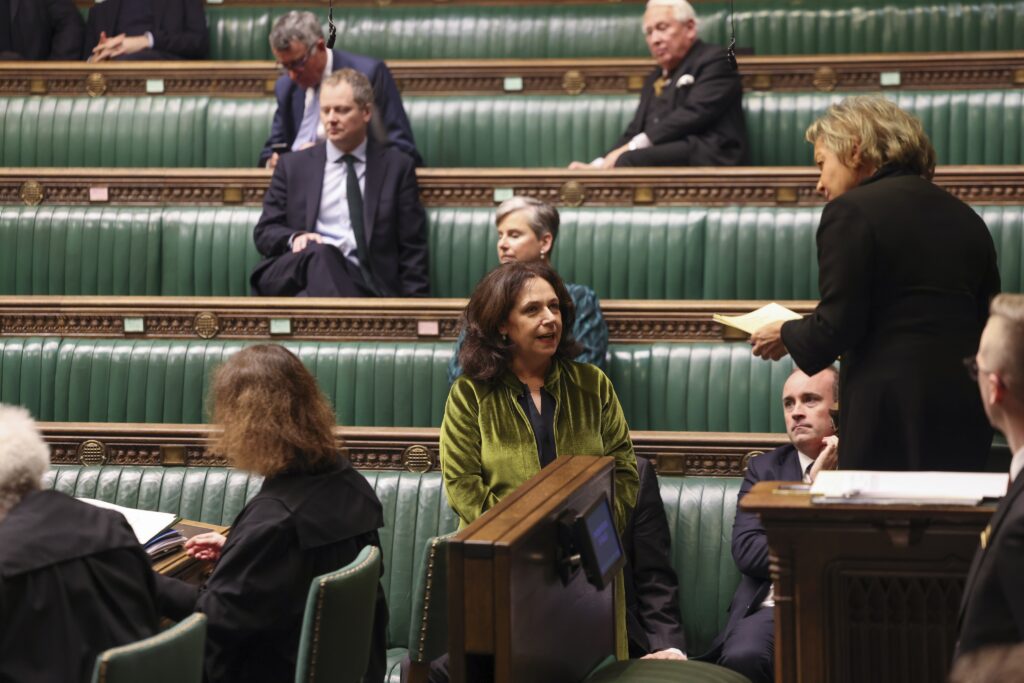
A private member’s bill (PMB) is a type of Public Bill that is introduced into the House of Commons or House of Lords by a parliamentarian who is not a government minister. These MPs and peers are known as “backbenchers”.
While any MP can propose a new law, the parliamentary timetable is dominated by government business. As a result, it is significantly rarer for private members’ bills to become law.
Despite the low success rate, PMBs are a staple of the British parliamentary system. They provide an opportunity for backbenchers to propose legislation that a government might not otherwise prioritise. Some of the most significant social reforms in British history have been achieved through this route.
The types of private members’ bill
An MP has three main routes for introducing a bill to the House of Commons. The chosen route has a major impact on the Bill’s chances of being debated and becoming law.
The ballot
This is the most effective route for a PMB to have a chance of success. At the beginning of each parliamentary session, any backbencher who wants to introduce a bill enters their name into a ballot. The ballot, organised and overseen by the chairman of ways and means (the principal deputy speaker), is typically held on the second sitting Thursday of a parliamentary session.
A total of 20 names are drawn at random.
These 20 MPs are then given priority for the limited amount of debating time allocated to PMBs on sitting Fridays. The MP whose name is drawn first has the best chance of their bill being debated and progressing. Moreover, the Public Bill Office in the House of Commons provides drafting support.
These bills are sometimes referred to as “ballot bills”.
10-minute rule bills
Another method for introducing a private members’ bill is the 10-minute rule procedure.
Under procedure, the sponsoring MP is given 10 minutes to make a speech outlining the purpose of their proposed bill. An opposing MP may then use 10 minutes to speak against it, although this is something of a rarity.
The speaker subsequently puts the question as to whether the House gives the MP permission to bring in the bill. Once more, this is rarely contested; and if the motion is passed, the bill formally receives its first reading.
This mechanism provides an opportunity for an MP to make the case for legislative change. To apply, an MP must gain a slot from the Public Bill Office, but these are extremely sought after. Some MPs have reportedly slept outside the office to ensure that they are first in the queue.
So-called 10-minute rule bills are usually scheduled immediately after oral questions on Tuesdays and Wednesdays. They rarely become law, but this procedure provides a means by which an MP can raise an issue. Between 1945 and 2010, just over 60 acts of parliament originated as 10-minute rule bills.
Presentation bill
The most common but least effective method of introducing a private members’ bill is by “presentation”. This is where an MP introduces the title of a bill without any debate.
Bills are presented after oral questions and any urgent questions or ministerial statements on Monday to Thursday, or at the start of the day on Friday. At the designated time, the speaker will say “Presentation of bill” and the name of the backbench MP, who must stand on the speaker’s right-hand side.
The sponsoring member will then hand the bill to the clerk of the House, who proceeds to read out its short title. The bill is presented in “dummy form”, containing only the short title, the long title (a description of what the bill seeks to do) and the names of the backers.
The speaker then asks, “Second reading, what day?”, and the sponsoring member names a future date. The bill is then considered to have been read a first time (first reading). There is no vote and the bill cannot be discussed or amended in any way.
The bill then joins the back of a long queue for debating time and has little prospect of becoming law unless it is later adopted by the government.
Why are private members’ bills unlikely to become law?
Limited parliamentary time
Only around 13 Fridays in each parliamentary session are allocated for the debate of private members’ bills. On the first seven Fridays allotted to PMBs, precedence is given to ballot bills. With dozens of bills competing for attention, therefore, there is simply not enough time to consider them all.
As a session progresses and more PMBs are put forward, that list grows longer.
A bill must pass through all its legislative stages in both the commons and the Lords within a single session, or it “falls” and must be started again from scratch in the next.
Procedural obstacles and ‘talking out’
The limited time available means that opponents of a bill can use parliamentary procedure to ensure it fails. The most common tactic is “talking out” or “filibustering”, where an MP makes an exceptionally long speech on a preceding bill to use up all the available debating time.
PMBs are vulnerable to this tactic as they are not subjected to a “programme motion” – the mechanism used by the government to timetable a government bill’s progress through the commons. Because PMBs are not timetabled, only the first PMB on the order paper each sitting Friday is certain to be debated. MPs who object to a bill on the order paper can filibuster during the first debate, preventing the House from turning to future items.
Evaluation question
Does the ease with which a single MP can “filibuster” or vocally object to a bill demonstrate a flaw in how backbench legislation is treated?
MPs opposed to a bill can also force a division on either the quorum or a closure motion. This will eat up more time.
A closure motion is also a direct way of thwarting the chances of a PMB becoming law. If the speaker believes there has been sufficient debate, a closure motion can be put to call an end to the debate. To pass, it must be supported by 100 MPs.
On these sitting Fridays, the “moment of interruption” (after which main business must conclude) is at 2:30 pm. At this time, the clerk lists any PMBs which have not been subjected to a second reading vote. The House is invited to hold a division on the bill. However, if one MP vocally “objects”, the bill is scheduled to resume on a later sitting Friday (often months later).
This can prevent the bill from ever being debated or voted upon, effectively killing it for that session.
And even if a PMB secures a second reading, it can be defeated when it returns to the House for its report stage or third reading. There may be more interest in the bill at these stages, especially from opponents, who fear it could progress further. Of course, once a PMB has passed through the commons it must be approved by the House of Lords. A peer must take up the bill during its Lords stages. Any amendments in the Lords return to the commons as part of the “ping pong” process. There may not be enough time in the session if peers stubbornly resist a particular PMB.
Lack of government support
A private member’s bill has almost no chance of becoming law without at least the tacit support of the government. If the government is actively opposed to a PMB, loyal MPs can vote against it, filibuster, and/or force a closure motion.
The government can object to bills that have not been voted on before the moment of interruption.
Even if a bill is approved at second reading on a sitting Friday, progress beyond that is not guaranteed because the government can exercise a veto by refusing to introduce a “money resolution”. This is a relevant point for bills that require any spending. Only the government can bring forward a money resolution.
Conversely, if the government supports the aims of a bill, it can provide drafting assistance from civil servants and ensure its MPs vote in favour. In some cases, the government will even “adopt” a PMB and provide it with government time to ensure its passage.
The government may also directly patronise a PMB by offering “handout bills”. These are bills drafted by the government and passed to sympathetic MPs who were successful in the PMB ballot. These allow the government to pass minor measures that they might not otherwise have found parliamentary time for.
What is the point of PMBs?
Despite the significant obstacles, private members’ bills remain an important feature of parliament.
In certain significant cases, they allow for social or “conscience” issues to be debated which a government would be unlikely to adopt as formal policy.
Many of the most significant social reforms of the 20th century were passed as private members’ bills.
The Abortion Act 1967 was first introduced to parliament as a private members’ bill by the then-Liberal MP David Steel. The landmark legislation legalised abortion in Great Britain.
The Murder (Abolition of Death Penalty) Act 1965 was introduced as a private members’ bill by backbench Labour MP Sydney Silverman.
From 1956 to 1964, backbench Labour MP Fenner Brockway introduced a bill which sought “to make illegal discrimination to the detriment of any person on the grounds of colour, race and religion in the United Kingdom.” Brockway’s parliamentary campaign played a part in the passage of the Race Relations Act 1965, the first piece of legislation in the UK to address the prohibition of racial discrimination.
More recently, the British Sign Language Act 2022, which gave BSL legal recognition, was introduced as a private members’ bill by backbench Labour MP Rosie Cooper.
The Down Syndrome Act 2022, which placed a duty on public authorities to meet the needs of people with Down syndrome, was introduced as a PMB by backbench Conservative MP Liam Fox.
Sir Christopher Chope: the scourge of PMBs
Sir Christopher Chope, a backbench Conservative MP, has gained a reputation for scrutinising, and often blocking, private members’ bills, particularly during Friday sittings of the commons. He states he does this on the principle that legislation requires sufficient debate.
Notable instances include his objection to the second reading of the Voyeurism (Offences) Bill in 2018, which aimed to outlaw upskirting. Commenting at the time, Chope told the Bournemouth Echo that he did support an upskirting ban and insisted he was not a “dinosaur”.
The veteran MP said: “I feel a bit sore about being scapegoated over this. The suggestion that I am some kind of pervert is a complete travesty of the truth. It’s defamatory of my character and it’s very depressing some of my colleagues have been perpetuating that in the past 48 hours.”
Setting out his reasoning behind objecting the proposed legislation, and bills like it, he remarked: “The government has been hijacking time that is rightfully that of backbenchers. This is about who controls the House of Commons on Fridays and that’s where I am coming from. I actually support the bills that were before the house. Four of the 26 bills that fell at the same time were my own.
“But this is something I have fought for in most of my time as an MP and it goes to the very heart of the power balance between the government and parliament. The government is abusing parliamentary time for its own ends and in a democracy this is not acceptable. The government cannot just bring in what it wants on the nod. We don’t quite live in the Putin era yet.”
However, Chope was heavily criticised for objecting to the Voyeurism (Offences) Bill. Then-prime minister Theresa May intervened, saying she was “disappointed” the bill, proposed by Liberal Democrat MP Wera Hobhouse, did not progress upon Chope’s objection.
Liz Truss, then serving as a Treasury minister, called Chope’s decision to object “completely unacceptable” and vowed to speak to the MP in the hope he would “change his mind.”
Tobias Ellwood, a neighbouring MP to Chope’s Christchurch constituency and then a defence minister, condemned his Conservative colleague as a “dinosaur”.
Chope rejected the characterisation, telling the Bournemouth Echo: “I am not a dinosaur. I am very much alive and kicking. There are too few colleagues who are prepared to stand up for the rights of Parliament against the executive and that’s when the freedoms we cherish will be eroded.”
The government subsequently introduced legislation to ban upskirting. The Voyeurism Act received royal assent in February 2019.
https://x.com/theresa_may/status/1007710305621807104
Other bills he has objected to or filibustered include proposed legislation concerning an Alan Turing pardon (2013), banning wild animals in circuses (2014), hospital parking charges for carers (2015), and protections against female genital mutilation (FGM) (2019).
Zac Goldsmith, the Conservative MP who co-drafted the proposed changes regarding FGM, called Chope’s decision to object “appalling”.
The then-home secretary, Sajid Javid, said that he was “very disappointed” by the outcome.
Dawn Butler, Labour’s shadow equalities minister, commented: “It’s unacceptable that this dinosaur of a Tory MP consistently gets away with blocking new laws to protect the safety and rights of women.
“Christopher Chope is causing shame and embarrassment for the Tories but also for the country and it’s time for the Tories to show they really care about these issues by stripping him of the whip.”
Kim Leadbeater and the assisted dying bill
A high-profile example of a PMB is the Terminally Ill Adults (End of Life) Bill, which was introduced to parliament by backbench Labour MP Kim Leadbeater. The bill was introduced after Leadbeater was selected by the parliamentary ballot.
The bill would allow terminally ill adults with a prognosis of six months or less to request assistance to end their own lives “subject to safeguards and protections”.
On 29 November 2024, MPs voted to back the assisted dying bill at its second reading by 330 votes to 275 – a majority of 55. It was subject to a “free vote” in the commons as a conscience issue – meaning party leaderships did not whip their MPs into voting either in favour or against assisted dying.
As such, while leading parliamentarians including Keir Starmer, the prime minister, his predecessor, Rishi Sunak, and the chancellor of the exchequer, Rachel Reeves, all voted in favour – several senior cabinet ministers, including the deputy prime minister Angela Rayner, the health secretary, Wes Streeting, and the justice secretary, Shabana Mahmood, voted against.
Speaking ahead of the debate, Streeting expressed concerns about the potential burden on the NHS and ordered a review of the costs associated with assisted dying.
Kemi Badenoch, the Conservative leader, voted against the bill alongside the majority in her party.
In total, 23 Conservative MPs voted in favour at second reading, versus 92 who voted against. 234 Labour MPs voted in favour at second reading; 147 voted against.
Ed Davey, the leader of the Liberal Democrats, voted against the bill. 61 Lib Dem MPs backed the legislation, with 11 opposed.
Addressing the commons, Leadbeater said the bill was “not about people choosing between life and death”. She argued the proposed legislation was “about giving dying people with six months or less to live autonomy about how they die and the choice to shorten their deaths.”
She maintained that the current law was “failing” and that, as legislators, MPs had a “duty to do what is right to fix it.”
Leadbeater said her bill addressed “one of the most significant issues of our time – an issue that people across the country clearly want us to address, none more so than the many families who are facing the brutal and cruel reality of the status quo.”
During the debate, the de facto opposition to the assisted dying bill was led by Danny Kruger, then a Conservative MP. He argued that it would fundamentally alter the relationship between the state and the citizen, creating a “state suicide service.”
Kruger described the proposed six-month prognosis as “arbitrary” and expressed his view that the bill’s safeguards would be eroded over time. He referred to the “voices of those we cannot hear: the frail and elderly and the disabled”, arguing that MPs must “do better than this bill”.
Conservative MP Kit Malthouse, supporting the bill, described the current legal framework as condemning people to “lonely” deaths in “horrible circumstances”.
Labour MP Meg Hillier, expressing her opposition to the bill, spoke of her daughter’s recovery from illness to argue. “I did not know for five days, in fact many months, whether she would live or die… But I saw what good medicine can do that palliated that pain”, she said.
Diane Abbott, the veteran Labour MP and mother of the House, was one of several contributors to the debate who raised the question of coercion. She warned that that coercion could be undetectable by doctors or judges.
The vote in November 2024 reflected a shift in parliamentary opinion. A similar PMB providing for assisted dying was defeated in the commons at its second reading in 2015, with 330 voting against and 118 in favour.
Leadbeater’s bill, having secured its second reading, proceeded to committee stage. The bill was subjected to detailed scrutiny in a public bill committee; accounting for the contentious nature of the legislation, the committee stage was unusually prolonged and, in an unprecedented step, heard evidence from witnesses. The public bill committee of 18 cross-party MPs, holding a range of views on assisted dying, sat for almost 90 hours of debate across 29 sittings between 21 January 2025 and 25 March 2025.
Over three days of evidence sessions, from 28 January to 30 January, over 50 expert witnesses gave testimony.
In total, 29 amendments to the bill were considered. A significant change came as MPs changed the previous provision which said applications for assisted dying would be subject to the approval of two doctors and a high court judge. Under the amended bill, applicants’ submissions would be considered by a multi-disciplinary “assisted dying review panel”, consisting of a senior legal figure, a consultant psychiatrist, and a social worker. The requirement for two doctors to approve the request first remains in place.
This change was tabled by Leadbeater, the sponsor of the bill.
The commencement period was also increased from two years to four years in England.
The amended bill returned to the commons for its report stage and third reading in June 2025, where it passed by a narrower margin of 23 votes (314 votes to 291). In total, research has found that 56 MPs changed their position between the assisted dying bill’s second and third reading.
14 MPs went from in favour to against, while one MP, Labour’s Jack Abbott, went from against to in favour. 15 went from in favour to abstaining. Of the 20 MPs who abstained at second reading, 10 voted in favour at third reading, and 10 voted against.
Scottish home rule ‘talked out’: PMB controversy
A private member’s bill which sought to establish a Scottish parliament was defeated on 9 May 1924, after its opponents successfully “talked it out” in a strategy that prompted furious protests from Scottish Labour MPs and forced the speaker to adjourn the House of Commons.
The Government of Scotland Bill, introduced by the Independent Labour Party (ILP) MP for Gorbals, George Buchanan, proposed a unicameral (single-chamber) Scottish parliament with wide-ranging powers over domestic affairs. The bill, based on the Government of Ireland Act 1914, proposed that only control of the army and navy, foreign affairs, the Post Office and excise and customs would remain reserved at the Westminster parliament. All other matters would be controlled by the new Scottish legislature – a quasi-federal settlement.
In his contribution, Buchanan argued that the “imperial parliament” at Westminster was so overwhelmed with business that it could not give adequate time or attention to specifically Scottish problems. He warned that if this “mild, meagre measure” was not conceded, it would be replaced by a demand for a much bolder one, invoking the recent history of Ireland.
Sir John Baird, the Unionist MP for Glasgow Central, spoke in opposition to the bill. He said the “reactionary measure” would “put the clock back where it was in [before the Acts of Union in] 1707.”
The bill’s introduction coincided with the dawn of the first Labour government under Ramsay MacDonald as prime minister. The Labour movement had emerged as the largest political force in Scotland at the 1922 and 1923 general elections. MacDonald, who was president of the London branch of the influential Scottish Home Rule Association (SHRA) before the First World War, was seen as an ally.
However, MacDonald’s ministry lacked an overall majority on the House of Commons, and many of its MPs were hesitant to support or prioritise a Scottish home rule scheme.
During the May 1924 debate, the government did indicate its lukewarm support for Buchanan’s measure. The secretary of state for Scotland, William Adamson, told MPs that the government agreed with the “general principle” of a home rule scheme and was prepared to appoint a committee to examine the issue.
When Adamson sat down just before the 4:00 pm deadline for private members’ business, supporters of the bill expected a vote to be called. But several Unionist MPs rose, indicating their desire to speak.
The well-mannered debate soon descended into chaos as Buchanan and his allies in the group of left-wing “Red Clydesider” MPs made repeated attempts to force a vote.
The commons speaker, John Henry Whitley, refused to accept these calls, basing his ruling on the grounds that there were still Unionist opponents of the bill who intended to speak.
In the ensuing chaotic scenes, several MPs, including Buchanan, David Kirkwood and Neil Maclean, repeatedly refused to obey the speaker’s calls for order. At the 4:00 pm cut-off, the speaker ruled that the debate stood adjourned and ordered the clerk to read the orders of the day.
Buchanan responded: “This is shameful.”
Kirkwood, the ILP MP for Dumbarton Burghs, protested: “There will be no orders read. You have no right, Mr. Speaker, to refuse the closure. I move the closure now.”
Liberal MP James Hogge rose to challenge the speaker’s conduct and refused to resume his seat. Hogge had previously objected to the speaker’s decision to call a series of opposition frontbench spokespeople to address the debate.
The speaker responded: “The honourable member persists in defying the chair, and being of opinion that grave disorder has arisen in the House, I adjourn the House, without question put, pursuant to Standing Order No 21.”
The government, to the dismay of home rule campaigners, refused to allocate additional parliamentary time to consideration of the bill. Nor was it referred to a royal commission or a commons committee.
Additional resources
- Parliament TV: House of Commons: Private Members’ bills’ ballot – https://parliamentlive.tv/Event/Index/d1a7e246-e26e-4913-bba5-22939272a2c5

