Sajid Javid resigns as chancellor in reshuffle bombshell
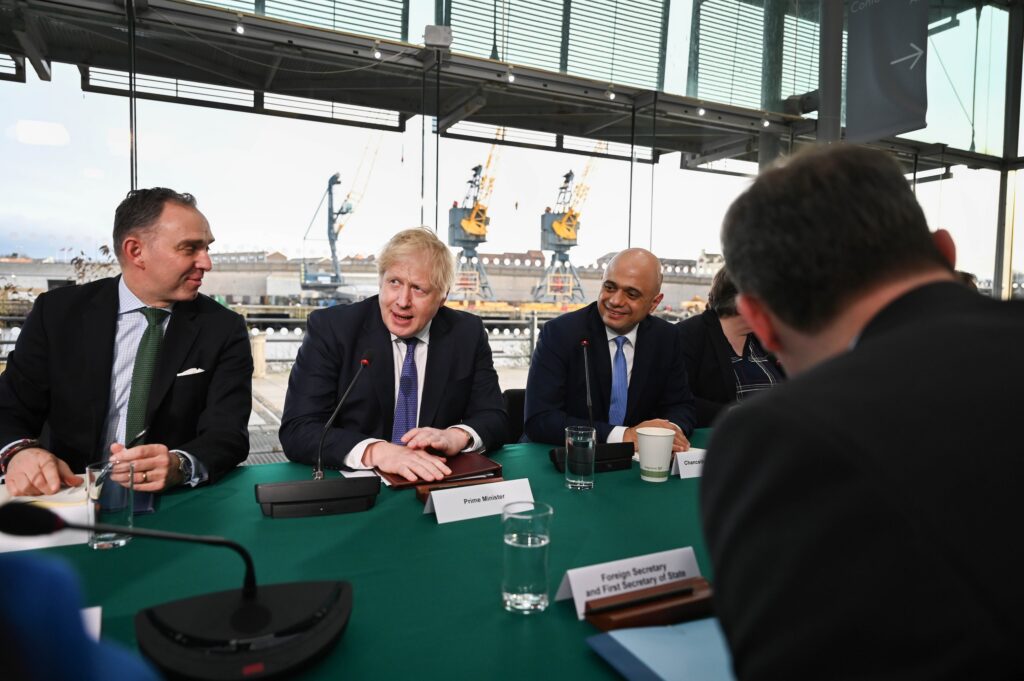
On 13 February 2020, Sajid Javid resigned as chancellor of the exchequer in a shock move that dominated Boris Johnson’s first major cabinet reshuffle since the 2019 general election.
Javid, who had been chancellor for less than seven months and was weeks away from delivering his first budget, resigned after the prime minister ordered him to dismiss his entire team of special advisers and replace them with ones selected by 10 Downing Street.
Javid refused to accept these terms.
***
The ultimatum was widely seen as an attempt by the prime minister’s then-chief adviser, Dominic Cummings, to diminish the Treasury’s traditional independence and political influence. Cummings, the former director of Vote Leave at the time of the 2016 Brexit referendum, was an integral and controversial staple of Johnson’s inner circle during this period.
In August 2019, Cummings reportedly dismissed Sonia Khan, one of Javid’s top advisers, without informing the chancellor. After clashing with Cummings, Khan was escorted out of Downing Street by an armed police officer.
In his resignation letter, Javid said he could not accept “the conditions attached to the reappointment”.
He added: “It is crucial for the effectiveness of government that you have people around you who can give you clear and candid advice, as I have always sought to do. I also believe that it is important as leaders to have trusted teams that reflect the character and integrity that you would wish to be associated with.”
The outgoing chancellor urged Johnson, his fellow candidate in the 2019 Conservative leadership election, to ensure that the Treasury “retains as much credibility as possible” as an institution.
https://x.com/bbcpolitics/status/1228001460421566464
Javid was swiftly replaced as chancellor by his deputy, chief secretary to the Treasury Rishi Sunak, who was considered to be a Johnson loyalist.
In 2019, Sunak was among the triumvirate of Conservative MPs, alongside Oliver Dowden and Robert Jenrick, who penned a piece in the Times backing Johnson as the next Conservative leader and prime minister. These MPs, considered to be rising stars in the party, described Johnson as the answer to the “existential threat” facing the Conservative Party.
In other reshuffle moves, former Brexit secretary Stephen Barclay was appointed chief secretary to the Treasury, replacing Sunak. Barclay’s former Department for Exiting the European Union was abolished at 11:01pm on 31 January as Britain formally left the EU.
Dowden was appointed as the new culture secretary, while Amanda Milling took up the post of Conservative Party chair.
Suella Braverman was made attorney general, replacing Geoffrey Cox.
In his letter of resignation, Cox made it clear that he had been removed on Johnson’s request. He referred moreover to his efforts to deliver “candid and independent” advice to the prime minister.
He wrote: “I bluntly told the House of Commons in September that they risked incurring the wrath of the British people by continually frustrating the result of the referendum, and that a reckoning at the polls would come.
“It is very good news for our country and a source of great personal satisfaction to me that you have so emphatically proven those predictions to be correct.”
***
In June 2021, Johnson was forced to reappoint Javid to the position of health secretary. This came after the previous incumbent, Matt Hancock, resigned for breaching social distancing guidance by kissing a colleague.
In this capacity, Javid went on to play a central role in Johnson’s downfall as prime minister.
Both Javid and Sunak resigned from their cabinet positions in response to the prime minister’s handling of the so-called “Pincher affair”. Chris Pincher, who was responsible for maintaining party discipline and MP welfare, was accused of groping two male guests on the evening of 29 June 2022 at the Carlton Club.
A loyal ally of the prime minister, Pincher had been promoted to his post in February 2022 in a bid to shore up Johnson’s premiership. His appointment formed part of a strategic shift termed “Operation Save Big Dog”.
Initially, Downing Street insisted that Johnson considered the matter closed and that Pincher would remain a Conservative MP, having lost only his government job. This position quickly became untenable as a storm of new allegations about Pincher’s past behaviour emerged over the following days.
Javid delivered a blistering resignation statement in the House of Commons, drawing parallels with Geoffrey Howe’s fatal parting shot directed at Margaret Thatcher.
With Johnson sitting on the government frontbench, Javid declared that “enough is enough”.
He added: “I also believe a team is as good as its team captain, and that a captain is as good as his or her team. So loyalty must go both ways. The events of recent months have made it increasingly difficult to be in that team.”
The wave of resignations that followed, totalling over 60, forced Johnson to announce his own departure on 7 July, against his obstinate wish to remain in office.
Javid stood in the subsequent July-September 2022 Conservative leadership election. However, he failed to secure the backing of at least 20 Conservative Party MPs to qualify for the first ballot.

Politics.co.uk Newsletters
DAILY
Politics@Lunch
WEEKLY
Week in Review
