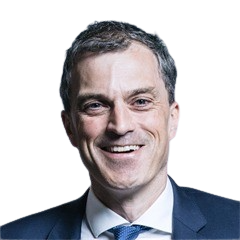
Sir Julian Smith is the Conservative MP for Skipton and Ripon, having first been elected to parliament at the 2010 general election.
In the 2024 general election, Smith won 18,833 votes, representing 35.2% of the vote. The Labour candidate, Malcolm Birks, received 17,183 votes (32.1%), while the Reform UK candidate, Simon Garvey, secured 8,516 votes (15.9%). Smith was duly elected with a majority of 1,650 votes.
The Skipton and Ripon constituency is a large rural seat in North Yorkshire, covering parts of the Yorkshire Dales. It is considered a safe Conservative seat, although the majority was significantly reduced in 2024 (down from 23,694 in 2019).
Political Career
Smith held senior cabinet-level roles from 2017 to 2019. He was secretary of state for Northern Ireland from July 2019 until February 2020 under prime minister Boris Johnson. Prior to this, he served as government chief whip (parliamentary secretary to the Treasury) from November 2017 to July 2019 under prime minister Theresa May.
As chief whip under Theresa May, Smith was responsible for enforcing party discipline and managing the government’s legislative agenda in the House of Commons. This proved a tall order during the fraught Brexit years. Following the 2017 general election, the Conservative government led by Theresa May lost its majority, leading to the formation of a confidence and supply agreement with the Democratic Unionist Party (DUP).
From January to March 2019, May’s Brexit withdrawal agreement was subjected to three successive defeats in the commons from January 2019 to March 2019. In this first so-called “meaningful vote”, the government’s motion was rejected by 432 votes to 202 – a majority of 230. This marked the largest defeat for a sitting government in modern parliamentary history. In total, 118 Conservative MPs – of both pro-‘Leave’ and ‘Remain’ backgrounds – voted against their own government’s flagship policy.
In the Leave camp, former Brexit secretaries Dominic Raab and David Davis were among those who voted against the agreement – as was senior backbencher Graham Brady. Philip Lee, Justine Greening, Dominic Grieve and Sam Gyimah – Conservative MPs who supported a “people’s vote” or second referendum – also rejected the deal.
The 230-vote margin significantly outstripped the three losses of 166, 161 and 140 votes suffered by the minority Labour government of Ramsay MacDonald in 1924. The only postwar government defeats on a similar scale were by 89 in March 1979 and 86 in January 1978 (both came during Jim Callaghan’s tenure as prime minister).
In April 2019, Smith publicly criticised senior ministers, saying they had shown the “worst example of ill-discipline in cabinet in British political history”. He told the BBC that he had watched ministers “sitting around the cabinet table… trying to destabilise” May as prime minister.
Labour called for Smith’s resignation as chief whip in July 2018 after a minister, Brandon Lewis, did not follow a pairing arrangement with an opposition MP, Jo Swinson, on maternity leave. Lewis broke the pairing agreement by voting in two crucial divisions on the Trade Bill, one on remaining in the customs union post-Brexit, which the government won by just six votes, and another on medicine regulation, which it lost.
May subsequently defended Smith, saying her chief whip had made an “honest mistake”.
May stated: “There was an honest mistake made for which the chief whip and indeed Brandon Lewis have both apologized to the member concerned.”
Previously, Smith held a series of roles in the government whip’s office. He was government deputy chief whip (treasurer of the household) (June – November 2017), vice-chamberlain of the household (2016-2017), and assistant government whip (2015-2016).
Smith also served as parliamentary private secretary (PPS) to the minister for international development, Alan Duncan, from 2010 to 2012 and to Justine Greening as secretary of state for international development from 2012 to 2015. A PPS acts as an unpaid parliamentary assistant, providing a link between the senior frontbencher and backbench MPs.
Smith was a member of the House of Commons Scottish affairs committee from July to November 2010.
Smith delivered his maiden speech on 11 October 2010 during a debate on the Finance Bill.
In it, he said: “There has been an explosion of employment law in the past 10 years, from the previous Government and from Brussels. As a small business owner trying to do the right thing, employment law took hundreds of hours of my time.
“People should try disciplining an employee with the three-step written process when they share the same tiny room with them – it feels ridiculous.”
Smith added: “We have to do something now to stop new employment legislation for the next two years – these are two years when we need small businesses to feel as free as possible to take on staff.
“In the longer term, we need to consider more exemptions for small business, acknowledging that it cannot cope with the same burdens as bigger firms.”
Political views
Leadership elections and loyalty
Tory leadership 2024: Smith supported Kemi Badenoch’s candidacy in the 2024 Conservative Party leadership election. The contest was triggered by the resignation of Rishi Sunak following the party’s defeat in the 2024 general election.
Badenoch, the then-shadow housing secretary, was seen as a leading figure on the party’s right wing. After finishing first in the final parliamentary ballot with 42 votes, she defeated Robert Jenrick in the membership vote with 53,806 votes (56.5%). Badenoch was declared Conservative leader on 2 November.
Tory leadership 2022 (I): Smith supported Rishi Sunak’s candidacy in the Conservative Party’s July-September 2022 leadership election. The contest was triggered by the resignation of Boris Johnson, following the mass exodus of more than 60 frontbenchers.
Sunak, the former chancellor, warned against “comforting fairytales” regarding unfunded tax cuts. Although he won every round of the parliamentary ballots, securing 137 votes in the final stage, Sunak was defeated by Liz Truss in the membership vote, finishing with 60,399 votes (42.6%).
Tory leadership 2022 (II): Smith again supported Sunak’s candidacy in the Conservative Party’s October 2022 leadership election. The contest was triggered by the resignation of Truss after just 45 days in office, following the financial and political tailspin triggered by her “mini-budget”.
Unlike the summer contest, this election featured an expedited process requiring each candidate to secure at least 100 nominations from MPs to proceed. Sunak, having emerged as the clear frontrunner, was declared leader of the Conservative Party unopposed on 24 October.
Tory leadership 2016: Smith supported Theresa May for the party’s leadership in July 2016. The contest was triggered by the resignation of David Cameron following the UK’s vote to leave the European Union.
May, the then-home secretary, secured a commanding lead in the parliamentary stages, receiving 165 votes in the first ballot and 199 in the second. Following the withdrawal of her final rival, Andrea Leadsom, on 11 July, May was declared leader unopposed and was appointed prime minister two days later.
Smith helped run May’s leadership campaign.
Factional identity and party tradition
Free Enterprise Group: Smith was a member of the Free Enterprise Group (FEG) of Conservative MPs – a parliamentary caucus, founded in 2011 by Liz Truss, that championed free-market, libertarian economic policies. The group, seen as a standard-bearer for the Thatcherite wing of the party, is most notable for the political ascent of its founding members. Key figures in the FEG included Truss, Kwasi Kwarteng, Priti Patel, Dominic Raab and Chris Skidmore. The 2012 book, Britannia Unchained, served as the group’s unofficial manifesto for radical free-market reform. It was effectively succeeded by the Free Market Forum, which was launched in 2021.
Brexit and Europe
Brexit referendum: Smith supported Remain in the 2016 Brexit referendum, and therefore disagreed with a majority of his constituents, 53.2% of whom voted to Leave.
Article 50: In February 2017, Smith voted in favour of the European Union (Notification of Withdrawal) Bill. The legislation empowered the prime minister to notify the Council of the European Union of the UK’s intention to withdraw, formally triggering the process set out in Article 50 of the Treaty on European Union. MPs supported the bill by 498 votes to 114 at second reading.
Customs union vote (2025): In December 2025, Smith voted against the UK-EU Customs Union (Duty to Negotiate) Bill. The bill, introduced under the ten-minute rule procedure by Liberal Democrat Europe spokesperson Al Pinkerton, sought to mandate the government to enter into negotiations with the European Union to establish a bespoke customs union.
Assisted dying
Smith voted against the Terminally Ill Adults (End of Life) Bill, better known as the assisted dying bill, at both second reading (November 2024) and third reading (June 2025).
Social values and conscience issues
Abortion decriminalisation (2025): Smith voted against a backbench amendment to the Crime and Policing Bill that sought to decriminalise abortion in England and Wales in June 2025. The amendment, which was passed by a majority of 242 votes, removed women from the threat of prosecution for ending a pregnancy at any stage. As an issue of conscience, MPs were allowed to vote according to their personal beliefs.
Same-sex marriage (2013): In February 2013, Smith was one of the 131 Conservative MPs to vote in favour of the Marriage (Same Sex Couples) Bill at its second reading. The landmark piece of legislation, which received its second reading by 400 votes to 175, legalised marriage for same-sex couples in England and Wales.
Foreign policy and security
Trident renewal (2016): Smith voted in favour of a government motion calling for the renewal of the Trident nuclear deterrent system in July 2016. The motion, which was passed by 472 votes to 117, committed the UK to constructing a new fleet of submarines to carry the nation’s nuclear weapons.
Syria airstrikes (2015): Smith voted in favour of a government motion to extend UK airstrikes against Isis from Iraq into Syria in December 2015. The motion, which was passed by 397 votes to 223 after a ten-hour debate in the House of Commons, authorised the RAF to conduct strikes against Isis targets in Syria.
Syria airstrikes (2013): Smith voted in favour of the government’s motion on the principle of military intervention in Syria in August 2013. The government motion was defeated by 285 votes to 272, a move which effectively ruled out UK participation in any US-led military strikes.
Sanctioned (Russia): In April 2022, Smith was among the group of MPs placed on a sanctions list by the Russian government. The measure barred them from entering Russia and was presented by Moscow as a retaliatory response to the UK’s stance on the invasion of Ukraine.
Before Politics
Julian Richard Smith was born in Stirling, Scotland on 30 August 1971.
He was educated at Balfron High School, a comprehensive school, before receiving a sixth-form bursary to Millfield School, an independent school in Somerset.
Smith studied English and history at the University of Birmingham.
Before entering politics, Smith worked as an entrepreneur, setting up an executive recruitment company, Arq International, in 1999.
Personal Life
Smith was appointed Commander of the British Empire in 2019 for political service and Knight Commander of the Order of Bath in 2024 for political and public service.
Trivia
As chief whip, Smith presided over the largest government defeat in the democratic era.
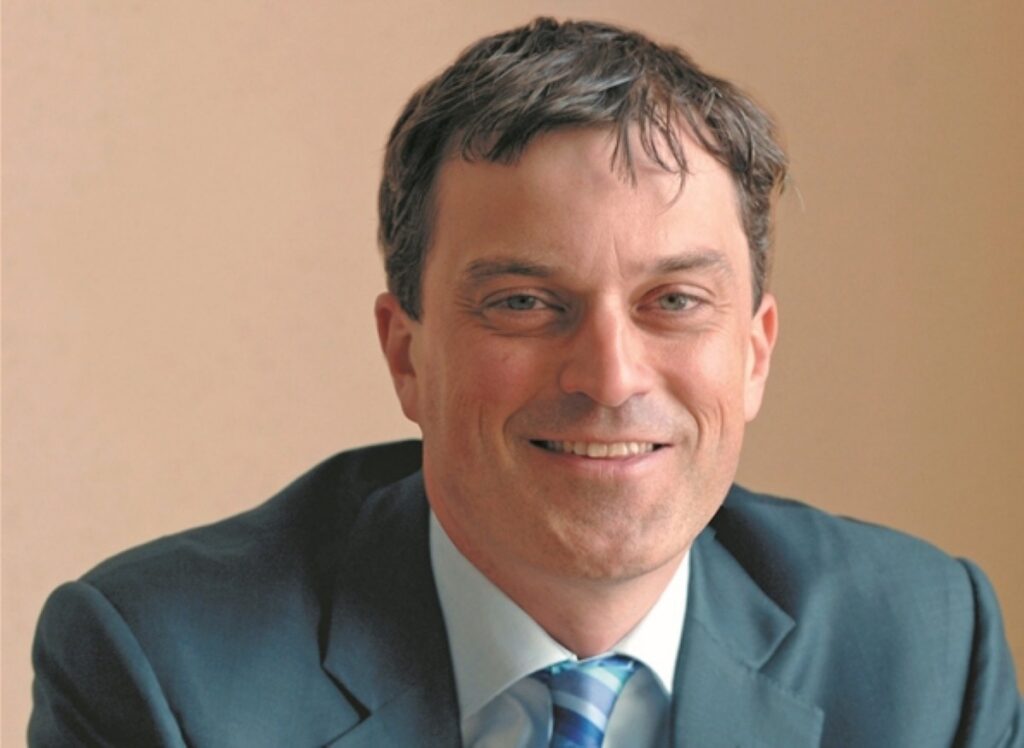


Julian Smith MP: ‘If Burnham is serious about growth, he must end the war on business’
26 August 2026