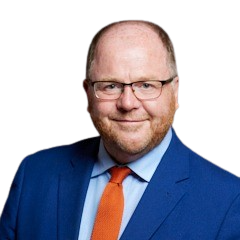
George Freeman is the Conservative MP for Mid Norfolk, having first been elected to parliament at the 2010 general election.
In the 2024 general election, Freeman won 16,770 votes, representing 36.5% of the vote. The Labour candidate, Michael Rosen, received 13,716 votes (29.9%), while the Reform UK candidate, Kabeer Kher, secured 9,427 votes (20.5%). Freeman was duly elected with a majority of 3,054 votes.
The Mid Norfolk constituency is a large rural seat in central Norfolk, including the towns of Dereham, Attleborough and Watton. Agriculture is a key part of the local economy. The seat has been held by the Conservatives since its creation in 1983.
Political Career
Freeman is a member of the House of Commons science, innovation and technology select committee – the committee responsible for examining the expenditure, administration and policy of the Department for Science, Innovation and Technology and associated its public bodies.
In June 2025, Freeman was suspended as the UK’s Trade Envoy to Malaysia, Philippines, Singapore and Brunei following claims a company he was being paid by helped him write questions of claims to government departments. Alleged leaked emails were published by The Times that showed Freeman asking the director of GHGSat, the greenhouse gas emissions monitoring service, what to ask about as he prepared written parliamentary questions related to space data and emissions tracking.
In a statement, Freeman said he did not believe he had done “anything wrong” but that he was referring himself to the standards commissioner.
He commented: “As a longstanding advocate of important new technologies, companies and industries, working cross-party through APPGs and the select committee, I regularly ask experts for clarification on technical points and terminology, and deeply respect and try to assiduously follow the code of conduct for MPs and the need to act always in the public interest.”
Prior to the 2024 general election, which saw the Conservatives ejected from government, Freeman held several ministerial roles, most recently as minister of state for science, research and innovation (September 2021 to July 2022, and again October 2022 to November 2023).
In July 2022, Freeman resigned from this post as science minister as part of the mass walkout of ministers that ultimately forced Boris Johnson to announce his own resignation.
In his resignation letter, addressed to the then-prime minister, Freeman described Johnson’s actions as “seriously damaging public trust and respect for government, democracy and the law.”
He added: “Your leadership, the chaos in No10, breakdown of Cabinet collective responsibility and collapse of public confidence in government represents a constitutional crisis. It is also now seriously undermining our authority in key negotiations on the world stage at a time of urgent international crises.”
https://x.com/MPGeorgeFreeman/status/1544929459286966272
Days later, Freeman offered to return to ministerial office following Johnson’s resignation to serve in the interim/caretaker government then constituted.
In a post to X (formerly Twitter), Freeman said: “In the light of PM’s announcement and the huge issues that need managing this summer, I’ve said to No 10 and chief whip at 10 Downing Street I’m happy to return to work [through] this summer.”
https://x.com/MPGeorgeFreeman/status/1545352190801362944
Having returned to his science brief under Rishi Sunak as prime minister, Freeman resigned again in November 2023 citing personal reasons. Freeman later stated, in January 2024, that he had quit as science minister for the second time because he could not afford to pay his mortgage on a salary of £118,300.
In a blog post, Freeman said he stood down because “my mortgage rises this month from £800pcm to £2,000, which I simply couldn’t afford to pay on a ministerial salary.”
He added: “We’re in danger of making politics something only hedge fund donors, young spin doctors and failed trade unionists can afford to do.”
Freeman’s previous ministerial positions include minister of state for transport (2019-2020) and parliamentary under-secretary of state for life sciences (2014-2016).
He also chaired prime minister Theresa May’s policy board from 2016 to 17. From 2016 to 2019, he was chair of the Conservative Policy Forum (CPF).
Freeman resigned as head of May’s policy board in November 2017. In his resignation letter, Freeman said then-Conservative chairman Patrick McLoughlin needed to be replaced and called for a new team at CCHQ to rejuvenate the party.
Freeman argued the party risked alienating young voters if it allowed itself to be “defined as [a] narrow party of nostalgia, hard Brexit, public sector austerity and lazy privilege”.
In September 2018, he called for May’s resignation once a deal on the UK’s departure from the European Union was secured through Parliament.
He told a London event hosted by The Times: “Let’s get the withdrawal agreement over the line…let’s leave the decision about the end state to be negotiated by Theresa May’s successor.”
In August 2017, Freeman attempted to launch a “Tory Glastonbury” to rival Jeremy Corbyn’s appearance at the music festival. He told the Financial Times he had already raised £25,000 for an idea which he said had “struck a chord” with those he asked for help. “Why is it the left who have all the fun in politics?”, he questioned.
In 2018, Freeman changed the festival to be “non-party political so that MPs, peers and others from the centre left can also get involved”.
https://x.com/MPGeorgeFreeman/status/1038731955821576192
In November 2013, George Freeman presented the Electronic Patient Records (Continuity of Care) Bill to parliament. The private members’ bill sought to give patients access to and ownership of their own electronic health records.
Introducing the bill to parliament under the 10-minute rule procedure, Freeman said it “would reassure patients by establishing in law that ultimate control lies with us, the patients.”
He added: “Without the measures in this bill there is a clear and present risk of the UK – far from leading in this world of personalised medicine; far from winning in the global race for investment; and far from the NHS pioneering new models of health care and productivity and patient empowerment – becoming a backwater and talking the talk but not walking the walk.”
Freeman was a member of the commons housing, communities and local government committee from July 2010 to November 2010.
Freeman is listed as a member of the all-party parliamentary groups (APPGs) for groups such as children of alcoholics, fusion energy and scientific.
Freeman delivered his maiden speech on 7 July 2010 during a debate on jobs and the unemployed. In it, he said: “My constituency has come of late to feel increasingly marginalised, however. Tackling that sense of marginalisation in order to unlock the talents and aspirations of its people is, and will remain, the central theme of my work as its MP.
“The people of Mid Norfolk feel marginalised by the decision-making process and too often forced to change in ways that they have neither chosen nor like. The small, local, voluntary and rural is all too often crowded out by the big, national, professional and urban.”
He added: “I hope that the House might allow me to close on a personal note. As no doubt for all [MPs], taking my seat in this great House is the culmination of a long journey and a lifetime’s dream. I can recall very clearly when that seed was sown: coming here on a school trip aged 12, inspired by childhood stories of my great-uncle [William Ewart] Gladstone.”
Freeman previously stood unsuccessfully as the Conservative candidate for Stevenage in the 2005 general election, finishing second to Labour incumbent Barbara Follett on 14,864 votes (35.4%).
In the 2005 to 2010 parliament, Freeman was added to the Tory “A-List” of prospective parliamentary candidates (PPCs), drawn up by Conservative Central Office at the behest of then-party leader David Cameron. The A-List was a centrally-approved priority list of around 100-150 PPCs created as part of Cameron’s bid to modernise the party’s image. The primary goal was to increase the diversity of Conservative MPs by fast-tracking more women and candidates from ethnic minority backgrounds into safe and winnable seats.
Political views
Leadership elections and loyalty
Tory leadership 2024: Freeman supported Mel Stride’s candidacy in the 2024 Conservative Party leadership election. The contest was triggered by the resignation of Rishi Sunak following the party’s defeat in the 2024 general election. Stride, the then-shadow work and pensions secretary, was eliminated in the second parliamentary ballot on 10 September 2024 after receiving 16 votes.
Freeman subsequently supported James Cleverly’s candidacy. During the contest, Cleverly, the shadow home secretary, urged the party to “be more normal”. On 9 October, in a major upset, Cleverly was eliminated in the fourth ballot after his support dropped to 37 votes. The result was widely attributed to a failure of tactical voting by supporters who assumed his place in the final two was secure.
Tory leadership 2022 (I): Freeman supported Penny Mordaunt’s candidacy in the Conservative Party’s July-September 2022 leadership election. The contest was triggered by the resignation of Boris Johnson, following the mass exodus of more than 60 frontbenchers.
Mordaunt, the international trade minister, was described as a “socially liberal Brexiteer”. She was narrowly overtaken by Liz Truss in the final round. Mordaunt was thereby eliminated in the fifth parliamentary ballot on 20 July after receiving 105 votes.
In an article for CapX, published July 2022, Freeman wrote that it was time to “end the division and embrace a one-nation conservatism of unity, prosperity and security.”
He added: “In this platinum jubilee year, we need a prime minister committed to national renewal in the spirit of the Jubilee we celebrated last month. I believe Penny Mordaunt is dazzlingly well equipped to be the change we urgently need.”
Freeman later switched his support to Rishi Sunak.
Tory leadership 2022 (II): Freeman once again supported Mordaunt’s candidacy in the Conservative Party’s October 2022 leadership election. The contest was triggered by the resignation of Liz Truss after just 45 days in office, following the financial and political tailspin triggered by her “mini-budget”.
Mordaunt withdrew from the contest on 24 October, shortly before the deadline, after being unable to secure the required number of nominations. During the court of the expedited campaign, Freeman switched to Sunak, who was declared leader of the Conservative Party unopposed on 24 October.
Tory leadership 2019: Freeman was one of 20 Conservative MPs who voted for Matt Hancock in the first ballot of the party’s leadership election in June 2019. The contest was triggered by the resignation of Theresa May after she was unable to secure a Brexit deal acceptable to the Conservative Party.
Hancock, the then-health and social care secretary, pitched himself as one nation Conservative who could appeal to the centre ground. He secured 20 votes in the first round of voting on 13 June, placing sixth, and withdrew the next day.
Johnson confidence vote: In June 2022, Freeman publicly declared their loyalty to the prime minister, Boris Johnson, ahead of a Conservative “no-confidence” in his leadership. The vote was triggered by discontent within the parliamentary party following the “partygate” scandal and the publication of the Sue Gray report. While the prime minister ultimately won the vote, the scale of the rebellion against him, with 148 of his own MPs voting to remove him, severely weakened his authority and presaged his resignation the following month.
Tory leadership 2016: Freeman supported Theresa May for the party’s leadership in July 2016. The contest was triggered by the resignation of David Cameron following the UK’s vote to leave the European Union.
May, the then-home secretary, secured a commanding lead in the parliamentary stages, receiving 165 votes in the first ballot and 199 in the second. Following the withdrawal of her final rival, Andrea Leadsom, on 11 July, May was declared leader unopposed and was appointed prime minister two days later.
Freeman’s leadership campaign endorsements generally reflect a more moderate or “one nation” Conservative outlook.
Factional identity and party tradition
One Nation Conservative: Freeman has been listed as a member of the One Nation Conservatives caucus of moderate Tory MPs. The group was established in 2019 to provide a voice for the party’s more pragmatic and professedly “moderate” elements – a factional counter-weight to its ideological free-market, eurosceptic and socially conservative groups. In the 2019 to 2024 parliament, the group was chaired by former first secretary of state Damian Green, who went on to lose his seat at the 2024 general election.
Freeman also claims to have “founded” the associated caucus.
In an interview with the New Statesman in 2023, Freeman described the One Nation tradition as “responsible, unifying, patriotic, compassionate, global, internationalist conservatism.”
Some years previously, Freeman co-founded the 2020 Group of Tory MPs, a group positioned on the “radical progressive centre ground” of the Conservative Party.
Journalist Michael Crick described the group as a “kind of [David] Cameron Supporters’ Club”
Other members of the group included former MPs Damian Green, Greg Barker, Hugo Swire, Nadhim Zahawi and Jo Johnson. In 2011, they were reported as holding weekly meetings at 9pm on Tuesday evenings at Westminster.
In 2014, Freeman described the group to the Daily Telegraph thusly: “The 2020 Conservatives is about the radical progressive centre ground of the parliamentary party, setting out bold ideas for unleashing social mobility and enterprise in 21st century Britain. We are setting out a programme of reform to show how economic and social enterprise and responsibility can go hand in hand in a competitive and compassionate Conservative Britain.”
Conservative Environment Network: Freeman is listed as a member of the Conservative Environment Network (CEN) advisory council. CEN is an independent forum for conservatives that supports conservation and decarbonisation. It calls for the environment to be given a higher profile at the heart of policy making, describing “biodiversity loss, climate change, and wasteful resource use are threats to our national security”, and promotes “market-based policies” to environmental challenges. Members of its parliamentary caucus, such as Freeman, are thought to generally align with the group’s “green” message and environmentalism.
Bright Blue: Freeman has been listed as a parliamentary supporter of Bright Blue, an independent centre-right think tank and membership organisation that champions liberal conservatism in the UK. Since its founding in 2014, the organisation has expanded its reach through a new cross-party strategy.
Brexit and Europe
Brexit referendum: Freeman supported the Remain campaign in the 2016 referendum on Britain’s membership of the European Union (EU), and therefore disagreed with a majority of constituents, 60.6% of whom voted to Leave.
Article 50: In February 2017, Freeman voted in favour of the European Union (Notification of Withdrawal) Bill. The legislation empowered the prime minister to notify the Council of the European Union of the UK’s intention to withdraw, formally triggering the process set out in Article 50 of the Treaty on European Union. MPs supported the bill by 498 votes to 114 at second reading.
Brexit Delivery Group: Freeman was a member of the Brexit Delivery Group of Conservative MPs – a faction of Conservative MPs active during the parliamentary battles over the UK’s withdrawal from the EU between 2018 and 2019. Co-chaired by MPs Andrew Percy and Simon Hart, the group was formed as a pragmatic, pro-deal voice within the parliamentary party – seeking to act as a counterweight to the influence of the hardline European Research Group (ERG).
Assisted dying
Freeman voted in favour of the Terminally Ill Adults (End of Life) Bill, better known as the assisted dying bill, at the second reading (November 2024). On the third reading of the Terminally Ill Adults (End of Life) Bill (Assisted Dying Bill) in June 2025, Freeman abstained.
Freeman said he changed his position as he was unhappy that a requirement for a High Court judge to approve assisted dying applications had been removed from the bill. He said he still “supported the aims of the bill” – but felt more time should be used to consider it.
“The sanctity of life and the ethical responsibilities we hold as lawmakers demand a much more cautious approach”, he commented.
Social values and conscience issues
Same-sex marriage (2013): In February 2013, Freeman was one of the 139 Conservative MPs to vote against the Marriage (Same Sex Couples) Bill at its second reading. The landmark piece of legislation, which received its second reading by 400 votes to 175, legalised marriage for same-sex couples in England and Wales.
Foreign policy and security
Trident renewal (2016): Freeman voted in favour of a government motion calling for the renewal of the Trident nuclear deterrent system in July 2016. The motion, which was passed by 472 votes to 117, committed the UK to constructing a new fleet of submarines to carry the nation’s nuclear weapons.
Syria airstrikes (2015): Freeman voted in favour of a government motion to extend UK airstrikes against Isis from Iraq into Syria in December 2015. The motion, which was passed by 397 votes to 223 after a ten-hour debate in the House of Commons, authorised the RAF to conduct strikes against Isis targets in Syria.
Sanctioned (Russia): In April 2022, Freeman was among the group of MPs placed on a sanctions list by the Russian government. The measure barred them from entering Russia and was presented by Moscow as a retaliatory response to the UK’s stance on the invasion of Ukraine.
Syria airstrikes (2013): Freeman voted in favour of the government’s motion on the principle of military intervention in Syria in August 2013. The government motion was defeated by 285 votes to 272, a move which effectively ruled out UK participation in any US-led military strikes.
Before Politics
Born George William Freeman in Cambridge on 12 July 1967, his father was the Grand National-winning jump jockey Arthur Freeman, and his mother was Joanna Philipson. His parents divorced soon after his birth, and he grew up as a ward of court, having no contact with his father until adulthood.
Freeman has spoken about being a child carer for his mother who suffered from alcoholism.
Freeman’s biography on his official website reads: “[Freeman’s] parents divorced soon after he was born and he had no contact with his father until he reached adulthood, growing up as a ward of court.
“A campaigner for NACOA and child stammerers, Freeman has spoken powerfully about how his experiences as a child carer of his then alcoholic mother with an absent father shaped his core Conservative values of the responsibility of privilege.”
He was educated at Radley College and Girton College, Cambridge, graduating with a degree in Geography in 1989.
After university, he worked as a lobbyist for the National Farmers Union (NFU). He then spent 15 years in the biomedical venture capital sector, founding and financing start-ups.
Personal Life
Freeman was married to Eleanor Holmes from 1996 to 2016, and they have two children (a son and a daughter). In 2020, he married theatre director Fiona Laird.
In 2018, he set up the Bridge of Hope charity in memory of his father. The charity supports inclusive employment and was founded on the 60th anniversary of his father’s Grand National win (1958).
Commenting on the launch of the charity, Freeman said: “Imagine if there was some mechanism for taking those who had taken a fall in life, whether from injury, disability, mental illness, addiction, crime, debt, homelessness and giving them a second chance. There are plenty of charities looking after the fallen but the single biggest game changer is a stable job and we will be encouraging employers to be put people back on their feet.”
Trivia
Freeman is related to the 19th-century prime minister William Ewart Gladstone (his great-great-great-uncle).
Freeman’s great aunt was Mabel Philipson, the third woman to take a seat in the House of Commons. A Conservative MP, she represented the Berwick-upon-Tweed seat from 1923-1929.
Freeman’s father won the Grand National in 1958.
Freeman later bought back his father’s trophy at auction, commenting at the time: “I’ve never bid in an auction and probably paid way too much. It was completely irrational and emotion took over. But hearing the auctioneer bang the gavel and say ‘Sold. It’s coming home’ felt very good.”


George Freeman: ‘Harnessing fusion is the ultimate test for Labour’s industrial strategy’
12 November 2025