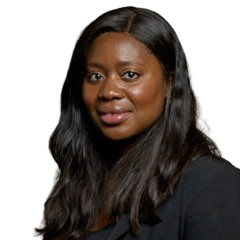
Suella Braverman is the Reform UK MP for Fareham and Waterlooville, having first been elected to parliament as a Conservative for the predecessor seat of Fareham in May 2015.
In the 2024 general election, Braverman (standing as a Conservative) received 17,561 votes in Fareham and Waterlooville, representing 35.0% of the vote share. The Labour candidate, Gemma Furnivall, received 11,482 votes (22.9%), while the Liberal Democrat candidate, Bella Hewitt, secured 9,533 votes (19.0%). Braverman was duly elected with a majority of 6,079 votes.
The Fareham and Waterlooville constituency is located on the Hampshire coast, encompassing the town of Fareham, Portchester and Waterlooville. It was created for the 2024 election, drawing mainly from the former Fareham and Meon Valley constituencies. The predecessor seats were historically safe Conservative territory.
Political Career
Braverman defected from the Conservatives to Reform UK on 26 January, becoming the fourth sitting MP to defect to Nigel Farage’s party since the 2024 general election. Her defection followed that of Robert Jenrick, the former immigration minister.
Upon defecting, Braverman accused Kemi Badenoch, the Conservative leader, of forcing her out as part of a “witch-hunt against rightwingers” and said she felt “politically homeless for the best part of two years”.
Responding to her defection, the Conservatives said they did “all we could to look after Suella’s mental health, but she was clearly very unhappy.” Braverman said the reference to her mental health was “a bit pathetic” and “more signs of a bitter and desperate party that seems to be in free-fall”.
In February 2026, Reform UK unveiled its own so-called “shadow cabinet” or frontbench. Braverman was appointed as “shadow education secretary” (education spokesperson).
During her tenure as a Conservative, Braverman served twice as home secretary. First appointed by Liz Truss in September 2022, she resigned on 19 October 2022 after admitting a “technical infringement” of the ministerial code relating to sending an official document via personal email.
In her resignation letter, Braverman acknowledged she had breached government security rules, stating: “I have made a mistake; I accept responsibility; I resign.”
Braverman also expressed “concerns about the direction of this government”, and, in a veiled swipe at the then-PM, added: “The business of government relies upon people accepting responsibility for their mistakes.
“Pretending we haven’t made mistakes, carrying on as if everyone can’t see that we have made them, and hoping that things will magically come right is not serious politics.”
Braverman, who had run for the Conservative leadership that summer, had been an outspoken critic of Truss’ repeated U-turns over her “mini-budget” measures, claiming the prime minister had fallen victim to a “coup”.
After Truss resigned as prime minister, Braverman was reappointed as home secretary by her successor, Rishi Sunak, just days later on 25 October.
Braverman was dismissed from her post by Sunak in November 2023 following controversy over an opinion piece she wrote for the Times concerning the policing of protests, which No 10 Downing Street stated had not been fully approved before publication. Braverman’s op-ed included the statement that there was “a perception that senior police officers play favourites when it comes to protesters” and were tougher on right-wing extremists than pro-Palestinian “mobs”.
According to reports, Downing Street requested edits to the article that were not implemented.
Braverman went on to become a strident critic of Sunak’s premiership. On 14 November, she sent a scathing letter to Sunak, her former boss, suggesting he had reneged on the terms of a deal the two had agreed during the October 2022 Conservative leadership contest.
Braverman wrote: “As you know, I accepted your offer to serve as home secretary in October 2022 on certain conditions.
“Despite you having been rejected by a majority of party members during the summer leadership contest and thus having no personal mandate to be prime minister, I agreed to support you because of the firm assurances you gave me on key policy priorities.”
The terms of their agreement, according to Braverman’s account of events, pertained directly to the Rwanda deportations scheme. She accused Sunak of reneging on plans to “block off the ECHR, the HRA [Human Rights Act] and any other obligations” which inhibited the government’s ability to operationalise the scheme.
Braverman also accused the government of lacking a “Plan B”.
She added: “If we lose in the supreme court, an outcome that I have consistently argued we must be prepared for, you will have wasted a year and an act of parliament, only to arrive back at square one.
“Worse than this, your magical thinking – believing that you can will your way through this without upsetting polite opinion – has meant you have failed to prepare any sort of credible Plan B.”
On 15 November 2023, supreme court found that there were “substantial grounds for believing” that asylum seekers sent to Rwanda faced a “real risk of ill-treatment as a consequence of refoulement” – the practice of being returned to a country where they might face persecution or human rights abuses.
Braverman’s sacking riled the Conservative right, and even elicited a ‘letter of no confidence’ – courtesy of longstanding Boris Johnson ally Andrea Jenkyns.
The following month, delivering her first speech in the House of Commons since her resignation, Braverman warned that the Conservative Party “faces electoral oblivion” if the government’s latest asylum legislation, responding to the supreme court’s ruling on the Rwanda scheme, failed.
Braverman stood in the July 2022 Conservative leadership contest following Boris Johnson’s resignation as prime minister. She positioned herself as a staunch Brexiteer on the party’s right wing, calling for the UK’s withdrawal from the European Court of Human Rights (ECHR). She was eliminated in the second parliamentary ballot on 14 July after receiving 27 votes.
Braverman ruled herself out of the 2024 Conservative leadership contest after her supporters, including key ally Sir John Hayes, stated they would be supporting fellow right-winger Robert Jenrick. However, in an article for the Telegraph, published July 2024, Braverman insisted she did have the requisite backers (10 MPs) to ensure a spot in the contest’s first round.
She wrote: “There is, for good or for ill, no point in someone like me running to lead the Tory party when most of the MPs disagree with my diagnosis and prescription.”
In the wake of the election campaign, Badenoch accused Braverman of having a “very public” nervous breakdown.
Previously, Braverman served in cabinet as attorney general for England and Wales under Boris Johnson from February 2020 to September 2022 – with a period of maternity leave from March to September 2021, during which Michael Ellis served as interim attorney general.
Braverman also served as parliamentary under-secretary of state at the Department for Exiting the European Union from January 2018 until November 2018, when she resigned in protest at Theresa May’s draft Brexit withdrawal agreement.
Braverman’s letter of resignation argued that May’s deal did not represent “what the British people or my constituents voted for in 2016.”
She added: “Firstly, the proposed Northern Ireland backstop is not Brexit… It prevents an unequivocal exit from a customs union with the EU. This robs the UK of the main competitive advantages from Brexit.
“Secondly, the backstop proposals set out different regulatory regimes for Northern Ireland and Great Britain, threatening to break our precious Union.”
Braverman was a member of the education select committee from 2015 to 2017.
Braverman delivered her maiden speech on 1 June 2015, speaking about her parents arriving in Britain from Kenya and Mauritius and her gratitude for the opportunities the UK offered.
She stated: “It is a stroke of luck to be born British, and my indebtedness goes to the heart of why I am a Conservative. Our party rewards endeavour, enables compassion and liberates people from the shackles of the state.
“Our party says, ‘It doesn’t matter where you start. You can make your life and that of others better by taking responsibility and through self-empowerment and generosity.’ I will do all I can to serve the people of Fareham with humility, integrity and warmth.”
Political Views
Even before her defection to Reform UK, Braverman was associated with the right of British politics.
Braverman stated in May 2023 that immigration threatened the country’s “national character” and called for Britons to be trained for jobs currently done by immigrants. The comments came in a speech to the National Conservatism conference in London. In her address, Braverman also railed against “identity politics” and “radical gender ideology”.
Braverman was criticised for a speech she delivered in March 2019, in which she stated that “as Conservatives, we are engaged in a battle against cultural Marxism.”
In February 2025, Braverman authored an article for the Telegraph arguing that English national identity is rooted in ancestry and ethnicity, stating she considered herself British Asian but not English due to a lack of “generational ties to English soil”.
Braverman wrote: “Englishness has never been static or simple. From the arrival of the Romans to the waves of Saxons, Vikings, and Normans, English culture has always absorbed and adapted. How many generations must pass before one can claim to be English? Five? Six? It is a question without an easy answer.
“If we are to defend Judeo-Christian civilization, British values, and the distinctiveness of English culture, there must be some form of consensus.”
Rishi Sunak later described Braverman’s comment as “ridiculous”.
“Of course I’m English. [I was] born here, brought up here”, he told the BBC’s Political Thinking podcast.
Braverman has also criticised multiculturalism for allowing “parallel lives” without demanding integration.
Leadership elections and loyalty
Tory leadership 2024: Braverman supported Jenrick’s candidacy in the 2024 Conservative Party leadership election. The contest was triggered by the resignation of Rishi Sunak following the party’s defeat in the 2024 general election.
Jenrick, a former immigration minister, positioned himself on the right wing of the party, advocating for the UK to leave the ECHR. He emerged as an early frontrunner, topping the first two parliamentary ballots. After reaching the final two, he was defeated in the membership vote by Badenoch, receiving 41,388 votes (43.5%) compared to Badenoch’s 53,806 (56.5%).
Braverman supported Jenrick despite previously referring to him as a “centrist Rishi supporter”, a remainer and on the “left of the party”.
https://x.com/SuellaBraverman/status/1848654380897112518
Tory leadership 2022 (I): Braverman supported Liz Truss’ candidacy in the Conservative Party’s July-September 2022 leadership election. The contest was triggered by the resignation of Boris Johnson, following the mass exodus of more than 60 frontbenchers.
Truss, the then-foreign secretary, campaigned on a platform of sweeping tax cuts. After finishing second in the final parliamentary ballot with 113 votes, she won the subsequent vote of the party membership with 81,326 votes (57.4%) and was appointed prime minister on 6 September.
Tory leadership 2022 (II): Braverman supported Sunak’s candidacy in the Conservative Party’s October 2022 leadership election. The contest was triggered by the resignation of Truss after just 45 days in office, following the financial and political tailspin triggered by her “mini-budget”.
Sunak, the former chancellor, had finished second to Truss in the previous contest. Unlike the summer contest, this election featured an expedited process requiring each candidate to secure at least 100 nominations from MPs to proceed. Sunak, having emerged as the clear frontrunner, was declared leader of the Conservative Party unopposed on 24 October.
Johnson confidence vote: In June 2022, Braverman was one of the Conservative MPs who publicly declared their loyalty to Johnson ahead of a vote of no confidence in his leadership. The vote was triggered by discontent within the parliamentary party following the “partygate” scandal and the publication of the Sue Gray report. While the prime minister ultimately won the vote, the scale of the rebellion against him, with 148 of his own MPs voting to remove him, severely weakened his authority and presaged his resignation the following month.
Tory leadership 2019: Braverman was one of the Conservative MPs who supported Dominic Raab’s candidacy for the party’s leadership in May 2019. The election was triggered by the resignation of Theresa May following her inability to secure a Brexit deal acceptable to the Conservative Party.
Raab, the former Brexit secretary, argued that the UK must be prepared to leave the EU without a deal on 31 October. He notably refused to rule out the prorogation of parliament to prevent MPs from blocking a no-deal exit. Raab was eliminated in the second parliamentary ballot on 18 June 2019, after securing 30 votes.
Braverman went on to support Boris Johnson’s successful candidacy.
Tory leadership 2016: Braverman supported Michael Gove during the party’s leadership election in July 2016. The contest was triggered by the resignation of David Cameron following the UK’s vote to leave the European Union.
Gove, then the justice secretary, had been expected to manage Boris Johnson’s campaign but made the surprise announcement that he would run for the leadership himself. Gove secured 48 votes in the first ballot, placing third, but his support fell to 46 votes in the second ballot on 7 July. As the candidate with the fewest votes in that round, Gove was eliminated from the contest.
Factional identity and party tradition
European Research Group: Braverman served as chair of the European Research Group (ERG) from 2017 to 2018. She was deputy chair of the group from 2016 to 2017. During the Conservative Party’s last stint in government, the ERG emerged as a highly influential Tory faction composed of staunchly eurosceptic MPs. Founded in 1993, the group played a pivotal role in shaping the UK’s exit from the European Union, consistently advocating for a “hard” Brexit.
Its members were generally and often stridently critical of the withdrawal agreement negotiated by Theresa May. The group proved instrumental in May’s downfall as prime minister.
Rwanda rebellion (amendments): In January 2024, Braverman was one of around 60 Conservative MPs who supported amendments to the government’s Safety of Rwanda (Asylum and Immigration) Bill. The amendments, proposed by Conservative MPs Sir Bill Cash and Robert Jenrick, sought to strengthen the proposed legislation by limiting the ability of individual asylum seekers to prevent their deportation to Rwanda, under the terms of the government’s flagship removals scheme. The rebellion was composed of Tory MPs on the right of the party.
Rwanda rebellion (third reading): Braverman was then one of 11 Conservative MPs to vote against the Safety of Rwanda (Asylum and Immigration) Bill at its third reading. The bill was passed by the House of Commons by 320 votes to 276.
Brexit and Europe
Brexit referendum: Braverman strongly supported leave in the 2016 EU referendum, and therefore agreed with a majority of constituents, 55.5% of whom also voted to leave.
Leave Means Leave: Braverman was a supporter of Leave Means Leave, a cross-party eurosceptic pressure group established in the aftermath of the 2016 EU referendum. The group, which described itself as “the campaign for a clean Brexit”, set out its opposition to any withdrawal agreement that it believed would keep the UK tied to EU rules and institutions – a position often referred to as a “hard Brexit”.
Article 50: In February 2017, Braverman voted in favour of the European Union (Notification of Withdrawal) Bill. The legislation empowered the prime minister to notify the Council of the European Union of the UK’s intention to withdraw, formally triggering the process set out in Article 50 of the Treaty on European Union. MPs supported the bill by 498 votes to 114 at second reading.
Brexit spartan: Braverman was one of the 28 so-called “Brexit spartans”, a group of hardline Eurosceptic Conservative MPs who voted against then-prime minister Theresa May’s Brexit withdrawal agreement on all three occasions it was put to parliament in 2019. The so-called “spartans” argued that May’s deal did not represent a genuine departure from the European Union. Their steadfast opposition was a critical factor in May’s resignation as prime minister.
Assisted dying
Braverman voted against the Terminally Ill Adults (End of Life) Bill, better known as the assisted dying bill, at both second reading (November 2024) and third reading (June 2025).
In a statement setting out her position, Braverman said: “Call it a ‘slippery slope’, ‘thin end of the wedge’, ‘tip of the iceberg’ – use whatever metaphor you like, the point stands, once the euthanasia box is opened, it cannot be closed.
“It’s not just Canada, but closer to home in the Netherlands, where doctors have assisted in the suicide of people not only terminally or physically ill or for whom the burden of living is just too great but for children as young as 12. Is that future really one that… supporters of this bill want?”
Social values and conscience issues
Abortion decriminalisation (2025): Braverman voted against a backbench amendment to the Crime and Policing Bill that sought to decriminalise abortion in England and Wales in June 2025. The amendment, which was passed by a majority of 242 votes, removed women from the threat of prosecution for ending a pregnancy at any stage. As an issue of conscience, MPs were allowed to vote according to their personal beliefs.
Foreign policy and security
Trident renewal (2016): Braverman voted in favour of a government motion calling for the renewal of the Trident nuclear deterrent system in July 2016. The motion, which was passed by 472 votes to 117, committed the UK to constructing a new fleet of submarines to carry the nation’s nuclear weapons.
Syria airstrikes (2015): Braverman voted in favour of a government motion to extend UK airstrikes against Isis from Iraq into Syria in December 2015. The motion, which was passed by 397 votes to 223 after a 10-hour debate in the House of Commons, authorised the RAF to conduct strikes against Isis targets in Syria.
Before Politics
Born Sue-Ellen Cassiana Fernandes on 3 April 1980 in Harrow, London, she grew up in Wembley. Her parents, Christie and Uma Fernandes, emigrated to the UK in the 1960s from Kenya and Mauritius respectively, both being of Indian origin (Goan Catholic and Hindu Tamil Mauritian heritage). Her mother was a nurse and Conservative council candidate.
Braverman was educated at Heathfield School, Pinner (fee-paying) on a partial scholarship, and then studied Law at Queens’ College, Cambridge, where she chaired the University Conservative Association (CUCA). She completed a master’s degree in European and French Law at Panthéon-Sorbonne University in Paris as an Erasmus student and Entente Cordiale Scholar.
She was called to the Bar (Middle Temple) in 2005 and practised as a barrister, primarily at No5 Chambers, specialising in planning law, judicial review, and immigration law. She also passed the New York bar exam in 2006.
In 2010, she co-founded the UK charity Africa Justice Foundation, supporting justice systems in Africa.
Personal Life
Braverman married Rael Braverman in February 2018 at the House of Commons. Her husband works for Mercedes-Benz Group. They have two children: a son born in 2019 and a daughter born in 2021.
She identifies as a Buddhist and attends the Triratna Buddhist Community in London, having taken her parliamentary oath on the Dhammapada. She lives in Locks Heath, Hampshire.
Trivia
Braverman was the first cabinet-level minister in the British government to take statutory maternity leave.
She was named after the character Sue Ellen Ewing from the television show Dallas.
In December 2024, her husband, Rael, joined Reform UK to campaign for Nigel Farage’s party.
On 16 July 2025, Rael announced he had left Reform “effective immediately” – it came some days after he appeared to criticise the defection of Sir Jake Berry, a former Tory MP, to the party. Berry and (Suella) Braverman had clashed following the latter’s expeditious exit from the Truss administration. Berry, who served as Conservative chairman during Truss’ brief tenure as PM, said Braverman had committed a “really serious breach” of the ministerial code.
https://x.com/raelbrav/status/1945423933617881562
Suella Braverman has not written for Politics.co.uk.