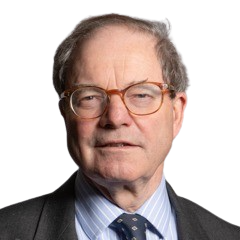
Sir Geoffrey Clifton-Brown is the Conservative MP for North Cotswolds, having first been elected to Parliament for the predecessor seat of Cirencester and Tewkesbury at the 1992 general election.
In the 2024 general election, Clifton-Brown won 17,426 votes, representing 34.7% of the vote. The Liberal Democrat candidate, Paul Hodgkinson, received 14,069 votes (28.0%), while the Labour candidate, Anna Mainwaring, secured 8,593 votes (17.1%). Clifton-Brown was duly elected with a majority of 3,357 votes.
The North Cotswolds constituency was newly created for the 2024 election following boundary changes. It covers the northern part of the former The Cotswolds constituency in Gloucestershire, including towns such as Chipping Campden, Moreton-in-Marsh, and Stow-on-the-Wold. It is considered safe Conservative territory, having been represented by the party continuously since the Second World War.
William Morrison, a former speaker of the House of Commons (1951-1959), represented the Cirencester and Tewkesbury constituency for 30 years from 1929 to 1959. Clifton-Brown’s immediate predecessor, Nicholas Ridley, was a longstanding cabinet minister in Margaret Thatcher’s government, serving consecutively as secretary of state for transport (1983-1986), secretary of state for the environment (1986-1989), and secretary of state for trade and industry (1989-1990).
Clifton-Brown was knighted for political and public Service in 2018
Political Career
Clifton-Brown currently serves as the chair of the influential House of Commons public accounts committee (since September 2024). The PAC is the oldest and arguably one of the most powerful select committees in the House of Commons. Its primary function is to scrutinise the value for money of public spending, ensuring taxpayers’ money is spent wisely. First established in 1857, the committee does not examine the merits of government policy, only the cost and effectiveness of its implementation.
By virtue of this role, Clifton-Brown sits on the liaison committee – the so-called “super committee” composed of the cross-party chairs of all the other commons select committees. It has a broad oversight role, but is best known for its questioning of the prime minister in sessions that take place two or three times a year.
Clifton-Brown has been a member of the public accounts committee for much of his parliamentary career, first joining in 1997.
Clifton-Brown previously served on the Conservative frontbench in opposition. He was shadow secretary of state for international development from 2007 to 2010, having previously held shadow ministerial briefs covering foreign affairs (2005-2007), communities and local government (2001-2004) and environment (2001). He also served as opposition deputy chief whip in 2005 and as an opposition whip from 1999 to 2001.
Clifton-Brown previously acted as the parliamentary private secretary (PPS) to Douglas Hogg, the-then minister of agriculture, fisheries and food. A PPS acts as an unpaid assistant to a minister, providing a link between the senior frontbencher and backbench MPs.
Between 2010 and 2015, Clifton-Brown was chairman of the Conservative Party International Office. In this capacity, he oversaw the activity of the international wing of the party, including its “friends of” groups and interactions with its sister parties.
He also held the post of treasurer of the 1922 committee of Conservative backbench MPs prior to the 2024 general election. The influential committee represents the views of backbench Conservative MPs to the party leadership, and also oversees and administrates Tory leadership contests.
In July 2024, Clifton-Brown proved unsuccessful in a bid to become the committee’s chairman, winning the support of 37 Tory MP colleagues. Bob Blackman, the contest’s victor, secured 61 votes.
Clifton-Brown is listed as a member of the all-party parliamentary groups (APPGs) for China and shooting and conservation.
Clifton-Brown delivered his maiden speech on 12 June 1992.
In it, he said: “As I have said, my predecessor but one [William Morrison] said that all taxation is bad. We must keep a careful eye on public expenditure. The public expenditure goal must be a set proportion of GDP of less than 40 per cent.
“Our major rivals, the United States, Japan and especially Switzerland, can maintain a much lower rate than ours and still have a satisfactory social security system.”
Sir Geoffrey was knighted in the 2018 New Year Honours for political and public service.
Before entering Parliament, Sir Geoffrey was active in the Conservative Party in Norfolk, serving as constituency chairman for North Norfolk from 1986 to 1991.
Political views
Sir Geoffrey blamed the Conservative Party’s loss at the 2024 general election on Liz Truss and Boris Johnson, saying the former PMs had made Sunak’s life “extremely difficult.”
He told BBC Points West: “The various shenanigans with Boris Johnson [were] going to make life extremely difficult for Rishi Sunak.”
He also said that Truss played a “big part” in the downfall of the Conservatives.
Leadership elections and loyalty
Tory leadership 2022 (I): Clifton-Brown supported Rishi Sunak’s candidacy in the Conservative Party’s July-September 2022 leadership election. The contest was triggered by the resignation of Boris Johnson, following the mass exodus of more than 60 frontbenchers.
Sunak, the former chancellor, warned against “comforting fairytales” regarding unfunded tax cuts. Although he won every round of the parliamentary ballots, securing 137 votes in the final stage, Sunak was defeated by Liz Truss in the membership vote, finishing with 60,399 votes (42.6%).
At the time, Clifton-Brown argued that it was “essential to have a prime minister who has detailed knowledge of how the economy works.”
He added: “I have asked Rishi some extremely tough questions on how he will deal with inflation, debt, the war in Ukraine, and how he plans to rejuvenate our public services post-pandemic and I was impressed with the strong responses he gave me.
“We need someone utterly determined and capable of resolving these enormous problems.”
After Sunak entered Downing Street as prime minister in October 2022, following Liz Truss’ brief tenure, Clifton-Brown said he was “very relieved” at the outcome and urged his party to “pull together.”
https://x.com/SkyNews/status/1584601309914796040
Tory leadership 2016: Clifton-Brown supported Theresa May for the party’s leadership in July 2016. The contest was triggered by the resignation of David Cameron following the UK’s vote to leave the European Union.
May, the then-home secretary, secured a commanding lead in the parliamentary stages, receiving 165 votes in the first ballot and 199 in the second. Following the withdrawal of her final rival, Andrea Leadsom, on 11 July, May was declared leader unopposed and was appointed prime minister two days later.
Clifton-Brown said he would have “preferred a Brexit [supporting] candidate” but backed May as the “best prime minister” among the available options.
He added: “We have to make sure she delivers on leaving the European Union but Theresa has explicitly said that she accepts she must abide by the public’s decision.”
Factional identity and party tradition
Conservative Environment Network: Clifton-Brown is listed as a member of the Conservative Environment Network (CEN) parliamentary caucus. CEN is an independent forum for conservatives that supports conservation and decarbonisation. It calls for the environment to be given a higher profile at the heart of policy making, describing “biodiversity loss, climate change, and wasteful resource use are threats to our national security”, and promotes “market-based policies” to environmental challenges. Members of its parliamentary caucus, such as …, are thought to generally align with the group’s “green” message and environmentalism.
Bright Blue: Clifton-Brow has been listed as a parliamentary supporter of Bright Blue, an independent centre-right think tank and membership organisation that champions liberal conservatism in the UK. Since its founding in 2014, the organisation has expanded its reach through a new cross-party strategy.
Brexit and Europe
Brexit referendum: Clifton-Brown supported the Leave campaign in the 2016 referendum on Britain’s membership of the European Union (EU), and therefore disagreed with a majority of constituents, 52.1% of whom voted to Remain.
Article 50: In February 2017, Clifton-Brown voted in favour of the European Union (Notification of Withdrawal) Bill. The legislation empowered the prime minister to notify the Council of the European Union of the UK’s intention to withdraw, formally triggering the process set out in Article 50 of the Treaty on European Union. MPs supported the bill by 498 votes to 114 at second reading.
Brexit Delivery Group: Clifton-Brown was a member of the Brexit Delivery Group of Conservative MPs – a faction of Conservative MPs active during the parliamentary battles over the UK’s withdrawal from the EU between 2018 and 2019. Co-chaired by MPs Andrew Percy and Simon Hart, the group was formed as a pragmatic, pro-deal voice within the parliamentary party – seeking to act as a counterweight to the influence of the hardline European Research Group (ERG).
European Research Group: Clifton-Brown has also been associated with the European Research Group (ERG). During the Conservative Party’s last stint in government, the ERG emerged as a highly influential Tory faction composed of staunchly eurosceptic MPs. Founded in 1993, the group played a pivotal role in shaping the UK’s exit from the European Union, consistently advocating for a “hard” Brexit.
Its members were generally and often stridently critical of the withdrawal agreement negotiated by Theresa May. Chaired variously by Mark Francois, Jacob Rees-Mogg, Steve Baker and Suella Braverman, the group proved instrumental in May’s downfall as prime minister.
Assisted dying
Clifton-Brown voted against the Terminally Ill Adults (End of Life) Bill, better known as the assisted dying bill, at third reading (June 2025).
In a statement setting out his position, published ahead of the bill’s second reading, Clifton-Brown said it did not contain “sufficient details of the safeguards in place to protect those that are vulnerable and the medical profession.”
He added: “The more I have heard over this week, the more resolute I am that I would vote against this Bill. The pressure on the court system would be untenable with public hearings only being able to be heard at the Family Division of the High Court. The current backlog means these decisions might take longer than six months.”
However, Clifton-Brown did not vote on the bill at second reading due to his wife undergoing major surgery. “It was critical that I was home to care for her the following day”, the MP said in a further statement.
Social values and conscience issues
Same-sex marriage (2013): In February 2013, Clifton-Brown was one of the 139 Conservative MPs to vote against the Marriage (Same Sex Couples) Bill at its second reading. The landmark piece of legislation, which received its second reading by 400 votes to 175, legalised marriage for same-sex couples in England and Wales.
Abortion decriminalisation (2025): Clifton-Brown voted against a backbench amendment to the Crime and Policing Bill that sought to decriminalise abortion in England and Wales in June 2025. The amendment, which was passed by a majority of 242 votes, removed women from the threat of prosecution for ending a pregnancy at any stage. As an issue of conscience, MPs were allowed to vote according to their personal beliefs.
Foreign policy and security
Trident renewal (2016): Clifton-Brown voted in favour of a government motion calling for the renewal of the Trident nuclear deterrent system in July 2016. The motion, which was passed by 472 votes to 117, committed the UK to constructing a new fleet of submarines to carry the nation’s nuclear weapons.
Syria airstrikes (2015): Clifton-Brown voted in favour of a government motion to extend UK airstrikes against Isis from Iraq into Syria in December 2015. The motion, which was passed by 397 votes to 223 after a ten-hour debate in the House of Commons, authorised the RAF to conduct strikes against Isis targets in Syria.
Syria airstrikes (2013): Clifton-Brown voted in favour of the government’s motion on the principle of military intervention in Syria in August 2013. The government motion was defeated by 285 votes to 272, a move which effectively ruled out UK participation in any US-led military strikes.
Iraq War authorisation vote (2003): In March 2003, Clifton-Brown voted in favour of the government motion authorising military action against Iraq. The vote, one of the most contentious in recent parliamentary history, gave the prime minister, Tony Blair, the authority to join the US-led invasion.
Civil liberties
Covid passes vote (2021): Clifton-Brown was one of 99 Conservative MPs to vote against Covid passes in England in December 2021.
Before Politics
Born Geoffrey Clifton-Brown on 23 March 1953 in Cambridge. He is the son of a farmer.
Clifton-Brown was educated at Tormore School in Kent and then Eton College.
He subsequently studied at the Royal Agricultural College in Cirencester (now the Royal Agricultural University), qualifying as a chartered surveyor in 1975.
His early career was as a graduate estate surveyor with the Property Services Agency in Dorchester, followed by work as an investment surveyor with the firm Jones Lang Wootton.
Personal Life
Sir Geoffrey Clifton-Brown married Alexandra Peto-Shepherd in 1979; the marriage was dissolved in 2004. He has adult children. He is now reportedly married to Kym Clifton-Brown.
He is a Freeman of the City of London.
Trivia
Clifton-Brown is related to several other previous MPs, including two former speakers of the House of Commons.
His grandfather, Geoffrey Benedict Clifton-Brown, served as the Conservative MP for Bury St Edmunds from 1945 to 1950.
His great-uncle, Douglas Clifton Brown, served as the Conservative MP for Hexham from 1918 to 1923 and 1924 to 1951. He was commons speaker from 1943 to 1951.
Sir Harry Hylton-Foster, Douglas Clifton Brown’s son-in-law, was the Conservative MP for York (1950-1959) and then the Conservative MP for Cities of London and Westminster (1959-1965). He served as commons speaker from 1959-1965.
Another of Sir Geoffrey Clifton-Brown’s great-uncles, Howard Clifton Brown, served as the Conservative MP for Newbury from 1922 to 1923 and 1924 to 1945.
His great-great grandfather, James Clifton Brown, was the Liberal MP for Horsham from 1876-1880.
As a result of familial links and his own political/constituency inheritance, Sir Geoffrey can connect himself to the three speakers who served from 1943 to 1965: Douglas Clifton Brown (1943-1951), William Morrison (1951-1959) and Sir Harry Hylton-Foster (1959-1965).
Geoffrey Clifton-Brown has not written for Politics.co.uk.