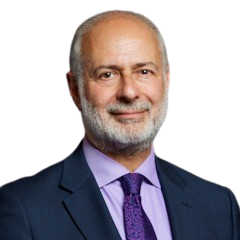
Fabian Hamilton is the Labour MP for Leeds North East, having first been elected to parliament at the 1997 general election.
In the 2024 general election, Hamilton received 23,260 votes (51.5%). The Conservative candidate received 7,177 votes (15.9%), and the Green Party candidate secured 5,911 votes (13.1%). Hamilton was duly elected with a majority of 16,083.
The Leeds North East constituency covers the northern part of the city of Leeds in West Yorkshire. It includes the inner-city area of Chapeltown, suburban areas such as Moortown and Roundhay, and extends northwards towards Eccup reservoir. The constituency is ethnically diverse and includes a notable Jewish population. Historically a Conservative seat, Labour gained Leeds North East in 1997 and has held it since. It is now considered a safe Labour seat.
Hamilton’s immediate predecessor as the MP for Leeds North East was Timothy Kirkhope of the Conservative Party, who represented the seat from 1987 to 1997. Kirkhope would go on to serve as the leader of the Conservatives in the European parliament.
Keith Joseph, who served as a minister under four Conservative prime ministers (Harold Macmillan, Alec Douglas-Home, Edward Heath and Margaret Thatcher), represented the seat from 1956 to 1987. In his 1997 maiden speech, Hamilton appropriately described Joseph as an “architect of what became known as Thatcherism”.
Political Career
Hamilton serves as a trade envoy to Argentina, Paraguay and Uruguay. Appointed by the trade secretary, envoys are tasked with boosting British exports and attracting foreign investment. An envoy’s duties typically involve leading trade delegations, lobbying host governments on market access issues, and building relationships with overseas businesses.
Hamilton is chair of the British Group of the Inter-Parliamentary Union (BGIPU).
In a speech delivered after taking on the role, Hamilton stated: “We must ensure that our engagement is grounded in the realities of the challenges facing people across the world. Growing instability, division, and disinformation put the stability of our democratic institutions at risk.”
At the beginning of the parliament elected in 2024, Hamilton stood unsuccessfully for election as chair of the transport committee. In the contest, the results of which were announced in September 2024, Hamilton secured 163 votes, placing second. They were eliminated in the third round. They were ultimately defeated by Ruth Cadbury, who won the support of 328 colleagues.
Previously, Hamilton served on the opposition frontbenches of both Jeremy Corbyn and Keir Starmer, notably as shadow minister for peace and disarmament (foreign affairs) from October 2016 until the post was abolished in September 2023. In this capacity, he served concurrently in Labour’s defence team from October 2016 to April 2020. He was shadow minister for Africa from January 2016 to June 2016, and shadow minister for Europe even more briefly from June 2016 to July 2016.
Hamilton was appointed shadow Europe minister on 29 June 2016. He replaced Pat Glass who, alongside many of her colleagues, had resigned from the shadow frontbench in protest at Corbyn’s leadership and his approach to the 2016 referendum on Britain’s membership of the European Union (EU).
Hamilton had previously replaced Stephen Doughty as a shadow foreign affairs minister in January 2016. Doughty resigned his post during a live television interview, accusing the Labour leadership of dishonesty over the sacking of Europe spokesman Pat McFadden.
However, Hamilton resigned as shadow Europe minister mere days after his appointment on 4 July 2016 – the 65th frontbencher to do so in just over a week. Hamilton said he was troubled by Corbyn’s response to the party’s antisemitism inquiry – particularly the treatment of Ruth Smeeth, who left the launch of the report in tears after a member of the public appeared to accuse her of colluding with the Daily Telegraph in a row over leaflets criticising MPs opposed to Corbyn’s continued leadership.
In a statement, Smeeth said: “I was verbally attacked by a Momentum activist and Jeremy Corbyn supporter who used traditional antisemitic slurs to attack me for being part of a ‘media conspiracy’.”
Hamilton went on to demand Corbyn’s resignation as Labour leader.
Hamilton returned to the frontbench in October 2016, serving as a shadow minister jointly in Labour’s foreign affairs and defence teams.
Announcing his appointment as shadow minister for peace and disarmament, Hamilton admitted that “the role is unusual”.
He added: “The Labour leader has made peace and disarmament his major international priorities – and I also share his belief that these are important aims, especially given what is happening in so many parts of the world today.”
In a November 2018 article for The House magazine, written while serving as shadow minister for peace and disarmament, Hamilton called on the government to suspend arms sales to Saudi Arabia and establish a “more ethical foreign policy”. Focusing on the conflict in Yemen, Hamilton argued that the UK would appear to be “complicit” in the unfolding humanitarian crisis “by continuing to supply arms and ammunition to the Saudis”, whose bombing campaign he described as a “clear breach of international law.”
He added: “The possibility that British arms may be responsible for the death of innocent children is absolutely sickening, and unforgivable. The British government has prevaricated for too long and should have been using its position as the ‘penholder’ on Yemen at the UN to call for a ceasefire resolution much sooner.”
In November 2024, Hamilton introduced the Powers of Attorney Bill which sought to prevent the financial abuse of vulnerable people. The bill would strengthen the powers of the office of the public guardian to investigate wrongdoing and place greater duties on banks and care homes to spot and report suspicious activity by those holding Lasting Powers of Attorney (LPAs).
The Marriage and Civil Partnership (Consent) Bill, which Hamilton introduced in November 2018, was aimed at combating forced marriage, the bill would have required registrars to formally attest that both parties were freely and fully consenting immediately before a ceremony could be legally completed.
Introducing the bill under the 10-minute rule procedure, Hamilton told the House: “I am presenting my bill in an attempt to close some of the loopholes in the statutes governing marriage in this country.
“It is not good enough for a registrar to say that simply because one of the participants in a marriage ceremony was smiling at the time, consent was happily given.”
In a November 2022 House magazine article, Hamilton argued that Lula’s victory in the Brazilian presidential election was a “win for tackling the climate crisis”.
In a February 2022 piece, Hamilton described then-prime minister Boris Johnson’s behaviour as “an insult to our democracy”.
He wrote: “He has repeatedly lied to the House of Commons about gatherings in Downing Street and has parroted conspiracy theories about one of Britain’s most notorious paedophiles.
“Whether Labour or Conservative, in my 25 years as a member of parliament, I have never seen a British prime minister stoop so low, dragging our Parliament through the mud with him.”
Hamilton has twice been a member of the House of Commons foreign affairs committee, first from July 2001 to May 2010 and later from November 2023 to May 2024. He was a member of the transport committee from November 2023 to May 2024, international development committee from July 2015 to February 2016, national security strategy (joint committee) from November 2010 to March 2015, political and constitutional reform committee from November 2010 to March 2015, the committees on arms export controls from March 2008 to May 2010, and administration committee from July 1997 to May 2001.
He was a member of the panel of chairs from June 2015 to January 2016. The panel of chairs is made up of MPs chosen by the House of Commons speaker, typically at the beginning of every parliament, to chair public bill committees and other commons general committees. In this capacity, Hamilton also chaired debates in Westminster Hall and could also act as temporary chair during a committee of the whole House.
Hamilton is listed as a member of the all-party parliamentary groups (APPGs) for Haiti, human rights, Morocco, the British Council and soft power, cycling and walking and Latin America.
Hamilton delivered his maiden speech on 23 June 1997. In it, he said: “I have the great privilege of representing a constituency of diverse places and communities. It stretches from inner-city Chapeltown to the stately home of Harewood House.
“It encompasses the largest Afro-Caribbean community in West Yorkshire, a large Sikh and Muslim population, the largest Jewish community in Yorkshire… and representatives of the growing Vietnamese, Chinese, Greek, Polish, Latvian, Gujerati Indian, Iranian and African communities.”
He added: “In the end, it is the welfare and the quality of education for our children which count, and I welcome anything that will improve that education.
“Used properly, the PFI [private finance initiative] will greatly enhance our schools and buildings, and will assist staff in concentrating on the job of educating, rather than being distracted into site management, as so many senior school staff are currently forced to do.”
Hamilton previously stood unsuccessfully as the Labour candidate for Leeds North East in the 1992 general election, finishing second to Conservative incumbent Kirkhope on 18,218 votes (36.8%).
Hamilton served as a Labour councillor on Leeds City Council from 1987 to 1998, representing the Wortley ward. He was elected as the chairman of the Leeds West Constituency Labour Party in 1987.
Political Views
Leadership elections and loyalty
Oppose leadership election: In May 2026, Hamilton was among the over 100 Labour MPs who signed a joint statement insisting it was “no time for a leadership contest.” The letter was an intervention in the political crisis engulfing Keir Starmer’s premiership, after Labour suffered heavy losses in the 2026 local elections and devolved elections to the Scottish Parliament and Senedd Cymru. It was organised as a counterweight to a mounting rebellion that had seen high-profile figures, including some ministers, call for Starmer’s resignation.
The statement read: “Last week we had a devastatingly tough set of election results. It shows we have a hard job ahead to win back trust from the electorate.
“That job needs to start today – with all of us working together to deliver the change the country needs.
“We must focus on that. This is no time for a leadership contest.”
Labour leadership 2020: Hamilton was one of 22 Labour who nominated Emily Thornberry for the party’s leadership in early 2020. The election was triggered by the resignation of Jeremy Corbyn following the party’s defeat in the 2019 general election, which resulted in Labour’s fewest seats in the House of Commons since 1935.
Thornberry, then the shadow foreign secretary, was one of five candidates to reach the second stage of the contest. However, she was eliminated from the race on 15 February 2020 after failing to secure the required 33 nominations from Constituency Labour Parties (CLPs) or three affiliated groups. This left Keir Starmer, Rebecca Long-Bailey, and Lisa Nandy as the three candidates on the final membership ballot.
During the campaign, Hamilton described Thornberry as an “inspirational” that “truly gets the best out of everybody she works with.”
He told PoliticsHome: “During Boris Johnson’s time as Foreign Secretary, Emily consistently and powerfully put Labour’s case for humanitarianism and a truly ethical foreign policy to the government.
“In light of the events in Iran, it’s absolutely vital that Labour elects a leader who will uphold our commitment to human rights, peace and disarmament. These have always been core Labour values and will certainly be enhanced under Emily’s leadership.”
In November 2020, Hamilton apologised for taking the “wrong approach” during Jeremy Corbyn’s tenure as Labour leader. He issued a public apology to his local Jewish community, in wake of the the Equality and Human Rights Commission (EHRC) report which found evidence of “unlawful acts, harassment and discrimination” as well as “political interference” in cases of antisemitism in the party.
In a statement, Hamilton said: “The Equality and Human Rights Commission’s report into antisemitism in the Labour Party has rightly been viewed as a shameful moment in the history of our party…
“Whilst I did raise the pain and anger felt across the Jewish community in Leeds privately with Jeremy Corbyn and his team throughout his leadership, it’s clear that my testimonies were not acted upon. It was the wrong approach and I am truly sorry.
“I deeply regret damaging my personal relationship with the Leeds Jewish community – many of whom I have worked closely with over the last 23 years as Labour MP for Leeds North East – and many of whom remain as good friends.”
In July 2018, the Jewish Chronicle reported that Hamilton had called for a less “hysterical and angry” approach to Labour’s antisemitism rows.
Hamilton also criticised Dame Margaret Hodge, then a fellow Labour MP, when he was asked why he had not defended her for confronting Jeremy Corbyn to his face.
According to the report, Hamilton wrote in a letter: “As for Margaret Hodge, shortly after she allegedly lost her temper with Jeremy Corbyn, I got the next blast in the lobby when she shouted at me for still remaining on the frontbench and it wasn’t very calm or dignified.
“In fact, even as a hardened politician with 21 years’ experience in parliament, I came away slightly upset and a little angry at being the butt of her frustration with Jeremy Corbyn.”
He added: “I recalled that when she was a minister during the Iraq war, I didn’t shout at her for staying in the government even though I had voted against the war.”
In May 2018, Hamilton said that former London mayor Kevin Livingstone was “absolutely right” to resign from the Labour Party after comments he made about Adolf Hitler supporting Zionism.
Hamilton said: “Ken Livingstone’s comments caused a lot of distress to many people within the Jewish community in Leeds, including to myself.
“The historical inaccuracies that he put forward many times over the last few years were disturbing, and were damaging to the Labour Party’s reputation, so it was absolutely right for him to resign.”
Labour leadership 2015: Hamilton nominated Yvette Cooper for the party’s leadership in June 2015. The election followed the resignation of Ed Miliband after the party’s defeat in the 2015 general election. It was the first contest held under the “one member, one vote” system, which replaced the previous electoral college.
Cooper, the shadow home secretary, secured 59 nominations from the Parliamentary Labour Party (PLP), comfortably exceeding the 35 required to reach the final ballot. She ultimately finished third in the contest with 17% of the vote.
Anti-austerity letter (2015): Hamilton was among the 16 Labour MPs – generally associated with the party’s left wing – who signed a statement demanding then-leader Ed Miliband oppose further austerity, take rail franchises back into public ownership and strengthen collective bargaining arrangement. Jeremy Corbyn, Diane Abbott and John McDonnell were among the signatories.
The statement, issued in January 2015, read: “There is an alternative way out of endless austerity. We need public investment to kickstart the economy out of faltering growth and to generate real job creation and rising incomes.”
Labour leadership 2010: Hamilton was one of 81 Labour MPs who nominated David Miliband for the party’s leadership in May 2010. The election followed the resignation of Gordon Brown, who stepped down as prime minister and Labour leader after the 2010 general election.
Miliband, the former foreign secretary, was seen as closely aligned with the New Labour project – a Blairite figure. He secured 81 nominations from the Parliamentary Labour Party (PLP), comfortably exceeding the 33 required to reach the final ballot, but was narrowly defeated by his brother, Ed Miliband, in the final round by 50.7% to 49.3%.
Brexit and Europe
Brexit referendum: Hamilton supported the Remain campaign in the 2016 EU referendum, and therefore agreed with a majority of his constituents, 62.6% of whom voted also to Remain.
Article 50: In February 2017, Hamilton voted in favour of the European Union (Notification of Withdrawal) Bill. The legislation empowered the prime minister to notify the Council of the European Union of the UK’s intention to withdraw, formally triggering the process set out in Article 50 of the Treaty on European Union. MPs supported the bill by 498 votes to 114 at second reading.
Remain pledge: During the 2019 general election campaign, Hamilton was one of 193 Labour candidates to sign the anti-Brexit “Remain pledge”, drawn up by the campaign group Remain Labour.
It stated: “Labour is committed to a confirmatory referendum, to give you the final say on Brexit. If elected as your Labour MP, I pledge to campaign to Remain in the EU.”
Welfare
Welfare ‘reasoned amendment’ (June 2025): Hamilton was one of the over 120 Labour MPs to sign the reasoned amendment to the government’s flagship welfare bill which aimed to reject the proposed legislation.
The amendment, in the name of senior Labour MP Dame Meg Hillier, objected to the fact that the bill had not been subject to a “formal consultation with disabled people” and that “250,000 people will be pushed into poverty” as a result of it, according to a government impact assessment.
The motion also called on the government to wait for the publication of the review into the Personal Independence Payment (Pip), helmed by minister Sir Stephen Timms, and the independent review, conducted by Sir Charlie Mayfield, into how the employment of disabled people could be boosted.
Welfare vote (July 2025): Hamilton voted in favour of the government’s flagship welfare bill at second reading. The vote came after ministers agreed to significant concessions to avoid defeat via a mass rebellion of Labour MPs on 1 July 2025.
Assisted dying
Hamilton voted in favour of the Terminally Ill Adults (End of Life) Bill, better known as the assisted dying bill, at the second reading (November 2024). He did not record a vote at the bill’s third reading (June 2025) – but said he would have voted in favour of the bill had he not been “on parliamentary business with the British Group Inter-Parliamentary Union.”
In a statement setting out his position, issued after the bill’s third reading debate, Hamilton said: “My view remains that good palliative care is not incompatible with the compassion shown by the measures set out in this bill.
“I have supported the bill consistently and believe it is morally right to give those who choose to end their own life because of a terminal illness, dignity in death.”
Social values and conscience issues
Same-sex marriage (2013): In February 2013, Hamilton voted in favour of the Marriage (Same Sex Couples) Bill at its second reading. The landmark piece of legislation, which received its second reading by 400 votes to 175, legalised marriage for same-sex couples in England and Wales.
X letter: In November 2025, Hamilton was one of 34 cross-party MPs and peers who signed a letter to Ofcom demanding an investigation into the social media platform X (formerly Twitter). The letter, led by Joani Reid, chair of the all-party parliamentary group (APPG) on antisemitism, called on the regulator to determine whether the platform was in breach of its legal duties under the Online Safety Act following a reported surge in antisemitic content and calls for violence against Jews on X.
Foreign policy and security
Sanctioned (Russia): In April 2022, Hamilton was among the group of MPs placed on a sanctions list by the Russian government. The measure barred them from entering Russia and was presented by Moscow as a retaliatory response to the UK’s stance on the invasion of Ukraine.
Trident renewal (2016): Hamilton voted against a government motion calling for the renewal of the Trident nuclear deterrent system in July 2016. The motion, which was passed by 472 votes to 117, committed the UK to constructing a new fleet of submarines to carry the nation’s nuclear weapons. Labour was split over the issue with 140 of its 230 MPs going against leader Jeremy Corbyn and backing the motion.
Syria airstrikes (2015): Hamilton voted against a government motion to extend UK airstrikes against Isis from Iraq into Syria in December 2015. The motion, which was passed by 397 votes to 223 after a ten-hour debate in the House of Commons, authorised the RAF to conduct strikes against Isis targets in Syria.
Syria airstrikes (2013): Hamilton voted against the government’s motion on the principle of military intervention in Syria in August 2013. The government motion was defeated by 285 votes to 272, a move which effectively ruled out UK participation in any US-led military strikes.
Iraq War vote (2003): In March 2003, Hamilton voted for a rebel amendment which argued that the case for war against Iraq had not been established. A total of 139 Labour, 53 Liberal Democrat and 15 Conservative MPs backed the amendment. The government’s unamended motion authorising military action against Iraq passed by 412 votes to 149.
In 2006, Hamilton signed the Euston Manifesto and the statement of principles of the Henry Jackson Society, a neoconservative think tank.
He commented at the time: “I agree with the manifesto and its forward looking principles. I am especially impressed with its embrace of freedom and its rejection of racism and antisemitism. The points made about the growing respectability of anti-Zionism are especially important.”
Hamilton believes in “multilateral disarmament”.
Palestine
In July 2025, Hamilton was among the over 130 Labour MPs to sign a cross-party letter calling for the government to immediately recognise the state of Palestine. The letter, led by Labour MP for Rotherham Sarah Champion and signed by almost a quarter of MPs in the House of Commons, called on the prime minister and foreign secretary to recognise Palestine at the UN Conference then taking place in New York.
The letter read: “Whilst we appreciate the UK does not have it in its power to bring about a free and independent Palestine, UK recognition would have a significant impact due to our historic connections and our membership on the UN Security Council, so we urge you to take this step.
“British recognition of Palestine would be particularly powerful given its role as the author of the Balfour Declaration and the former Mandatory Power in Palestine. Since 1980 we have backed a two-state solution. Such a recognition would give that position substance as well as living up to a historic responsibility we have to the people under that Mandate.”
Ceasefire vote (November 2023): Hamilton was among 56 Labour MPs to vote in favour of a Scottish National Party (SNP) amendment to the King’s Speech in the House of Commons calling for an “immediate ceasefire” in Gaza – defying the instruction set out by the party’s frontbench. Labour had tabled its own motion, making a more moderate appeal for a “humanitarian pause” in the conflict and ordered its representatives to support that stance.
In January 2016, Hamilton said that boycotting Israel and not “all the dictatorships in the world” is “simply antisemitic”.
He told Jewish News: “If you’re going to boycott Israel because of what it allegedly does you should boycott China too which means not buying computers or mobile phones. Are you going to boycott Burma? Are you going to boycott all the countries that treat minorities far worse than Israel ever does because Israel is a democratic country?
“Are you going to boycott all the dictatorships in the world? If you’re going to do that then maybe you have a case for boycotting Israel. Until then, it’s absolutely out the question. It’s simply antisemitic.”
In April 2015, Hamilton accused then-Labour leader Ed Miliband of “betraying” Israel with his position on the Gaza conflict. Speaking to the Jewish Chronicle, Hamilton said he was also angry over the party leadership’s attempt to whip MPs into voting for unilateral recognition of a Palestinian state. On this vote, held in 2014, Hamilton rebelled and abstained.
He commented: “I’d be lying if I said there had been no impact at all. I was steaming mad the day before the Palestine debate when I got a text from the whips saying ‘you must vote’. A third of the shadow cabinet boycotted it. Our leader’s choice on this did not help us.”
Before Politics
Born Fabian Uziell-Hamilton in London on 12 April 1955 into a British Jewish family (his maternal grandfather was an Orthodox Rabbi), he attended Brentwood School in Essex. He graduated from the University of York with a Bachelor of Arts degree.
After university, he worked briefly as a taxi driver (from 1978) before pursuing a career as a graphic designer. From 1994 until his election in 1997, he worked as a computer systems consultant specialising in Apple Macintosh systems.
Personal Life
Hamilton married Rosemary Ratcliffe in 1980. They have two daughters and one son.
Hamilton’s great-grandmother, Raina Sevilla, was murdered in Auschwitz-Birkenau in July 1942.
In an article for the Yorkshire Post, published April 2018, Hamilton wrote: “I mention Raina Sevilla because, like almost every other Jewish family alive in Britain today, I have a direct connection to the Holocaust and through that a direct connection to the nation that was created in 1948, 70 years ago this year, to give safety and security to the Jewish people after the catastrophe of that appalling genocide on such an industrial scale.
“But my own roots are even more complex: three of my grandparents were born abroad, as was my father, who couldn’t speak English until he was 12, although just eight years after arriving in England he started his service in the British Army…
” My maternal grandfather was an Orthodox Rabbi who then joined a Reform Synagogue and finally lost his faith altogether. My sister and I are the product of both Ashkenazi and Sephardi traditions, though as a young man I was often mistaken for being Greek, Italian, Iranian or Arabic and sometimes I still am.”
He added: “One of the most disturbing aspects of the current wave of anti-Semitism – and Islamophobia – is that humanity has clearly not learned from the lessons of history, for if we are ever to create a truly harmonious and peaceful society, we have to stamp out the ignorance and fear that leads to hatred, whether of the Jewish people, or of any other cultural or religious group within society.”
Hamilton speaks fluent French and is a member of the Unite trade union.
Trivia
Hamilton attended school with the writer Douglas Adams and comedian Griff Rhys Jones and was in a production of Julius Caesar alongside them both.
Hamilton is a keen cyclist, having completed a charity cycle ride to Aachen, Germany, to raise money for a Kenyan children’s charity in 2017.


Fabian Hamilton: ‘The UK’s vital partnership with Morocco is delivering results’
13 June 2025