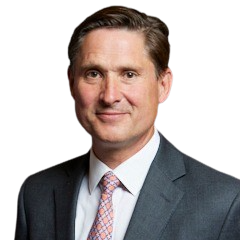
Sir Sajid Javid served as the Conservative MP for Bromsgrove from the 2010 general election until he stood down ahead of the 2024 general election.
A prominent figure who held several high offices, Javid was notably the first person of colour to hold one of the great offices of state, serving as home secretary from April 2018 to July 2019 and later as chancellor of the exchequer from July 2019 to February 2020.
Javid twice ran unsuccessfully for the Conservative Party leadership, in 2019 (finishing fourth) and briefly in 2022.
Javid announced his decision to stand down from parliament in December 2022, saying that “serving in government has been the privilege of my life and I am immensely grateful for the opportunity to serve.”
The Bromsgrove seat was held for the Conservatives by Bradley Thomas at the 2024 general election.
Javid was knighted in the 2024 New Year Honours list for political and public service.
Political Career
Javid served as chancellor of the exchequer from July 2019 to February 2020 under Boris Johnson as prime minister.
Javid resigned as part of the February 2020 reshuffle after the prime minister ordered him to dismiss his entire team of special advisers and replace them with ones selected by 10 Downing Street. The ultimatum was widely seen as an attempt by the prime minister’s then-chief adviser, Dominic Cummings, to diminish the Treasury’s traditional independence and political influence. Cummings, the former director of Vote Leave at the time of the 2016 Brexit referendum, was an integral and controversial staple of Johnson’s inner circle during this period.
In August 2019, Cummings reportedly dismissed Sonia Khan, one of Javid’s top advisers, without informing the chancellor. After clashing with Cummings, Khan was escorted out of Downing Street by an armed police officer.
In his resignation letter, Javid said he could not accept “the conditions attached to the reappointment”.
Javid was swiftly replaced as chancellor by his deputy, chief secretary to the Treasury Rishi Sunak, who was considered to be a Johnson loyalist.
In June 2021, Johnson was forced to reappoint Javid to the position of health secretary. This came after the previous incumbent, Matt Hancock, resigned for breaching social distancing guidance by kissing a colleague.
In June 2022, Javid publicly declared their loyalty to the prime minister, Boris Johnson, ahead of a Conservative “no-confidence” in his leadership. The vote was triggered by discontent within the parliamentary party following the “partygate” scandal and the publication of the Sue Gray report. While the prime minister ultimately won the vote, the scale of the rebellion against him, with 148 of his own MPs voting to remove him, severely weakened his authority and presaged his resignation the following month.
Javid went on to play a central role in Johnson’s downfall as prime minister.
Both Javid and Rishi Sunak resigned from their cabinet positions in response to the prime minister’s handling of the so-called “Pincher affair”. Chris Pincher, who was responsible for maintaining party discipline and MP welfare, was accused of groping two male guests on the evening of 29 June 2022 at the Carlton Club.
Javid delivered a blistering resignation statement in the House of Commons, drawing parallels with Geoffrey Howe’s fatal parting shot directed at Margaret Thatcher.
With Johnson sitting on the government frontbench, Javid declared that “enough is enough”.
He added: “I also believe a team is as good as its team captain, and that a captain is as good as his or her team. So loyalty must go both ways. The events of recent months have made it increasingly difficult to be in that team.”
The wave of resignations that followed, totalling over 60, forced Johnson to announce his own departure on 7 July, against his obstinate wish to remain in office.
Javid stood in the subsequent July-September 2022 Conservative leadership election. However, he failed to secure the backing of at least 20 Conservative Party MPs to qualify for the first ballot.
During the campaign, Javid pledged to reverse the recent national insurance rise. He argued that the party needed to restore its reputation for integrity and economic competence. However, he ultimately withdrew from the contest before the nominations deadline, after failing to secure enough support from fellow MPs to reach the required 20-nomination threshold.
Javid previously ran in the 2019 Conservative leadership election. The contest was triggered by the resignation of Theresa May following her inability to secure a Brexit deal acceptable to the Conservative Party. Javid, the then-home secretary, successfully reached the final four of the parliamentary stages, but was eliminated in the fourth ballot on 20 June after receiving 34 votes.
Javid played a role in the 2016 Conservative leadership election as supporter of Crabb’s candidacy. Crabb, the work and pensions secretary, was the first candidate to formally declare his intention to stand for the leadership, running on a joint ticket with Javid as his intended chancellor. Crabb withdrew from the race after the first ballot and endorsed Theresa May, the contest’s eventual winner.
Javid served as home secretary from April 2018 to July 2019 following Amber Rudd’s resignation over the Windrush scandal. Rudd admitted that she had “inadvertently misled” the home affairs select committee over the existence of targets for the removal of illegal immigrants.
Javid delivered his first remarks to the commons as home secretary on 30 April. It came in response to an urgent question tabled by Diane Abbott, the shadow home secretary, which called for a statement on the “government’s handling of the Windrush crisis”.
Javid, the first person of colour to occupy one of the great offices of state, emphasised his identity as a second-generation migrant.
He told MPs: “When I heard that people who were long-standing pillars of their communities were being impacted for simply not having the right documents to prove their legal status in the UK, I thought that that could be my mum, my brother, my uncle or even me.”
Javid served in several other senior ministerial roles, including as secretary of state for housing, communities and local government from July 2016 to April 2018, secretary of state for business, innovation and skills from May 2015 to July 2016, and secretary of state for culture, media and sport from April 2014 to May 2015.
Javid delivered his maiden speech on 8th June 2010 during a debate on economic affairs.
In it, Javid said: “There are many global economic uncertainties at the moment, and they have potentially grave consequences for our economy.”
He added: “We have to make sure that when we look at these issues, we never forget the traditional disciplines that have stood Britain in good stead – sound public finances, low and simple taxation, and light and flexible regulation.
“It is when we forget these disciplines that we put our future prosperity at risk.”
Political Views
Javid is generally considered to be on the Thatcherite, economically liberal wing of the Conservative Party.
Javid attended his first Conservative conference towards the end of the Thatcher years. At the 1990 conference, he handed out leaflets opposing the decision to join the Exchange Rate Mechanism (ERM).
Leadership elections
Tory leadership 2022 (II): Javid supported Rishi Sunak’s candidacy in the Conservative Party’s October 2022 leadership election. The contest was triggered by the resignation of Liz Truss after just 45 days in office, following the financial and political tailspin triggered by her “mini-budget”.
Sunak, the former chancellor, had finished second to Truss in the previous contest. Unlike the summer contest, this election featured an expedited process requiring each candidate to secure at least 100 nominations from MPs to proceed. Sunak, having emerged as the clear frontrunner, was declared leader of the Conservative Party unopposed on 24 October.
Tory leadership 2022 (I): Javid supported Liz Truss’ candidacy in the Conservative Party’s July-September 2022 leadership election. The contest was triggered by the resignation of Boris Johnson, following the mass exodus of more than 60 frontbenchers.
Javid endorsed Truss after failing to secure the necessary nominations to continue in the race himself.
Truss, the then-foreign secretary, campaigned on a platform of sweeping tax cuts. After finishing second in the final parliamentary ballot with 113 votes, she won the subsequent vote of the party membership with 81,326 votes (57.4%) and was appointed prime minister on 6 September.
Tory leadership 2019: After dropping out of the race, Javid supported Boris Johnson for the party’s leadership in 2019.
Johnson, the former foreign secretary and mayor of London, campaigned on the central pledge to “deliver Brexit” by 31 October 2019, “deal or no deal”. He thereby positioned himself as the candidate best-placed to break the parliamentary deadlock. Johnson secured 114 votes in the first parliamentary ballot, and reached 160 votes in the final MP round. In the subsequent ballot of the party membership, Johnson won a decisive victory with 92,153 votes (66.4%).
Tory leadership 2016: Javid supported Theresa May for the party’s leadership in July 2016. The contest was triggered by the resignation of David Cameron following the UK’s vote to leave the European Union.
May, the then-home secretary, secured a commanding lead in the parliamentary stages, receiving 165 votes in the first ballot and 199 in the second. Following the withdrawal of her final rival, Andrea Leadsom, on 11 July, May was declared leader unopposed and was appointed prime minister two days later.
Factional identity and party tradition
Free Enterprise Group: Javid was a member of the Free Enterprise Group (FEG) of Conservative MPs – a parliamentary caucus, founded in 2011 by Liz Truss, that championed free-market, libertarian economic policies. The group, seen as a standard-bearer for the Thatcherite wing of the party, is most notable for the political ascent of its founding members. Key figures in the FEG included Truss, Kwasi Kwarteng, Priti Patel, Dominic Raab and Chris Skidmore. The 2012 book, Britannia Unchained, served as the group’s unofficial manifesto for radical free-market reform. It was effectively succeeded by the Free Market Forum, which was launched in 2021.
Cornerstone Group: Javid was a member of the Cornerstone Group, a highly traditionalist and socially conservative faction of Conservative MPs. Its political philosophy was summarised by its motto: “Faith, Flag, and Family”. In July 2005, the group published a pamphlet that accused the-leader Michael Howard of running a general election campaign that was too “timid” about tax cuts, public service reform and family values.
Brexit and Europe
Javid voted Remain in the 2016 referendum on Britain’s membership of the European Union (EU). However, he expressed eurosceptic sentiment during the campaign and said he supported Remain “with a heavy heart and no enthusiasm”.
Article 50: In February 2017, Javid voted in favour of the European Union (Notification of Withdrawal) Bill. The legislation empowered the prime minister to notify the Council of the European Union of the UK’s intention to withdraw, formally triggering the process set out in Article 50 of the Treaty on European Union. MPs supported the bill by 498 votes to 114 at second reading.
Social values and conscience issues
Same-sex marriage (2013): In February 2013, Javid was one of the 131 Conservative MPs to vote in favour of the Marriage (Same Sex Couples) Bill at its second reading. The landmark piece of legislation, which received its second reading by 400 votes to 175, legalised marriage for same-sex couples in England and Wales.
Foreign policy and security
Trident renewal (2016): Javid voted in favour of a government motion calling for the renewal of the Trident nuclear deterrent system in July 2016. The motion, which was passed by 472 votes to 117, committed the UK to constructing a new fleet of submarines to carry the nation’s nuclear weapons.
Syria airstrikes (2015): Javid voted in favour of a government motion to extend UK airstrikes against Isis from Iraq into Syria in December 2015. The motion, which was passed by 397 votes to 223 after a 10-hour debate in the House of Commons, authorised the RAF to conduct strikes against Isis targets in Syria.
Syria airstrikes (2013): Javid voted in favour of the government’s motion on the principle of military intervention in Syria in August 2013. The government motion was defeated by 285 votes to 272, a move which effectively ruled out UK participation in any US-led military strikes.
Before Politics
Javid was born in Rochdale, Lancashire, on 5 December 1969, and grew up in Bristol.
His parents were migrants from Pakistan; his father, who reportedly arrived in the UK with only £1, worked as a bus driver. Javid has spoken of experiencing racism during his youth. He attended Downend School and Filton Technical College, before studying economics and politics at the University of Exeter.
After graduating, Javid pursued a successful career in international finance. He worked at Chase Manhattan Bank in New York and London, becoming, aged 25, their youngest ever vice president. He later moved to Deutsche Bank.
Personal Life
Javid married his childhood sweetheart, Laura King, in 1997. They have four children.
Javid’s elder brother, Bas, was appointed director general of immigration enforcement at the Home Office in 2023.
Trivia
Javid was the first person of colour to hold one of the great offices of state.
Javid resigned as chancellor of the exchequer after only 204 days, becoming the first chancellor in 50 years not to deliver a budget.
Sajid Javid has not written for Politics.co.uk.