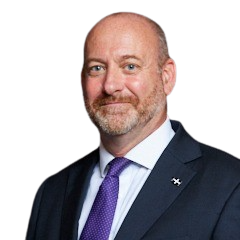
Perran Moon is the Labour MP for Camborne and Redruth, having first been elected to parliament at the 2024 general election.
In the 2024 general election, Moon won 19,360 votes, representing 40.5% of the vote. The Conservative candidate, Connor Donnithorne, received 11,554 votes (24.2%), while the Reform UK candidate, Roger Tarrant, secured 8,952 votes (18.7%). Moon was duly elected with a majority of 7,806
The Camborne and Redruth constituency is located in Cornwall, in the South West of England. The seat was created in 2010 and held by the Conservative Party until the 2024 election.
Moon’s immediate predecessor as the MP for Camborne and Redruth was George Eustice of the Conservative Party. Eustice stood down from parliament at the 2024 general election.
Political Career
Moon was appointed as a government “business champion” for renewable energy in the South West – a role established in February 2025 to facilitate engagement between the Labour administration and the private sector.
The position was part of a network of approximately 40 MPs appointed by the Department for Business and Trade to act as conduits for industry views on government policy. The grouping operated under the oversight of Dan Tomlinson, the national “mission champion” for growth.
The selection of champions was designed to leverage the professional expertise of the 2024 intake of MPs, and the role was seen as an early step on the Westminster ladder. However, the scheme was reportedly scrapped in July 2025 following a meeting at 10 Downing Street. According to a Guido Fawkes report, the business champions were told that their services were no longer required.
In May 2026, Moon was among the over 100 Labour MPs who signed a joint statement insisting it was “no time for a leadership contest.” The letter was an intervention in the political crisis engulfing Keir Starmer’s premiership, after Labour suffered heavy losses in the 2026 local elections and devolved elections to the Scottish Parliament and Senedd Cymru. It was organised as a counterweight to a mounting rebellion that had seen high-profile figures, including some ministers, call for Starmer’s resignation.
The statement read: “Last week we had a devastatingly tough set of election results. It shows we have a hard job ahead to win back trust from the electorate.
“That job needs to start today – with all of us working together to deliver the change the country needs.
“We must focus on that. This is no time for a leadership contest.”
In February 2026, Moon expressed criticisms about the government’s proposed overhaul of indefinite leave to remain (ILR) guidelines in a Westminster Hall debate. The session, which was triggered by two public petitions signed by over 330,000 people, focused on Home Office proposals to replace the established five-year pathway to permanent residency (also known as indefinite leave to remain or settlement) with a 10-year baseline under an “earned settlement” model.
In the debate, Moon called moving the goalposts “not fair play” and “not British”.
He stated: “I am deeply uncomfortable with the principle of changing the rules for people already in the UK who have so often experienced huge upheaval to settle in the UK…
“Are they working hard and paying their taxes in the UK, only for the goalposts to move and for the terms under which they came to the UK to change? I am afraid that that is not right. It is not keeping our word. It is not fair play. Dare I say it, it is not British.”
Moon is listed as a member of the all-party parliamentary groups (APPGs) for electric vehicle (chair), British Sign Language, critical minerals, and Primodos.
Moon delivered his maiden speech on 5 September 2024 during a debate on the Great British Energy Bill.
In it, he said: “Tin, which is used in the production of virtually every electrical device, is now also being used in the production of solar panels and, along with lithium, forms the cornerstone of our critical mineral industry…
“The renewable energy opportunities are not the only factors that make this land so distinct. Let me quickly give three other examples. First, 10 years ago Cornwall was granted national minority status under the European framework convention for the protection of national minorities.
“Our language, our culture and our heritage, as well as our economic potential, mark us out on this island.
“Secondly, the positive reaction received by all six Cornish MPs on both sides of the House for taking our oaths in Cornish is telling.”
He added: “It has been clear on the doorstep over the past two years that there is a strong desire for a non-mayoral model of governance arrangement with Westminster.
“My hope and my focus in the coming weeks and months will be to persuade the Government that the most appropriate devolution arrangement for Cornwall is an assembly similar to that of our Celtic cousins in Wales.”
Before entering parliament, Moon served as a Labour councillor on Cherwell District Council in Oxfordshire from 2019 until 2023.
Political Views
Leadership elections
Labour deputy leadership 2025: Moon was one of 175 Labour MPs who nominated Bridget Phillipson for the party’s deputy leadership in September 2025. The election followed the resignation of Angela Rayner, who stepped down as deputy prime minister and deputy party leader after an investigation into her tax affairs. It marked the first time since 2007 that Labour had held a deputy leadership contest while in government.
Phillipson, the serving education secretary, was widely viewed as the candidate favoured by Downing Street and the party leadership. She secured 175 nominations from the Parliamentary Labour Party (PLP), comfortably exceeding the 80 required to reach the final ballot. She was ultimately defeated by Lucy Powell.
Factional identity and party tradition
Labour Rural Research Group: Moon has been listed as a member of the Labour Rural Research Group (LRRG) – a caucus made up of MPs representing Labour’s so-called “rural wall”. Launched in August 2025, the group’s primary aim is to ensure that policy is developed with a clear understanding of the distinct challenges and priorities of rural and semi-rural communities.
The LRRG, chaired by the Suffolk Coastal MP Jenny Riddell-Carpenter, conducts research and consultations to challenge what it sees as a “rural blind spot” in Whitehall.
Its first report, “Understanding Rural Britain”, surveyed voters on issues from healthcare and the economy to housing and the environment, seeking to build an evidence-based policy platform. The survey found nearly three quarters (74.4%) of respondents believe rural communities had been overlooked over the past 15 years. On the back of the report, Riddell-Carpenter stated that using the labelling rural voters as Nimbys (not in my back yard) was “toxic” and maintained “many people rightly despise the term”.
Labour Growth Group: Moon has been listed as a member of the Labour Growth Group (LGG) – a vocal faction of backbenchers committed to ensuring economic growth remains the central mission of the government. The group, largely composed of MPs from the 2024 intake, positions itself as the voice of “the builders, not the blockers” and provides organised support for ministers taking on politically difficult decisions in the name of economic expansion.
In an open letter addressed to Keir Starmer, issued upon the group’s founding in July 2024, LGG MPs said it was imperative that “the government grasps the nettle and goes for growth”.
They added: “This absolutely has to start with the sweeping planning reforms to get Britain building again. Under the Tories, planning permissions for new homes hit record lows and housebuilding cratered. Indeed, not once in their 14 years in power did the Conservatives meet their housing targets.
“Energy and transport projects were promised but not built. That’s why we are writing to you to make clear that it’s in the national interest to start delivering on our manifesto promise, including 1.5 million more homes across this parliament at the earliest opportunity.
“A failure to act will not be forgiven by the public. Britain has a housing crisis and a huge infrastructure deficit – without strong and immediate action, this will only worsen.”
Living Standards Coalition: Moon is a member of the Living Standards Coalition. Established in July 2025, the group’s stated aim was to develop and promote policy ideas that directly reduce everyday costs for households, particularly in areas such as food, energy, housing and childcare. In an open letter published upon its founding, addressed to Keir Starmer, the MPs wrote: “Our constituents will ask one question at the next election: did this Labour government make me better off?”
They added: “To raise living standards, we support government interventions that will help to increase incomes and lower costs.”
SERA: Moon has been listed as a member of the Socialist Environment and Resources Association (SERA) – a socialist society affiliated with the Labour Party. Founded in 1973, SERA is the party’s official environmental campaign group. The organisation campaigns on a wide range of issues, including renewable energy, biodiversity, air quality and the transition to a green economy. SERA describes its member MPs as “champions for the environment”.
Labour Movement for Europe: Moon was endorsed by the Labour Movement for Europe (LME) in the 2024 general election. Founded in 1981, LME is a pro-European socialist society affiliated with the Labour Party. It campaigns for a close relationship between the United Kingdom and the European Union. The organisation refers to itself as the “home of the pro-Europeans in the Labour and trade union movement”.
Compass: Moon was endorsed by local groups of the cross-party organisation Compass during the 2024 general election. Compass is a thinktank and campaign group. As part of its “Win as One” campaign in the 2024 election, local Compass groups backed a slate of progressive candidates who had pledged their support for electoral reform. The central aim of the initiative was to elect a “caucus” of MPs who would champion the cause of replacing the first past the post electoral system.
Electoral reform
Electoral reform amendment: In May 2026, Moon was one of over 70 Labour MPs who signed an amendment to the Representation of the People Bill, calling on the government to establish a “national commission on electoral reform”. Tabled by Alex Sobel as chair of the fair elections APPG, the amendment aimed to force a rethink of the first past the post voting system.
At the time, Sobel described FPTP as “one of the biggest examples of a broken status quo in UK politics.” He invited colleagues to join this “common sense call to take a fresh look at how parliament is elected in modern Britain.”
Proportional representation bill: In December 2024, Moon voted in favour of the Elections (Proportional Representation) Bill – introduced by Liberal Democrat frontbencher Sarah Olney under the 10-minute rule procedure. The bill sought to “introduce a system of proportional representation for parliamentary elections and for local government elections in England”.
A total of 138 MPs supported the bill – with 136 opposed. Notably, 59 Labour MPs backed Olney’s bill.
Introducing the bill, Olney told the House: “First past the post is a broken and unfair system. This summer, the Labour party won a landslide election victory, securing 63% of seats in the House of Commons in return for just 34% of the vote.
“The system leaves millions of voices unheard and creates a divisive, adversarial political climate where collaboration is discouraged and accountability is often sidestepped.”
Welfare
Welfare vote (July 2025): Moon voted in favour of the government’s flagship welfare bill at second reading. The vote came after ministers agreed to significant concessions to avoid defeat via a mass rebellion of Labour MPs on 1 July 2025.
Assisted dying
Moon voted in favour of the Terminally Ill Adults (End of Life) Bill, better known as the assisted dying bill, at both second reading (November 2024) and third reading (June 2025).
Social values and conscience issues
Abortion decriminalisation (2025): Moon voted in favour of a backbench amendment to the Crime and Policing Bill that sought to decriminalise abortion in England and Wales in June 2025. The amendment, which was passed by a majority of 242 votes, removed women from the threat of prosecution for ending a pregnancy at any stage. As an issue of conscience, MPs were allowed to vote according to their personal beliefs.
Before Politics
Born on 2 April 1970 in Redruth, Cornwall, Perran Henry Rupert Moon’s father was a GP and Redruth RFC club doctor. His mother was a nurse at Treliske Hospital.
He grew up in Redruth and Penzance, attending Trewirgie School and then St Erbyn’s school in Penzance.
Moon worked in marketing and communications within the automotive and energy sectors. He was marketing director at Manheim UK and later at Auto Trader.
Personal Life
Moon lived in Oxfordshire for a period, where he raised his three children with his now ex-wife, before returning to live in Cornwall in 2022.
Moon has six siblings.
Trivia
Moon was one of six Cornish MPs to swear their oath of allegiance in the Cornish language.
Perran Moon has not written for Politics.co.uk.