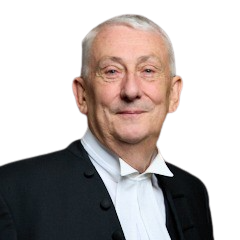
Sir Lindsay Hoyle is the independent MP for Chorley, having first been elected to parliament at the 1997 general election, and the 158th speaker of the House of Commons.
Originally elected as a Labour MP for Chorley in 1997, upon election as speaker in 2019, Hoyle relinquished his party affiliation.
In the 2024 general election, standing as “The speaker seeking re-election” in Chorley, Hoyle received 25,238 votes (74.3%). Following parliamentary convention, his seat was not contested by the major parties (Labour, Conservative or Liberal Democrat). The Green Party candidate, Mark Tebbutt, came second with 4,663 votes (13.7%). Hoyle was duly re-elected with a majority of 20,575.
Lindsay Hoyle: speaker of the House of Commons
Hoyle was elected as speaker of the House of Commons in November 2019, succeeding John Bercow. In the 2019 contest, Hoyle bested rival candidates including Eleanor Laing, Harriet Harman, Edward Leigh and Chris Bryant. He secured the support of 325 MPs (60.2%) in the final ballot; Bryant placed second with 213 votes (39.5%).
Upon taking the chair as speaker, Hoyle vowed to restore calm after Bercow’s controversial tenure as speaker. “I’ve come into this job as a referee,” Hoyle stated. “It shouldn’t be about me, it’s about the chamber.”
Addressing the House, Hoyle told MPs: “I hope that this House will be once again a great, respected House, not just in here but around the world.
“I hope that once again it is the envy of the world. We have to make sure that that tarnish is polished away and that the respect and tolerance that we expect from everyone who works here will be shown, and we will keep that in order.”
He added: “I hope to show that the experience I have shown previously will continue. As I have promised, I will be neutral. I will be transparent.”
Hoyle was re-elected as speaker on 17 December following the 2019 general election. Bercow had resigned as speaker before the expected election to ensure his successor would be elected by the existing hung parliament, in which no party exercised overall control – rather than by a new parliament which might have a large Conservative majority. It was seen as a final act of defiance against the government.
Hoyle’s tenure as speaker has been less high-profile than that of his predecessor and he has his own distinct style. Hoyle’s first prime minister’s questions (PMQs) after replacing Bercow as speaker lasted 33 minutes; by contrast, Bercow’s final session on 30 October 2019 lasted 71 minutes. In 2017, Bercow controversially ruled that male MPs do not need to wear ties in the commons chamber; Hoyle has since taken a stricter sartorial approach, including when it comes to neckwear.
Hoyle has, however, continued the revival of urgent questions (UQs) as a tool of parliamentary accountability. During his tenure in the chair, Bercow granted an unprecedented number of urgent questions – much to the irritation of those ministers hauled to the commons. In the 2017-2019 session, there was an average of 0.88 UQs a day. This is compared to less than 0.1 UQs a day in the sessions between 1990 and 2009. In the 2022-2023 session, Hoyle granted 160 UQs in 213 sitting days.
As such, Hoyle remains at the centre of parliamentary proceedings; nor does he shy away from controversies. Notably, he has ejected several MPs from the chamber for disorderly behaviour, including shadow transport secretary Richard Holden in January 2026.
Since the 2024 general election, Hoyle has regularly clashed with ministers over their responsibility, outlined in the ministerial code, to make announcements in the first instance to parliament – rather than to the media. Facing a regular stream of leaks over the October 2024 autumn budget, Hoyle described the government’s approach as a “supreme discourtesy to the House”.
Addressing the commons on 28 October 2024, Hoyle stated: “I have always defended the undoubted right of this House, including the opposition parties and backbenchers in all parts of the House, to be the first to hear major government policy announcements.”
In June 2025, Hoyle reprimanded the government for making major policy announcements outside the House. He described the conduct as a “blatant” breach of the ministerial code and called on the cross-party public administration and the constitutional affairs committee (Pacac) to investigate the matter. Hoyle pointed to the publication of the strategic defence review, which was accompanied by a speech and press conference by the prime minister in Glasgow, following several days of advance media briefing.
Responding on behalf of the government, the leader of the House, Lucy Powell, argued that ministers had made a number of important oral statements and that she was “satisfied that this government is coming to the House regularly to keep parliament informed.”
Hoyle rejected this defence, declaring: “I am not satisfied. I think that’s the key, because both backbenches quite rightly should hear it first.”
In November 2023, Hoyle appeared to criticise the appointment of Lord (David) Cameron as foreign secretary. Lord Cameron’s appointment, which involved his elevation to the peerage, sparked questions over accountability and parliamentary scrutiny. Hoyle told the commons he would work to ensure that the new foreign secretary, who would answer questions in the House of Lords, was “accountable”. Hoyle declared that “given the gravity of the current international situation, it is especially important that this House is able to scrutinise the work of the Foreign, Commonwealth and Development Office [FCDO] effectively.”
In April 2022, Hoyle announced that he would allow a debate to be held on a motion referring Boris Johnson, the then prime minister, to the privileges committee. The speaker confirmed he had received letters from a number of MPs calling for this course of action, including the Labour leader of the opposition, Keir Starmer. The matter, Hoyle said, concerned “the prime minister’s statements to the House regarding gatherings held at Downing Street and Whitehall during lockdown.” Hoyle’s actions were consistent with the rules of the House, which requires that a matter of privilege must first be raised with the commons speaker. MPs then vote on a motion to refer the matter specifically to the committee of privileges for a full inquiry.
Hoyle told the House: “I want to be clear about my role. First, as members will appreciate, it is not for me to police the ministerial code… My role is to decide whether there is an arguable case to be examined.
“Having considered the issue, and having taken advice from the clerks of the House, I have decided that this is a matter that I should allow the precedence accorded to issues of privilege.”
The commons subsequently debated a motion tabled by Starmer as leader of the opposition, calling for an investigation on 21 April 2022. The motion was passed without a division. On 9 June 2023, Johnson announced his resignation as an MP after receiving a draft of the committee’s final report. The 106-page final report of the privileges committee, published a week later on 15 June 2023, found that Johnson committed “repeated contempts of parliament”.
On 15 December 2022, Hoyle led the House of Commons in marking the 80th anniversary of the Joint Declaration by Members of the United Nations – the first formal Allied acknowledgement of what would later be known as the Holocaust. Hoyle invited the House to observe a minute of silence.
He said: “Before we start our business, I wish to invite the House to commemorate a tragic and sombre event. On 17 December 1942 – 80 years ago, on Saturday – the then foreign secretary, Anthony Eden, read to the House a declaration issued by the wartime allies condemning the treatment of Jewish people by the Nazis in occupied Europe.
“The declaration followed a diplomatic note sent to the allied powers a week earlier, by the Polish foreign minister in exile – the first official report that the Holocaust was under way.”
He added: “To remember that important moment, and as a tribute to all those who suffered at the hands of the Nazis, I now invite the House to join me for a minute of silent reflection.”
Seven survivors of the Holocaust were present in the gallery to witness the tribute.
In March 2022, following Russia’s full-scale invasion of Ukraine, Hoyle took the unprecedented step of inviting Ukrainian president Volodymyr Zelenskyy to address the House of Commons by video link. At the time, Hoyle cited “the exceptional and grave situation” in Ukraine. One year later in February 2023, Zelenskyy delivered his first speech on British soil as part of a surprise visit to parliament. On that occasion, Zelenskyy presented Hoyle with the helmet of a Ukrainian fighter pilot, inscribed with the words: “We have freedom, give us wings to protect it.”
Hoyle had introduced Zelenskyy in Westminster Hall with an anecdote about their first meeting in October 2020, during the Covid-19 pandemic, when they had shared “much laughter over an English afternoon tea”.
In October 2021, Hoyle led tributes to Sir David Amess, the Conservative MP for Southend West, who was fatally stabbed during a scheduled constituency surgery in Leigh-on-Sea, Essex. Hoyle praised Sir David as “second to none in his determined commitment to his constituents, first as the Member for Basildon between 1983 and 1997, and since then as the member for Southend West.”
Hoyle added: “He was tireless in making sure that the voice of Southend West was heard in this chamber – it is difficult to believe that we will not hear him make the case for Southend achieving city status before the next recess.”
Hoyle has also, on occasion, found himself at the centre of political controversies.
Most notably, in February 2024, Hoyle came in for significant criticism over his conduct during a Scottish National Party (SNP) opposition day debate on a ceasefire in Gaza. In a break with long-standing commons rules, Hoyle accepted both the government and Labour’s amendments to the original SNP motion. By parliamentary convention, an opposition party amendment (in this instance Labour’s) to a motion submitted by another opposition party (the SNP) is not put to a vote when there is also a government amendment. As such, Hoyle’s decision caused fury on the government and SNP benches – as a series of Labour MPs, under pressure from their constituents, had been planning to vote for the SNP motion. In the end, the government withdrew its amendment, and the Labour motion was carried by “voice vote” – meaning no formal division took place.
At the time, Penny Mordaunt, the commons leader, said the speaker had “undermined the confidence” of the House in him. Stephen Flynn, the leader of the SNP at Westminster, described the speaker’s position as “intolerable”, arguing his party has been treated with “complete and utter contempt”.
Hoyle strenuously apologised for his conduct. However, the episode precipitated the introduction of an early day motion (EDM) entitled, “No confidence in the speaker”. The motion secured the support of more than 90 MPs from the Conservative Party and SNP. It dominated the news agenda, fuelling speculation about the speaker’s future. The campaign, however, was ultimately unsuccessful. An EDM is not a binding procedure and cannot, by itself, force a vote of no confidence in the speaker. That would require a substantive motion to be debated on the floor of the House, for which the government of the day would have to make time. The government ultimately confirmed it still had confidence in the speaker, effectively ending the prospect of his removal.
Lindsay Hoyle: deputy speaker and rise to prominence
Before his elevation as speaker, Hoyle served as chairman of ways and means (senior deputy speaker) for nine years from 2010 to 2019. He was appointed a Knight Bachelor in the 2018 New Year Honours for parliamentary and political services.
Hoyle was elected as the Labour MP for Chorley at the 1997 general election, unseating Den Dover as the incumbent Conservative MP. In so doing, Hoyle became the first Labour MP to represent the constituency in parliament for 18 years.
As a backbench MP, Hoyle was a member of the House of Commons the business, innovation and skills committee (2009-2010), the business and enterprise committee (2008-2009), the European scrutiny committee (2005-2010), and the trade and industry committee (1998-2007).
Hoyle delivered his maiden speech on 21 May 1997.
In it, he said: “A recent survey in Chorley showed that more than half the job offers in our jobcentre were for part-time employment. The average weekly wage for those jobs was £103, and one job was advertised at £1 per hour. Such a situation is disgusting and unacceptable in a modern society. We will be a modern society, and we will redress that imbalance. A minimum wage is crucial to achieving our goals.”
Before entering parliament, Hoyle served on Chorley Borough Council from 1980 to 1998. Elected at age 22, he was the youngest councillor in Chorley’s history at the time. He served as deputy leader of the council from 1994 to 1997 and was mayor of Chorley from 1997 to 1998.
Political views
Leadership elections and loyalty
Labour leadership 2015: Hoyle was one of 26 Labour MPs who did not nominate any candidate for the party’s leadership in June 2015. The election was triggered by the resignation of Ed Miliband following the 2015 general election defeat and was the first to be conducted under the “one member, one vote” system. The contest eventually saw Jeremy Corbyn, a veteran backbencher, win a landslide victory in the first round with 59.5% of the vote, defeating Andy Burnham, Yvette Cooper and Liz Kendall.
Corbyn loyalty list: In March 2016, Hoyle was labelled as “core group plus” by the Corbyn leadership in a leaked list which categorised Labour MPs by their perceived loyalty. This label suggested the Corbyn leadership viewed Hoyle as supportive.
Labour leadership 2010: Hoyle was one of 33 Labour MPs who nominated Andy Burnham for the party’s leadership in May 2010. The election followed the resignation of Gordon Brown, who stepped down as prime minister and Labour leader after the 2010 general election.
Burnham, the former health secretary, secured 33 nominations from the Parliamentary Labour Party (PLP), the minimum required to reach the final ballot. He ultimately finished fourth in the contest with 10.4% of the vote.
Brexit and Europe
Brexit: Hoyle has not revealed how he voted in the 2016 Brexit referendum. A majority of his constituents (56.7%) voted to Leave.
In 2008, Hoyle was one of 18 Labour MPs to vote against the Lisbon Treaty. Among the other rebels were Jeremy Corbyn, John McDonnell and Dennis Skinner.
In a June 2008 European scrutiny committee evidence session, Hoyle challenged a witness by asking: “Which do you think is more democratic, the Chinese Government or the [European] Council?”.
In another exchange, when a witness began to note that “19 member states have ratified [the Treaty of Lisbon] — …”, Hoyle interjected: “Not by the people.”
Hoyle went on to describe the Lisbon Treaty as a “federal agenda that is not acceptable”.
He added: “It should go to the public and let them decide whether they want to become a federal state of Europe or whether they want to remain within their own sovereign parliaments, and that will be the way forward. If it all came out as a vote ‘Yes’, no arguments, but when it is ‘No’, please accept people do mean ‘No’ and it does not mean ‘Yes’”.
Foreign policy and security
Iraq War authorisation vote (2003): In March 2003, Hoyle voted in favour of the government motion authorising military action against Iraq. The vote, one of the most contentious in recent parliamentary history, gave the prime minister, Tony Blair, the authority to join the US-led invasion.
Sanctioned (Russia): In April 2022, Hoyle was among the group of MPs placed on a sanctions list by the Russian government. The measure barred them from entering Russia and was presented by Moscow as a retaliatory response to the UK’s stance on the invasion of Ukraine.
Before Politics
Hoyle was born in Adlington, Lancashire, on 10 June 1957. He attended Adlington County School and Lord’s College in Bolton.
Before becoming an MP, Hoyle ran his own textile and screen-printing business.
Personal Life
Hoyle’s father was the late Labour politician Doug Hoyle (later Lord Hoyle), who served as MP for Nelson and Colne and Warrington North, and was chairman of the parliamentary Labour Party (PLP) from 1992 to 1997.
Lord Hoyle passed away in April 2024, aged 98.
Sir Lindsay has been married twice. His first marriage to Lynda Fowler (1974-1982) ended in divorce. He married Catherine Swindley in 1993.
Hoyle’s daughter Natalie Lewis-Hoyle died suddenly in December 2017; an inquest later heard she was found hanged in her bedroom.
In his first speech as speaker-elect in November 2019, Hoyle said he wished his Natalie could have been there.
He told the House: “I also want to say something to my family. There is one difficult part that I want to get over. There is one person who is not here: my daughter Natalie. I wish she had been here. We all miss her, as a family, and none more so than her mum Miriam.
“I have to say that she was everything to all of us. She will always be missed but she will always be in our thoughts.”
Hoyle was appointed as the chancellor of the University of Gibraltar in 2020.
In a 2021 visit to Gibraltar, Hoyle stated: “My association with and love for the Rock preceded me becoming an MP, and was sparked by my father Doug, whose efforts to raise its voice on the world stage earned him the Freedom of Gibraltar in 2004.”
Trivia
Hoyle is well-known for his love of animals and has kept a variety of pets – many named after political figures. These include a parrot named Boris (reportedly taught to shout “Order, order!”), a Patterdale terrier named Betty (after former speaker Betty Boothroyd), a Rottweiler named Gordon (after Gordon Brown), a cat named Dennis (after Dennis Skinner), and a tortoise named Maggie (after Margaret Thatcher).
Maggie is said to be “not for turning”.
Hoyle is also a keen sports fan, particularly of rugby league and football as a supporter of Bolton Wanderers.
In February 2025, Hoyle said it was a “major injustice” that no rugby league player has ever been knighted. He told MPs on Thursday that “now is the time” to knight the former professional player Kevin Sinfield, who has raised more than £10 million to combat motor neurone disease (MND).
He stated: “I’ve also raised it with the prime minister because there is a major injustice, and the stigma against rugby league where not one person has ever had a knighthood.
“But the fact that Kevin Sinfield has raised millions for the motor neurone disease and on behalf of what he’s done, I would have thought now is the time and we wait no longer.”
Lindsay Hoyle has not written for Politics.co.uk.