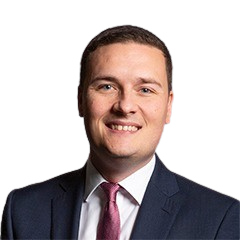
Kwasi Kwarteng was the Conservative MP for Spelthorne from 2010 to 2024.
Kwarteng served as chancellor of the exchequer from 6 September 2022 to 14 October 2022 under prime minister Liz Truss. Following significant market turmoil after his mini-budget announcement, he was dismissed from the role, making him the second-shortest serving chancellor in British history.
In February 2024, Kwarteng announced he would not seek re-election at the upcoming general election.
At the 2024 general election, the Spelthorne constituency was held by the Conservative Party candidate, Lincoln Jopp. Jopp secured 14,038 votes (30.4% of the vote), defeating the Labour candidate, Claire Tighe, who received 12,448 votes (27.0%). Jopp was elected with a majority of 1,590.
Kwasi Kwarteng: tenure as chancellor and ‘mini-budget’
Kwarteng served as chancellor for a brief period during Liz Truss’ tumultuous tenure as prime minister.
Upon his appointment as chancellor in September 2022, Kwarteng sacked the Treasury’s most senior civil servant, Tom Scholar. Truss had repeatedly railed against what she called “Treasury orthodoxy” during the July-September Conservative leadership election. Sacking Scholar, the long-serving public servant, was a symbolic statement of intent.
In a statement, Scholar said Kwarteng had decided it was time for “new leadership”.
He commented: “It has been the privilege of my career to lead this great institution since 2016. I wish the Treasury all the best for the times ahead, and I will be cheering on from the sidelines.”
Truss’ premiership was defined by the mini-budget delivered by Kwarteng.
On 23 September, Kwarteng announced the largest package of unfunded tax cuts in 50 years, estimated at £45 billion. The measures included the abolition of the 45p top rate of income tax, a reversal of the April 2022 national insurance rise, bringing forward a 1p cut in the basic rate of income tax to 19%, the cancellation of the plan to increase corporation tax from 19% to 25%, and cuts to stamp duty.
The ‘mini-budget’ followed the announcement of a new “energy price guarantee”. Under the plan, the government would pay a subsidy to energy and gas suppliers in order to limit typical household energy costs to £2,500 per year. The Institute for Fiscal Studies (IFS) estimated its cost at over £100 billion per year.
Critically, the government bypassed the fiscal watchdog, the Office for Budget Responsibility (OBR). Kwarteng presented his statement without the customary independent forecast of its impact on public finances; a formal budget statement – which The Growth Plan deliberately was not – would have required an independent forecast.
Kwarteng told the House of Commons that the Treasury’s growth plan was “built around three central priorities: reforming the supply-side of the economy; maintaining responsible approach to public finance; and cutting taxes to boost growth.”
Unveiling his package’s headline measure, the chancellor continued: “Take the additional rate of income tax. At 45%, it is currently higher than the headline top rate in G7 countries such as the US and Italy, and it is even higher than in social democracies such as Norway.
“But I am not going to cut the additional rate of tax today; I am going to abolish it altogether.”
Kwarteng promised a “medium-term fiscal plan” in “due course” – when the Treasury would set out “a clear commitment to fiscal responsibility and reducing debt as a proportion of GDP over the medium term”. But the chancellor did not commit to a date.
Investors were spooked by the scale of the unfunded borrowing. On the day of Kwarteng’s statement, sterling fell by around 4% against the US dollar.
Kwarteng made matters worse when he committed to more tax cuts during an interview on 25 September. “There’s more to come”, the chancellor vowed during an appearance on the BBC’s flagship Sunday politics programme.
On 26 September, sterling reached an all-time low against the dollar, plunging to $1.0327 (a fall of nearly 5%). The cost of government borrowing (gilt yields) spiked. The market meltdown forced the Bank of England (BoE) to intervene on 28 September with an emergency £65 billion bond-buying programme. The BoE said its decision to buy government bonds was driven by concern over “a material risk to UK financial stability.”
The International Monetary Fund (IMF) also issued a rare rebuke, warning that “the nature of the UK measures will likely increase inequality”.
The political and financial backlash sparked a series of tortured U-turns. On 3 October, at the height of a funereal Conservative Party conference, Kwarteng announced the abolition of the 45p tax rate would be scrapped. Kwarteng said the cut had “become a distraction from our overriding mission to tackle the challenges facing our country”.
On 14 October, Truss sacked Kwarteng as chancellor. In a subsequent press conference, Truss announced that the government would “keep the increase in corporation tax that was planned by the previous government.”
Truss replaced Kwarteng with Jeremy Hunt, who proceeded to reverse almost all of the mini-budget’s policies.
Truss’ political authority collapsed in tandem with the Conservative Party’s economic credibility. After a further farce – a botched whipping operation over an ‘opposition day’ fracking vote – Truss announced her resignation on 20 October 2022.
After returning to the backbenches, Kwarteng maintained a relatively low profile.
In October 2023, Kwarteng took an advisory role with the Australian mining company Fortescue Future Industries, focusing on its green energy division. He has also appeared as a commentator on various podcasts and news channels, including GB News, Channel 4 News, and The Rest is Politics.
Kwarteng’s rise to prominence (2010-2022)
Kwarteng was appointed minister of state for business, energy and clean growth in July 2019, attending cabinet from May 2020. In January 2021, he was promoted to secretary of state for business, energy and industrial strategy, a position he held until September 2022 when appointed chancellor by Liz Truss.
Kwarteng served as parliamentary private secretary (PPS) to the chancellor of the exchequer, Philip Hammond, from 2017 to 2018. His first ministerial role was as parliamentary under-secretary of state at the department for exiting the European Union from November 2018 to July 2019.
In September 2012, Kwarteng was named by ConservativeHome as one of 24 backbench Tory MPs who had yet to rebel against the Conservative-Liberal Democrat coalition government.
Kwarteng was a member of the Free Enterprise Group (FEG) of Conservative MPs – a parliamentary caucus, founded in 2011 by Liz Truss, that championed free-market, libertarian economic policies. The group, seen as a standard-bearer for the Thatcherite wing of the party, is most notable for the political ascent of its founding members. Key figures in the FEG included Truss, Kwarteng, Priti Patel, Dominic Raab and Chris Skidmore. The 2012 book, Britannia Unchained, served as the group’s unofficial manifesto for radical free-market reform. The book argued for significant economic liberalisation and supply-side reforms. The FEG was effectively succeeded by the Free Market Forum, which was launched in 2021.
Kwarteng delivered his maiden speech on 8 June 2010 during a debate on economic growth.
In it, he stated: “Spelthorne is a seat in the south-east that relies almost exclusively on infrastructure and economic expansion, and in that context self-starting business men are very important.
He added: “Adam Smith made it very clear in The Wealth of Nations, a book that many honourable Members will know, how societies grow rich and how they can become very poor.
“I am sorry to say that the past 13 years have been an exercise that Adam Smith and the university of Edinburgh would probably have awarded a flat D grade for performance – although perhaps he would have awarded a B grade for effort, who knows?”
Political views
Kwarteng is associated with the free-market, libertarian wing of the Conservative Party.
Leadership elections and loyalty
Tory leadership 2022 (I): Kwarteng supported Liz Truss’ candidacy in the Conservative Party’s July-September 2022 leadership election. The contest was triggered by the resignation of Johnson, following the mass exodus of more than 60 frontbenchers.
Truss, the then-foreign secretary, campaigned on a platform of sweeping tax cuts. After finishing second in the final parliamentary ballot with 113 votes, she won the subsequent vote of the party membership with 81,326 votes (57.4%) and was appointed prime minister on 6 September.
Johnson confidence vote: In June 2022, Kwarteng publicly declared their loyalty to Johnson ahead of a Conservative “no-confidence” in his leadership. The vote was triggered by discontent within the parliamentary party following the “partygate” scandal and the publication of the Sue Gray report. While the prime minister ultimately won the vote, the scale of the rebellion against him, with 148 of his own MPs voting to remove him, severely weakened his authority and presaged his resignation the following month.
Tory leadership 2019: Kwarteng supported Johnson for the party’s leadership in 2019. The election was triggered by the resignation of Theresa May following her inability to secure a Brexit deal acceptable to the Conservative Party.
Johnson, the former foreign secretary and mayor of London, campaigned on the central pledge to “deliver Brexit” by 31 October 2019, “deal or no deal”. He thereby positioned himself as the candidate best-placed to break the parliamentary deadlock. Johnson secured 114 votes in the first parliamentary ballot, and reached 160 votes in the final MP round. In the subsequent ballot of the party membership, Johnson won a decisive victory with 92,153 votes (66.4%).
Tory leadership 2016: Kwarteng supported May for the party’s leadership in July 2016. The contest was triggered by the resignation of David Cameron following the UK’s vote to leave the European Union.
May, the then-home secretary, secured a commanding lead in the parliamentary stages, receiving 165 votes in the first ballot and 199 in the second. Following the withdrawal of her final rival, Andrea Leadsom, on 11 July, May was declared leader unopposed and was appointed prime minister two days later.
Factional identity and party tradition
The Free Market Forum: Kwarteng has been listed as a supporter of the Free Market Forum (FMF) of Conservative MPs and peers. The group, co-chaired by Dehenna Davison and Greg Smith in the 2019-2024 parliament, set out to “encourage free market thinking, winning over the unpersuaded and providing intellectual firepower and a public platform to proponents of classical liberalism.” Founded in 2021, the forum, associated with the Institute of Economic Affairs (IEA), was seen as aligned with the economic policies of the Liz Truss government.
Cornerstone Group: Kwarteng was a member of the Cornerstone Group, a highly traditionalist and socially conservative faction of Conservative MPs. Its political philosophy was summarised by its motto: “Faith, Flag, and Family”. In July 2005, the group published a pamphlet that accused the-leader Michael Howard of running a general election campaign that was too “timid” about tax cuts, public service reform and family values.
Brexit and Europe
Brexit referendum: Kwarteng supported Leave in the 2016 Brexit referendum, and therefore agreed with a majority of his constituents, 60.3% of whom also voted to Leave.
Article 50: In February 2017, Kwarteng voted in favour of the European Union (Notification of Withdrawal) Bill. The legislation empowered the prime minister to notify the Council of the European Union of the UK’s intention to withdraw, formally triggering the process set out in Article 50 of the Treaty on European Union. MPs supported the bill by 498 votes to 114 at second reading.
Social values and conscience issues
Same-sex marriage (2013): In February 2013, Kwarteng was one of the 139 Conservative MPs to vote against the Marriage (Same Sex Couples) Bill at its second reading. The landmark piece of legislation, which received its second reading by 400 votes to 175, legalised marriage for same-sex couples in England and Wales.
Foreign policy and security
Trident renewal (2016): Kwarteng voted in favour of a government motion calling for the renewal of the Trident nuclear deterrent system in July 2016. The motion, which was passed by 472 votes to 117, committed the UK to constructing a new fleet of submarines to carry the nation’s nuclear weapons.
Syria airstrikes (2015): Kwarteng voted in favour of a government motion to extend UK airstrikes against Isis from Iraq into Syria in December 2015. The motion, which was passed by 397 votes to 223 after a 10-hour debate in the House of Commons, authorised the RAF to conduct strikes against Isis targets in Syria.
Syria airstrikes (2013): Kwarteng voted in favour of the government’s motion on the principle of military intervention in Syria in August 2013. The government motion was defeated by 285 votes to 272, a move which effectively ruled out UK participation in any US-led military strikes.
Before Politics
Akwasi Addo Alfred Kwarteng was born in London in 1975 to Ghanaian parents who emigrated in the 1960s. His father was an economist and his mother a barrister.
Kwarteng attended a state primary school before winning a scholarship to Eton College. He read classics and history at Trinity College, Cambridge. He subsequently attended Harvard University as a Kennedy scholar.
Kwarteng earned a PhD in economic history from the University of Cambridge in 2000.
Before entering parliament, Kwarteng worked as a columnist for the Daily Telegraph and as a financial analyst for firms including JPMorgan Chase and Odey Asset Management.
Kwarteng has authored historical works including Ghosts of Empire: Britain’s Legacies in the Modern World (2011), War and Gold: A Five-Hundred-Year History of Empires, Adventures and Debt (2014), and Thatcher’s Trial: Six Months That Defined a Leader (2015).
Personal Life
Kwarteng married Harriet Edwards, a solicitor, in December 2019. They have one daughter.
Trivia
In 1995, Kwarteng was part of the winning team for Trinity College, Cambridge, on the television quiz show University Challenge. Kwarteng’s appearance on University Challenge was Jeremy Paxman’s first series as host, and is often remarked upon due to his rapid responses.
Kwarteng is tall (reportedly 6 feet 5 inches).
Kwarteng was once reportedly in a relationship with the former home secretary, Amber Rudd.
Kwasi Kwarteng has not written for Politics.co.uk.