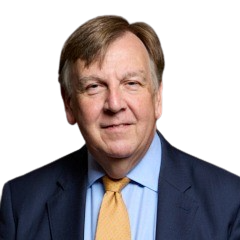
Sir John Whittingdale is the Conservative MP for Maldon, having first been elected to parliament for the predecessor seat of South Colchester and Maldon in the 1992 general election.
In the 2024 general election, Whittingdale won 19,374 votes, representing 38.9% of the vote. The Reform UK candidate, Pamela Walford, received 12,468 votes (25.0%), while the Labour candidate, Onike Gollo, secured 9,817 votes (19.7%). Whittingdale was duly elected with a majority of 6,906 votes.
The Maldon constituency covers a central part of Essex, including the towns of Maldon and South Woodham Ferrers. The area is considered very safe Conservative territory.
Political Career
Whittingdale is a member of the House of Commons foreign affairs select committee (since October 2024) – the committee responsible for examining the expenditure, administration and policy of the Foreign, Commonwealth and Development Office (FCDO) and other associated bodies.
Whittingdale served as a shadow health minister from July to November 2024 on the caretaker/interim Conservative frontbench constructed by Rishi Sunak in the wake of the general election of that year.
Prior to the 2024 general election, which saw the Conservatives ejected from government, Whittingdale held several ministerial positions. Most recently, he served jointly as minister of state for data and digital infrastructure at the Department for Science, Innovation and Technology and minister of state for media, tourism and creative industries from May to December 2023, covering parental leave for Julia Lopez.
Whittingdale previously served as minister of state for media, tourism and creative industries from February 2020 to September 2021.
Whittingdale served in cabinet as secretary of state for culture, media and sport from May 2015 to July 2016. He was also vice-chair of the 1922 committee of Conservative backbenchers from July 2008 to March 2015.
While serving in cabinet, Whittingdale was a member of the “gang of six” who broke ranks with the government to support the Vote Leave campaign during the 2016 Brexit referendum.
On the backbenches, Whittingdale was chair of the House of Commons culture, media and sport select committee from July 2005 to May 2015. By virtue of this role, Whittingdale sat in the liaison committee across the same period.
In April 2011, while chair of the culture, media and sport committee, Whittingdale called for a public inquiry into phone hacking at News of the World.
At the time, he stated: “There are some very big questions. What I find [most] worrying is the apparent unwillingness of the police, who had the evidence and chose to do nothing with it. That’s something that needs to be looked into.
“It also raises some quite serious questions for the security of government. It seems pretty extraordinary that newspapers are able to listen in to the private conversations of Downing Street, royal staff and others.”
Whittingdale was chair of the culture, media and sport committee in July 2011 when Rupert Murdoch and his son, James, gave evidence to the cross-party group of MPs. The hearing came after the committee issued a former summons effectively ordering the Murdochs to appear before MPs. In his opening remarks, Whittingdale said recent revelations had “angered and shocked the entire country.” Rupert Murdoch described the committee hearing as “the most humble day of my life.”
After Murdoch was hit with a foam pie by Jonathan May-Bowles, a comedian and activist, Whittingdale apologised “on behalf of the committee and parliament for the way you have been treated.”
A subsequent culture, media and sport committee report, published on 1 May 2012, concluded that Rupert Murdoch had exhibited “wilful blindness to what was going on in his companies and publications”, stating that this culture “permeated from the top throughout the organisation.”
The report added: “This culture, we consider, permeated from the top throughout the organisation and speaks volumes about the lack of effective corporate governance at News Corporation and News International. We conclude, therefore, that Rupert Murdoch is not a fit person to exercise the stewardship of a major international company.”
The report further found that “the News of the World and News International misled the committee about the true nature and extent of the internal investigations they professed to have carried out.”
The committee also criticised former Metropolitan Police officer John Yates and director of public prosecutions Keir Starmer for “failing to ensure that the evidence held by the Metropolitan Police was properly investigated in the years afterwards, given all the opportunities to do so”.
During the Conservative Party’s last stint in opposition, Whittingdale served as shadow secretary of state for culture, media and sport on two occasions from July 2002 to November 2003 and July 2004 to May 2005. He was also shadow secretary of state for environment, food and rural affairs (2003-2004), shadow secretary of state for trade and industry (2001-2002), shadow treasury spokesperson (1998-1999) and an opposition whip (1997-1998).
Whittingdale was also parliamentary private secretary (PPS) to the leader of the opposition, William Hague (1999-2001). A PPS acts as an unpaid parliamentary assistant, providing a link between the senior frontbencher and backbench MPs.
As a backbencher in the 1992-1997 parliament, Whittingdale was one of the newly elected Conservative MPs who signed the eurosceptic so-called “fresh start” early day motion (EDM) calling for the postponement of the implementation of the Maastricht Treaty. The motion, EDM 174, marked a key development in corralling and consolidating euroscepticism as a coherent force within the Conservative Party. The Maastricht Treaty, which entailed a significant deepening of European integration, badly divided the Conservative Party under John Major’s leadership – triggering rolling rebellions from a determined group of eurosceptic backbenchers.
Whittingdale was one of three former advisers to Margaret Thatcher who put their name to the “fresh start” EDM, which led to the creation of the Fresh Start Group (FSG) and later the European Research Group (ERG).
Whittingdale was a member of the committee on the House of Commons future relationship with the European Union (2016-2019), the trade and industry committee (2001-2001) and the health and social care committee (1993-1997).
Whittingdale is listed as a member of the all-party parliamentary groups (APPGs) for Armenia, intellectual property, Lithuania, media freedom, Ukraine and writers.
Whittingdale delivered his maiden speech on 6 July 1992.
In it, he said: “The recession has hit my constituents hard. The Colchester Lathe Company has announced its intention to cease production, light industrial companies throughout Essex have shed labour, and retailers, small business men, and the construction industry continue to suffer from lack of demand.”
He added: “Confidence among Essex business men remains low. I am frequently asked what are the government doing to bring about an upturn. I have always replied that it is not in the government’s power to conjure up recovery. Only business can create lasting jobs, and it is the government’s duty to create the right climate in which enterprise can flourish.”
Before entering parliament, he served as political secretary to Margaret Thatcher as prime minister from 1988 to 1990.
Political views
Leadership elections and loyalty
Tory leadership 2024: Whittingdale supported Priti Patel’s candidacy in the 2024 Conservative Party leadership election. The contest was triggered by the resignation of Rishi Sunak following the party’s defeat in the 2024 general election. Patel, the former home secretary, was eliminated in the first parliamentary ballot on 4 September after receiving 14 votes.
Tory leadership 2022 (I): Whittingdale supported Liz Truss’ candidacy in the Conservative Party’s July-September 2022 leadership election. The contest was triggered by the resignation of Boris Johnson, following the mass exodus of more than 60 frontbenchers.
Truss, the then-foreign secretary, campaigned on a platform of sweeping tax cuts. After finishing second in the final parliamentary ballot with 113 votes, she won the subsequent vote of the party membership with 81,326 votes (57.4%) and was appointed prime minister on 6 September.
Tory leadership 2022 (II): Whittingdale supported Boris Johnson’s explored candidacy in the Conservative Party’s October 2022 leadership election. The contest was triggered by the resignation of Liz Truss after just 45 days in office, following the financial and political tailspin triggered by her “mini-budget”.
Johnson, who had resigned as prime minister only months earlier, initially sought a return to office and claimed to have secured the 100 nominations required to proceed. However, he announced his withdrawal on 23 October, stating that “you can’t govern effectively unless you have a united party in parliament.” Sir Graham Brady, chair of the 1922 committee of Tory backbenchers, later confirmed that Johnson had indeed secured the 100 MPs necessary to force a ballot of the Conservative membership – which he could well have won.
After Johnson dropped out, Whittingdale supported Rishi Sunak’s candidacy. Sunak, the former chancellor, had finished second to Truss in the previous contest. Unlike the summer contest, this election featured an expedited process requiring each candidate to secure at least 100 nominations from MPs to proceed. Sunak, having emerged as the clear frontrunner, was declared leader of the Conservative Party unopposed on 24 October.
Tory leadership 2019: Whittingdale supported Boris Johnson for the party’s leadership in 2019. The election was triggered by the resignation of Theresa May following her inability to secure a Brexit deal acceptable to the Conservative Party.
Johnson, the former foreign secretary and mayor of London, campaigned on the central pledge to “deliver Brexit” by 31 October 2019, “deal or no deal”. He thereby positioned himself as the candidate best-placed to break the parliamentary deadlock. Johnson secured 114 votes in the first parliamentary ballot, and reached 160 votes in the final MP round. In the subsequent ballot of the party membership, Johnson won a decisive victory with 92,153 votes (66.4%).
Tory leadership 2016: Whittingdale supported Johnson’s potential candidacy for the party’s leadership in June 2016. The contest was triggered by the resignation of David Cameron following the UK’s vote to leave the European Union.
Johnson, the former mayor of London and a leading figure in the Vote Leave campaign, was widely regarded as the frontrunner to succeed Cameron. However, his campaign was upended when Michael Gove unexpectedly withdrew his support and announced his own leadership bid. Johnson announced on 30 June that he would not enter the race, leaving his supporters to shift their allegiances.
Whittingdale went on to support Gove’s candidacy. Gove secured 48 votes in the first ballot, placing third, but his support fell to 46 votes in the second ballot on 7 July. As the candidate with the fewest votes in that round, Gove was eliminated from the contest.
Factional identity and party tradition
European Research Group: Whittingdale has been associated with the European Research Group. During the Conservative Party’s last stint in government, the ERG emerged as a highly influential Tory faction composed of staunchly eurosceptic MPs. Founded in 1993, the group played a pivotal role in shaping the UK’s exit from the European Union, consistently advocating for a “hard” Brexit.
Its members were generally and often stridently critical of the withdrawal agreement negotiated by Theresa May. Chaired variously by Mark Francois, Jacob Rees-Mogg, Steve Baker and Suella Braverman, the group proved instrumental in May’s downfall as prime minister.
Cornerstone Group: Whittingdale was a member of the Cornerstone Group, a highly traditionalist and socially conservative faction of Conservative MPs. Its political philosophy was summarised by its motto: “Faith, Flag, and Family”. In July 2005, the group published a pamphlet that accused the-leader Michael Howard of running a general election campaign that was too “timid” about tax cuts, public service reform and family values.
Bright Blue: Whittingdale has been listed as a parliamentary supporter of Bright Blue, an independent centre-right think tank and membership organisation that champions liberal conservatism in the UK. Since its founding in 2014, the organisation has expanded its reach through a new cross-party strategy.
Brexit and Europe
Brexit referendum: Whittingdale supported Leave in the 2016 Brexit referendum, and therefore agreed with a majority of his constituents, 61% of whom also voted to Leave.
Leave Means Leave: Whittingdale was a supporter of Leave Means Leave, a cross-party eurosceptic pressure group established in the aftermath of the 2016 EU referendum. The group, which described itself as “the campaign for a clean Brexit”, set out its opposition to any withdrawal agreement that it believed would keep the UK tied to EU rules and institutions – a position often referred to as a “hard Brexit”.
Article 50: In February 2017, Whittingdale voted in favour of the European Union (Notification of Withdrawal) Bill. The legislation empowered the prime minister to notify the Council of the European Union of the UK’s intention to withdraw, formally triggering the process set out in Article 50 of the Treaty on European Union. MPs supported the bill by 498 votes to 114 at second reading.
Customs union vote (2025): In December 2025, Whittingdale voted against the UK-EU Customs Union (Duty to Negotiate) Bill. The bill, introduced under the ten-minute rule procedure by Liberal Democrat Europe spokesperson Al Pinkerton, sought to mandate the government to enter into negotiations with the European Union to establish a bespoke customs union.
Assisted dying
Whittingdale voted against the Terminally Ill Adults (End of Life) Bill, better known as the assisted dying bill, at both second reading (November 2024) and third reading (June 2025).
Social values and conscience issues
Abortion decriminalisation (2025): Whittingdale voted against a backbench amendment to the Crime and Policing Bill that sought to decriminalise abortion in England and Wales in June 2025. The amendment, which was passed by a majority of 242 votes, removed women from the threat of prosecution for ending a pregnancy at any stage. As an issue of conscience, MPs were allowed to vote according to their personal beliefs.
Same-sex marriage (2013): In February 2013, Whittingdale was one of the 139 Conservative MPs to vote against the Marriage (Same Sex Couples) Bill at its second reading. The landmark piece of legislation, which received its second reading by 400 votes to 175, legalised marriage for same-sex couples in England and Wales.
Foreign policy and security
Trident renewal (2016): Whittingdale voted in favour of a government motion calling for the renewal of the Trident nuclear deterrent system in July 2016. The motion, which was passed by 472 votes to 117, committed the UK to constructing a new fleet of submarines to carry the nation’s nuclear weapons.
Syria airstrikes (2015): Whittingdale voted in favour of a government motion to extend UK airstrikes against Isis from Iraq into Syria in December 2015. The motion, which was passed by 397 votes to 223 after a ten-hour debate in the House of Commons, authorised the RAF to conduct strikes against Isis targets in Syria.
Syria airstrikes (2013): Whittingdale voted in favour of the government’s motion on the principle of military intervention in Syria in August 2013. The government motion was defeated by 285 votes to 272, a move which effectively ruled out UK participation in any US-led military strikes.
Iraq War authorisation vote (2003): In March 2003, Whittingdale voted in favour of the government motion authorising military action against Iraq. The vote, one of the most contentious in recent parliamentary history, gave the prime minister, Tony Blair, the authority to join the US-led invasion.
Sanctioned (Russia): In April 2022, Whittingdale was among the group of MPs placed on a sanctions list by the Russian government. The measure barred them from entering Russia and was presented by Moscow as a retaliatory response to the UK’s stance on the invasion of Ukraine.
Before Politics
Born John Flasby Lawrance Whittingdale in Sherborne, Dorset on 16 October 1959, he is a distant remainder to the lordship of Napier.
Whittingdale was educated at Sandroyd School and Winchester College before studying economics at University College London (UCL).
Whittingdale worked as head of the political section at the Conservative research department (1982-1984) and then as special adviser to secretaries of state for trade and industry Norman Tebbit, Leon Brittan and Paul Channon (1984-1987). He worked briefly for NM Rothschild & Son before becoming political secretary to Margaret Thatcher.
Personal Life
Whittingdale married Ancilla Murfitt in 1990. They later divorced. They have two children.
He is a member of the Church of England.
Trivia
As political secretary to Thatcher, Whittingdale had to explain why mocking the new Liberal Democrat logo as a “dead parrot” would be funny. Thatcher delivered the line at the 1990 Conservative Party conference.
John Whittingdale has not written for Politics.co.uk.