‘Project Volvo’ documents detail Brownite plot to oust Blair
On 10 June 2011, the cabinet secretary, Gus O’Donnell, sanctioned a formal investigation into the leaking of sensitive government documents which appeared to detail a plot by allies of Gordon Brown to oust Tony Blair as prime minister.
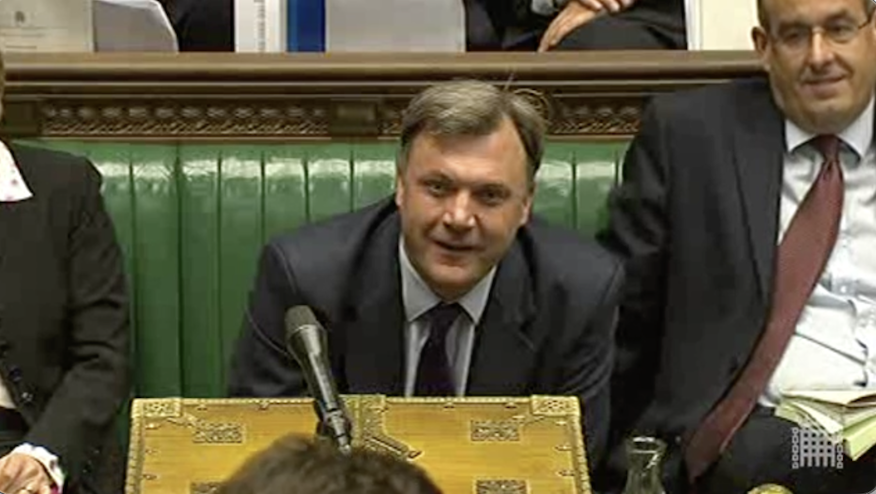
The controversy centred on the publication of 55 private documents – the personal papers of shadow chancellor and leading Brownite Ed Balls – by the Daily Telegraph on the evening of 9 June.
At the time, the antagonisms between Blair and Brown in the former’s third term were well-understood. In his memoirs, published September 2010, Blair said that Brown could be “maddening” and accused his successor of lacking “emotional intelligence”.
In a July 2010 interview with the Times, Lord (Peter) Mandelson said that Brown had been “very badly served” by his allies when he was chancellor.
Mandelson commented: “The unbridled contempt that some people around Gordon had for Tony and those who worked for him was very destructive.”
***
The leaked papers in 2011 set out the broad strokes of a strategy to rebrand Brown, while undermining Blair in a bid to oust him. The plot, codenamed “Project Volvo”, pointed to a campaign of co-ordinated activity by key Brownite figures to exert pressure on the prime minister.
The scheming reportedly began in July 2005, shortly after Labour’s third consecutive general election victory.
The strategy’s title reflected internal assessments that the Volvo marque, alongside British Rover, were the vehicles voters most closely associated with Brown. According to the documents, this association aligned with Brown’s reputation as “steadfast” and “robust”.
Volvo itself hit out at the comparisons.
In a statement, the car company said the documents “show just how out of touch with reality senior politicians within the previous government had become with modern Britain”.
A spokesperson added: “If only the Labour Party had been like today’s Volvos – dynamic, agile and innovative – perhaps the UK economy would have been in a better place than it finds itself today.”
Labour strategists reportedly likened David Cameron, the then Conservative leader of the opposition, to “a sports car, BMW”.
A BMW spokeswoman responded: “We are absolutely fine with that. We have no problem with that at all.”
A series of leading Brownite figures were implicated in the alleged plot, including Balls, Ed Miliband, the Labour leader of the opposition, and Douglas Alexander, the shadow foreign secretary.
Miliband had bested his Blairite brother, David, in the 2010 Labour Party leadership election – which followed the resignation of Gordon Brown.
Included in the cache of documents were apparent handwritten notes by Brown, detailing his negative feelings towards Blair.
In one document, Brown wrote that “if we are to renew Labour, we will have to be as rigorous and as brutal as we were in the creation of New Labour”.
In 2005, Brown hit out at Blair’s alleged weaknesses.
“This is a government not presidency”, he wrote. “Restoration of constitution and of trust. Leadership that gets on with the job… Trust depends on proper relationship between executive legislature and civil service, Labour the champion of the constitution… Need to redefine politics from spin/calculation/manoeuvre… No presidentialism.”
In another memo, Brown criticised Blair’s 2005 Labour conference speech, saying “all his talk” of Labour dominating the centre ground “is not about re-establishing Labour, but a self-promotion about his exceptionalism”.
In February 2006, Blair reportedly responded to the incessant handover requests from Brown with a note. “The division at the top is killing us”, he stated.
The then-prime minister added: “You (understandably) want to end the uncertainty by me going now.
“You need to be the candidate of continuity and change. The second will be relatively easy to do. A different person is, by its nature, change.
“The first, however, rests on a smooth transition. Critical to that is not merely the absence of disunity in the handover; it is also the visible, clear demonstration that the person who most embodies NL [New Labour], ie me, is working hand in hand with the successor.”
He added: “Whilst I remain PM, the final decision has to be mine; and that cannot provoke a breakdown. I will try, at all costs, to avoid disagreement, but there can’t be stalemate if it happens.”
On a copy of this letter, Brown noted the words “shallow”, “inconsistent” and “muddled”.
***
Responding to the leaks, Balls insisted it was “not true” to say he and Brown plotted to oust Blair.
He added: “It’s not justified either by the documents themselves or by what was actually happening at the time.”
Asked about the “shallow”, “inconsistent” and “muddled” notes, Balls admitted the changeover was not “always sweetness and light”.
After receiving a complaint from Balls, the cabinet secretary, Sir Gus O’Donnell, authorised a formal investigation to establish how the files were passed to the Telegraph.
A statement said: “The Cabinet Office is looking first into whether this particular set of papers was in the possession of any government department and, if so, whether there have been any breaches of document security.”
George Osborne, the chancellor, referenced the document leak during a House of Commons debate on 22 June 2011 – noting Volvo’s statement deriding the strategy document.
Labour MP Kevin Brennan responded: “While the chancellor is on that subject, can he give a simple answer to a question – yes or no?
“Did he have advance knowledge that the Daily Telegraph had obtained the shadow Chancellor’s private papers, or any advance knowledge of the stories that it planned to write – as he raised the issue, yes or no?”
Osborne did not engage with the question.
He stated: “This is a debate about the economy. We all enjoyed reading those papers in the Daily Telegraph”.

Politics.co.uk Newsletters
DAILY
Politics@Lunch
WEEKLY
Week in Review