
13 November 2026
On 22 March 1765, the Stamp Act – one of the most controversial laws ever passed by parliament – received royal assent. The act, intended to raise revenue to pay for troops stationed in North America, marked a crucial milestone on the road to the American Revolution.
The Stamp Act, proposed by the government of prime minister George Grenville, required a wide variety of printed materials in the colonies – including legal documents, newspapers, and even playing cards – to be produced on stamped paper made in London.
The legislation met with little opposition in the House of Commons, coming as the British government faced a mounting financial crisis after the Seven Years’ War (1756-1763). It passed by 205 votes to 49.
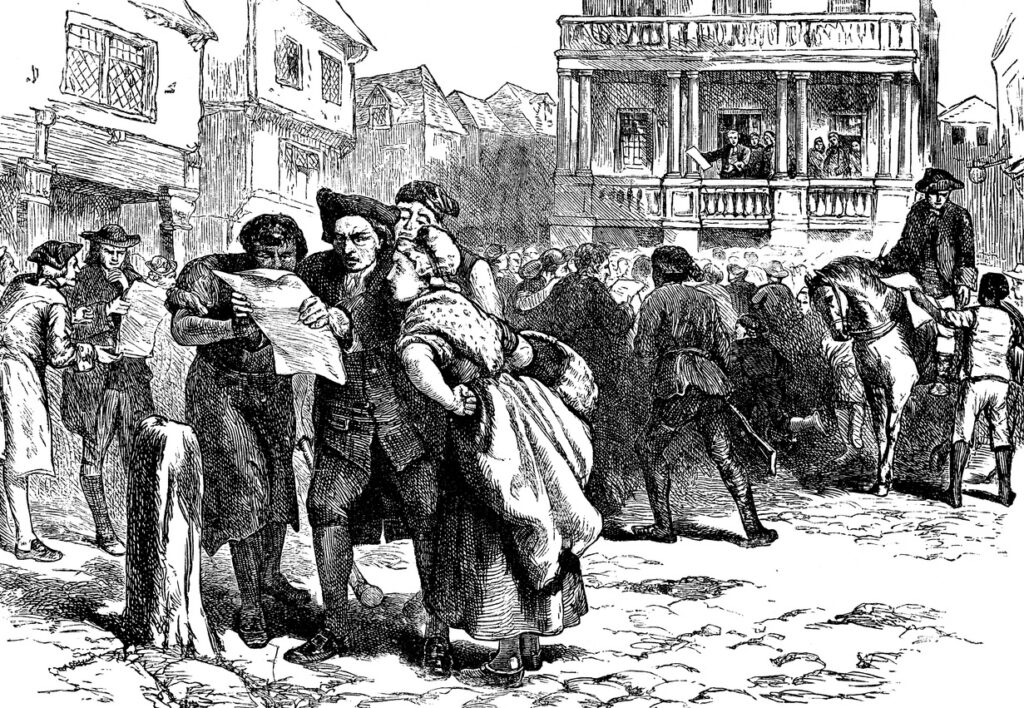
However, the act was met with widespread and co-ordinated opposition across the thirteen colonies. The central objection was that the colonists were being taxed by a parliament in which they had no elected representatives.
This principle was famously encapsulated in the slogan: “No taxation without representation”.
The act therefore led to boycotts of British goods, public protests and attacks on tax collectors.
Moreover, in an unprecedented show of unity, nine colonies sent delegates to the Stamp Act Congress in New York to orchestrate a collective response. The Stamp Act Congress, convened in New York City in October 1765, was the first united action taken by the colonies. It resolved that MPs did not have the power to tax the colonies since they were unrepresented in parliament.
Faced with intense protest, parliament ultimately repealed the Act a year later on 18 March 1766. At the same time however, the House of Commons simultaneously asserted its right to legislate for the colonies “in all cases whatsoever” with the Declaratory Act.
The repeal of the Stamp Act temporarily quieted colonial protest, but further perceived overreaches and renewed resistance resulted in the American Revolutionary War (1775-1783) and, ultimately, US independence.
DAILY
Politics@Lunch
WEEKLY
Week in Review
