Oswald Mosley resigns from Labour to launch New Party
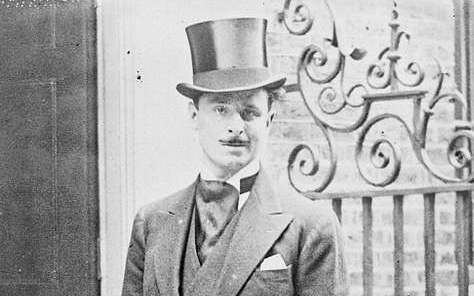
On 28 February 1931, Sir Oswald Mosley, seen by some as a rising star in Ramsay MacDonald’s Labour government, resigned from the party. He launched the New Party to oppose MacDonald’s administration and advocate an interventionist economic programme.
The party’s creation reflected growing strains within Labour and a significant step on Mosley’s own journey towards political extremism.
Mosley was first elected to parliament as a Conservative MP at the 1918 general election, having been encouraged to enter politics by Tory cabinet minister F. E. Smith. He applied to join the Labour Party in March 1924 and was returned as a Labour MP in the 1926 Smethwick by-election.
Labour emerged as the largest party for the first time at the 1929 general election, winning 287 seats on 33.3% of the vote. The Conservatives under Stanley Baldwin secured 260 seats on 38.1%. The Liberal Party, led by David Lloyd George, won 59 seats on 23.6% of the vote.
In the hung parliament, Lloyd George’s Liberals held the balance of power and tentatively agreed to prop up a minority Labour administration. Mosley was appointed as chancellor of the Duchy of Lancaster with special responsibility for unemployment.
***
However, Mosley soon grew frustrated with the MacDonald administration’s response to the Great Depression, spearheaded by Philip Snowden as chancellor. In January 1930, he proposed his own programme of policies to tackle rapidly rising unemployment: the so-called Mosley Memorandum. The radical document was highly critical of laissez-faire economics and advocated for large-scale, proto-Keynesian state intervention. It called for public works programmes, increased pensions and social security payments, industrial reorganisation and protective tariffs.
Mosley claimed his programme would “obliterate class conflict and make the British economy healthy again”.
The memorandum and later reproductions won some support in parliament, including from future health minister Aneurin ‘Nye’ Bevan and future prime minister Harold Macmillan. It was also reviewed approvingly by John Maynard Keynes himself.
Keynes wrote: “I like the spirit which informs the document. A scheme of national economic planning to achieve a right, or at least a better, balance of our industries between the old and the new, between agriculture and manufacture, between home development and foreign investment; and wide executive powers to carry out the details of such a scheme.”
The economist argued that the manifesto offered a “starting point for thought and action.”
He added: “It will shock – it must do so – the many good citizens of this country… who have laissez-faire in their craniums, their consciences, and their bones… But how anyone professing and calling himself a socialist can keep away from the manifesto is a more obscure matter.
But the proposals were rejected by the cabinet.
Mosley responded by resigning his ministerial post in May 1930. In his letter of resignation, addressed to MacDonald as prime minister, Mosley said it was “inconsistent with honour for me to remain a member of the government”.
He added: “In speech and in the advocacy of policy I shall claim the right always accorded by our party to its members to ask the party to adopt a policy which I believe to be more consistent with our programme and pledges at the last election.”
In a speech to the commons on 29 October 1930, Mosley condemned the government’s perceived reliance on inquiries. “Sooner or later a decision must be taken and action must ensue”, he stated. “We cannot continue simply to dodge from one inquiry to another.”
The Labour MP called on the government to “face modern problems with modern minds”.
Mosley’s language, rhetoric and policy recommendations foreshadowed his subsequent shift towards fascism.
In a speech delivered on 12 February, shortly before his resignation from the Labour Party, Mosley attacked the prime minister’s “complacency” and likened the government to chickens “in front of a motor car, cackling the economy slogans of their opponents.”
He argued that the economy needed a more “powerful government”.
He concluded: “These suggestions to put the nation in bed on a starvation diet are the suggestions of an old woman in a fright. The exact reverse is needed; a policy of manhood which takes the nation out into the field and builds up its muscles and its constitution in effort.”
J. H. Thomas, a MacDonald ally and lord privy seal, characterised Mosley’s speech as “very mean”. The prime minister’s only crime, Thomas added, was to bring Mosley “from obscurity into notoriety.”
Mosley was joined by five Labour MPs in resigning from the party – including his wife Lady Cynthia Mosley, future Labour intellectual John Strachey, Robert Forgan, Oliver Baldwin (the son of Stanley) and William J. Brown. They founded the New Party to advocate the economic nationalism and corporatist ideas contained within the Mosley Memorandum. Ulster Unionist MP William Allen and Liberal MP Cecil Dudgeon were also among Mosley’s converts.
Baldwin and Brown, however, resigned within a day of joining the party, later returning to Labour.
The official programme of the New Party, A national policy: an account of the emergency programme, declared the need to turn the House of Commons from a “talk-shop to a workshop” with quasi-dictatorial powers vested in a powerful executive committee in place of the cabinet.
Mosley launched a magazine, Action, which was edited by Harold Nicolson.
A New Party militia – dubbed the “Biff Boys” – was led by the England rugby captain Peter Howard.
Illness forced Mosley to scale back his ambitions for the New Party in the near term. It placed third in the April 1931 Ashton-under-Lyne by-election with 4,472 votes (16.0%). Significantly, Mosley was blamed for Labour’s defeat to the Conservatives in this contest, including by a hostile crowd on the steps of the local town hall. Labour supporters met Mosley with cries of “Traitor!”, “Dirty dog!” and “You let the Tories in!”
Strachey later remarked that this was the moment when “British fascism was born”.
Strachey left the party in July, arguing that Mosley was “attempting to depart from the agreed basis on which we all entered the New Party and to be leading it in a Conservative or a Fascist direction.”
***
In August 1931, the minority Labour government split over the report of the May Committee on National Expenditure, which recommended drastic cuts to public spending, including a significant cut to unemployment benefit, to balance the budget. Nine ministers opposed the cuts; MacDonald and Snowden were among the 11 who signalled their support.
With the government paralysed, unable to steer Britain through the Great Depression, MacDonald travelled to Buckingham Palace on 24 August to tender his resignation to King George V. He was asked to continue as prime minister of a cross-party national government; MacDonald accepted.
The prime minister was subsequently convinced to call an election by his new Conservative allies.
The New Party contested 25 seats, winning zero, in the general election of October 1931. Mosley, standing in Stoke-on-Trent, finished third behind the Conservative and Labour parties with 10,534 votes (24.1%). The seat had been held by Lady Cynthia from 1929 to 1931.
Only one New Party candidate, Sellick Davies in Merthyr, placed second. Nicolson, standing in the Combined English Universities, placed fifth with 461 votes (3.4%).
During the election campaign, Mosley denounced those men “who muddled my generation into the crisis of 1914, who muddled us into the crisis of 1931”. He was also subjected to at least one beating at a political meeting in Birmingham.
Both before and after the election, leading Conservative politicians, including Winston Churchill and Neville Chamberlain, attempted to secure Mosley’s support.
In the wake of the 1931 election, a comprehensive failure for the New Party, Mosley embarked on a tour of the “new movements” that were flourishing in Italy and Germany.
Mosley was especially impressed by the Italian fascist and corporatist model, writing a glowing review in the Daily Mail upon his return to Britain.
He stated: “No time is wasted in the polite banalities which have so irked the younger generation in Britain when dealing with our elder statesmen.”
He wrote that the new Italian mind was “hard, concentrated, direct – in a word, ‘Modern’.”
Nicolson recorded in his famous diary that, at this time, Mosley began ranting about “shock troops, the arrest of MacDonald and J.H. Thomas, their internment in the Isle of Wight and the roll of drums around Westminster.”
Within a year, the New Party was effectively reconstituted as the British Union of Fascists (BUF), formed on 1 October 1932. Mosley preserved the New Party’s youth movement, which formed the basis of the BUF.
As leader of the BUF, Mosley embraced Nazi-style antisemitism and sought alliances with Benito Mussolini and Adolf Hitler.
***
After the outbreak of the Second World War, Mosley and his second wife, Lady Diana Mosley, were both interned under Defence Regulation 18B, as well as other members of the BUF.
Diana and Oswald were married secretly on 6 October 1936 in the drawing room of Nazi propaganda chief Joseph Goebbels with Hitler among those in attendance.
Following the war, Mosley founded the neo-fascist Union Movement, which called for a single nation-state to cover the continent of Europe. He stood in the seat of Shoreditch and Finsbury in the 1966 general election, winning just 4.6% of the vote.
After retiring to France, Mosley died on 3 December 1980, aged 80.
In March 1981, Denis Healey, the then deputy leader of the Labour Party, referred to the formation of the New Party in response to the Social Democratic Party (SDP) schism.
Healey argued that the SDP would struggle to “start from scratch”.
He said: “Mosley tried to do this exactly 50 years ago when he broke away from the Labour Party, and as you know, nothing came of it. So he formed the fascist party.
“It’s very easy to appeal to the wonderful dream, a world in which there’s peace, motherhood and all that. But when you start getting down to how you achieve it in practice, how you build up your strength from the grassroots, this, I think, is when the problems will appear.”

Politics.co.uk Newsletters
DAILY
Politics@Lunch
WEEKLY
Week in Review
