King Edward VIII’s abdicates after constitutional crisis
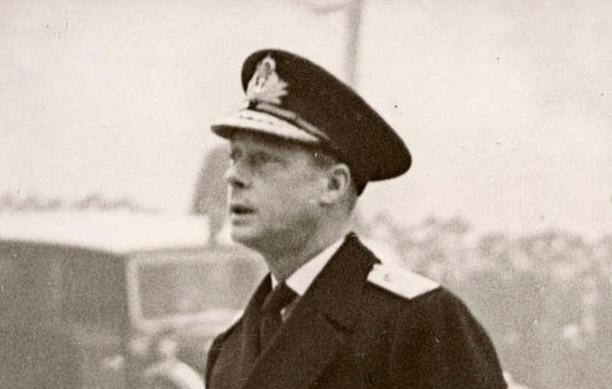
On 11 December 1936, King Edward VIII abdicated upon granting royal assent – his final act as sovereign – to His Majesty’s Declaration of Abdication Act. The legislation was rushed through parliament in a single day after Edward signed the Instrument of Abdication at Fort Belvedere, witnessed by his three younger brothers. The instrument declared his “irrevocable determination to renounce the Throne for myself and for my descendants.”
Edward’s decision to abdicate was communicated to parliament by the prime minister, Stanley Baldwin on 10 December.
Baldwin, in his third and final term as prime minister, had fought for weeks to uphold the principle that the king could not marry the American double-divorcée Wallis Simpson and retain the throne. His approach, praised for its tact and resolution, helped defuse the unprecedented crisis without causing lasting damage to the crown of the constitution.
***
The crisis began on 16 November when Edward informally told Baldwin that he intended to marry Simpson. This was seen as problematic, in no small part, given Edward’s position as the supreme governor of the Church of England. At this time, the church forbade the remarriage of divorced persons while a former spouse was still living.
Edward was insistent, however, and so the prime minister initially agreed to take soundings on three options: Edward marries Simpson and she become queen (a royal marriage); Edward and Simpson marry, but she does not become queen (a morganatic marriage); or abdication.
Baldwin also rejected Edward’s suggestion that he deliver a broadcast to the nation, indicating his desire to retain the throne and marry Simpson morganatically.
The news of Edward’s intentions became front-page news on 2/3 December. It was immediately addressed in parliament when Clement Attlee, the leader of the opposition, asked Baldwin whether “any constitutional difficulties have arisen”.
Baldwin said he had “no statement to make today”, adding: “While there does not at present exist any constitutional difficulty, the situation is of such a nature as to make it inexpedient that I should be questioned about it at this stage.”
On 4 December, Baldwin informed the House that he had rejected “widely circulated suggestions” of a compromise solution, including the proposal for a morganatic marriage. The prime minister rejected the scheme as lacking “any constitutional foundation”.
When parliament reconvened on 7 December, Baldwin warned that the “prolongation of the present state of suspense and uncertainty would involve risk of the gravest injury to national and imperial interests”.
But Winston Churchill, a backbench Conservative MP enjoying his “wilderness years”, appealed for a delay. He requested a “full statement, not only upon the personal but upon the constitutional issues involved”. His appeal received a hostile reception; MPs retorted with cries of “No!” and “Sit down!”
Churchill was styled as “the king’s champion in parliament” during the abdication crisis.
Baldwin answered that, with the king professedly still considering his decision, he would not debate “hypothetical considerations”.
***
Finally, on 10 December, parliament formally received the king’s message setting out his decision to abdicate. It was left to the speaker of the House of Commons, in a “quavering voice”, to articulate the sovereign’s wish.
The message stated: “After long and anxious consideration, I have determined to renounce the throne… Realising as I do the gravity of this step, I can only hope that I shall have the understanding of my peoples in the decision I have taken and the reasons which have led me to take it.
“I will not enter now into my private feelings, but I would beg that it should be remembered that the burden which constantly rests upon the shoulders of a sovereign is so heavy that it can only be borne in circumstances different from those in which I now find myself.”
Baldwin responded that “no more grave message has ever been received by parliament and no more difficult, I may almost say repugnant, task has ever been imposed upon a prime minister”.
The crisis, Baldwin said, had left him “little time in which to compose a speech for delivery today, so I must tell what I have to tell truthfully, sincerely and plainly, with no attempt to dress up or adorn.”
The prime minister described his relationship with the king at length and, with Edward’s permission, detailed the development of their discussions. He framed his actions as seeking to defend the constitutional principle that the sovereign must accept ministerial advice.
Baldwin revealed he had first intervened in October, driven by the danger of the “vast volume of correspondence” from the US “all expressing perturbation and uneasiness at what was then appearing in the American press”.
He said it was his “duty” as prime minister to engage the monarch to warn him of “the difficult situation that might arise later if occasion was given for a continuation of this kind of gossip and of criticism”. The PM said that he did so in secret without conferring with the cabinet.
Baldwin said he told Edward that the crown, though deprived of many prerogatives, “stands for far more than it ever has done in its history”. The integrity of the monarchy, the prime minister said, was that it was “the last link of empire that is left” and a guard “against many evils that have affected and afflicted other countries.”
Baldwin recounted his meeting with the king on 16 November, when he told Edward that his proposed arrangement would be “impracticable”.
He advised that “the position of the King’s wife was different from the position of the wife of any other citizen in the country”, because in the “choice of a queen the voice of the people must be heard.”
Baldwin then quoted Hamlet: “His will is not his own; For he himself is subject to his birth, He may not, as unvalued persons do, Carve for himself; for on his choice depends The safety and the health of the whole State.’”
It was in the meeting of 16 November, Baldwin said, that the king made his intentions explicit, when he stated: “I am going to marry Mrs Simpson, and I am prepared to go.”
In a further meeting on 2 December, Baldwin rejected the king’s proposal for a morganatic marriage. He argued that “neither in the dominions nor here would there be any prospect of such legislation” enabling Simpson to become the king’s wife without taking up the position of queen.
Baldwin described the king’s “struggle” between the “complete abandonment of the project on which his heart was set, and remaining as king, or doing as he intimated” and abdicating in the hope of later marrying Simpson.
Baldwin defended the conduct of the king. He told MPs that while “there is not a soul among us who will not regret this from the bottom of his heart, there is not a soul here to-day that wants to judge.”
The prime minister added: “We are not judges. He has announced his decision. He has told us what he wants us to do, and I think we must close our ranks, and do it.”
He called on MPs to “conduct ourselves with that dignity which His Majesty is showing in this hour of his trial”.
Harold Nicolson, a National Labour MP who supported Baldwin’s government, said the House heard the prime minister’s speech in “intense silence”.
He wrote in his diary: “We file out broken in body and soul, conscious that we have heard the best speech we shall ever hear in our lives.”
Attlee, responding to the king’s message for the Labour Party, requested that the House be suspended for an hour and 30 minutes to consider what had been heard.
Returning to the opposition dispatch box at 6:00 pm, Attlee expressed his “deep sorrow” at the conclusion of events.
He stated: “Powerful personal and human considerations have conflicted with the obligations and responsibilities of his high calling.”
“I am sure that all of us have been trying to think of some way by which this conflict could be resolved. We realised the grave objections to every course, and we hoped it would not come to abdication; but the king has made his decision.”
Churchill declared: “What is done is done. What has been done or left undone belongs to history, and to history, so far as I am concerned, it shall be left.”
He described the king’s “qualities of courage, of simplicity, of sympathy, and, above all, of sincerity”, adding: “It is the acme of tragedy that these very virtues should, in the private sphere, have led only to this melancholy and bitter conclusion.”
The solemn tone of proceedings was shaken by Independent Labour Party (ILP) and Communist MPs, who used the crisis to launch a fierce attack on the monarchy.
James Maxton said that he and his allies would take the view that “the monarchical institution has now outlived its usefulness.
George Buchanan, like Maxton an ILP MP, railed against the “cant and humbug” of the House.
He said: “I have heard praise of the king which was not felt sincerely in any quarter of the House. I go further.
“Who has not heard the tittle-tattle and gossip that is going about? If he had not voluntarily stepped from the throne, everyone knows that the same people in the House who pay lip service to him would have poured out scorn, abuse and filth…
“If an ordinary workman had been in this mess, everyone in the House of Commons would have been ashamed of him… You are setting aside your laws for a rich, pampered Royalty. The next set will be pampered too.”
Willie Gallacher, the Communist Party of Great Britain MP, suggested the crisis was an indication foreign influence.
He said: “The king and Mrs Simpson do not live in a vacuum. Sinister processes are continually at work… Mrs Simpson has a social set, and every member of the cabinet knows that the social set of Mrs Simpson is closely identified with a certain foreign government and the ambassador of that foreign government.”
It was an apparent reference to Simpson’s pro-German sympathies.
Viscount Halifax responded to the king’s message as leader of the House of Lords. He spoke of the “bewilderment” Britain and the empire would be experiencing.
Halifax likened the king’s state of mind to a “civil war”, stating: “It is not difficult to appreciate how stern must have been the contest for His Majesty between conflicting loyalties.”
The Marquess of Salisbury, a senior Conservative peer and former Lords leader, struck an existential tone.
Salisbury described the abdication of a monarch as “a momentous, almost a desperate act”. He said the abdication left “a wound in the body politic which is a disaster” and “leaves it mutilated.”
The Archbishop of Canterbury said that no such “tragedy of a pathos so profound has ever been enacted on the stage of our national history”.
He added: “Of the motive which has compelled that renunciation we dare not speak. It takes us into the region of the inner mysteries of human life and human nature.”
***
The King’s Instrument of Abdication was given effect by an act of parliament the following day, on 11 December 1936. The His Majesty’s Declaration of Abdication Bill was passed through all its stages in both the commons and the lords in less than three hours.
Maxton tabled a reasoned amendment, seeking to block the bill’s passage. The amendment said the present crisis showed the danger “inherent in an hereditary monarchy” and called for a “more stable and efficient form of government of a republican kind”.
In his speech, Maxton likened the monarchy to “Humpty Dumpty”.
The ILP MP said: “Humpty Dumpty sat on a wall, Humpty Dumpty had a great fall, All the King’s horses and all the King’s men, Could not put Humpty Dumpty back again.”
Maxton’s amendment was overwhelmingly defeated by 403 votes to 5.
Attlee maintained his support for the bill. Speaking at the bill’s second reading, the Labour leader rejected any “abstract discussions about monarchy and republicanism”.
He insisted: “We are concerned with fundamental economic changes.”
But Attlee criticised the “vulgar adulation” of the monarchy, using it to help explain the abdication crisis.
He said: “The interests which stand for wealth and class privilege have done all they can to invest the monarchy with an unreal halo, and to create a false reverence for royalty, and this has tended to obscure the realities of the position…
“Some pomp arid ceremony may be useful on occasions, but we believe that the note of monarchy should be simplicity… we should see the utmost simplicity in the monarchy, which will, I believe, bind together people and Monarch more closely than before.”
Baldwin address the House again ahead of the bill’s third reading,
He told MPs: “The royal assent given to this bill will be the last act of his present majesty, and I should not like the bill to go to another place without putting on record… [that] we shall always remember with regard and affection, the whole-hearted and loyal service that His Majesty has given to this country as Prince of Wales and during the short time he has been on the Throne.”
The reign of Edward VIII, which had lasted just 325 days, ended at 1.52 pm, after the His Majesty’s Declaration of Abdication Act received royal assent.
The act ensured the succession of Edward’s brother, Prince Albert, Duke of York, who became George VI – and permanently excluded Edward and his descendants from the line of succession.
Edward was granted an exemption from the Royal Marriages Act, allowing him to marry Simpson.
On the evening of 11 December, Edward delivered his famous farewell address, declaring that he could not carry the burden of duty “without the help and support of the woman I love.”
He stated: “At long last I am able to say a few words of my own. I have never wanted to withhold anything, but until now it has not been constitutionally possible for me to speak…
“You all know the reasons which have impelled me to renounce the throne. But I want you to understand that in making up my mind I did not forget the country or the empire, which, as Prince of Wales and lately as King, I have for twenty-five years tried to serve.
“But you must believe me when I tell you that I have found it impossible to carry the heavy burden of responsibility and to discharge my duties as King as I would wish to do without the help and support of the woman I love.”
Edward was created Duke of Windsor and went into self-imposed exile, marrying Simpson in France in June 1937.
***
On 14 December 1936, the House of Commons convened to swear allegiance to King George VI.
A message from the new sovereign, read by the speaker, stated: “I have succeeded to the throne in circumstances which are without precedent and at a moment of great personal distress.
“But I am resolved to do my duty and I am sustained by the knowledge that I am supported by the widespread goodwill and sympathy of all my subjects here and throughout the world.”
Baldwin noted the new king’s character. He said that more than “any of his brothers, he resembles in character and disposition of mind his father… whatever may happen to him, no personal predilections of any kind will stand between him and what he conceives to be his first duty.”
In May 1937, following the coronation of George VI, Stanley Baldwin announced his resignation as prime minister. His popularity among contemporaries had been reinforced by his handling of the abdication crisis.
Baldwin was succeeded by Neville Chamberlain.

Politics.co.uk Newsletters
DAILY
Politics@Lunch
WEEKLY
Week in Review