John Stuart Mill proposes women’s suffrage amendment to Reform Bill
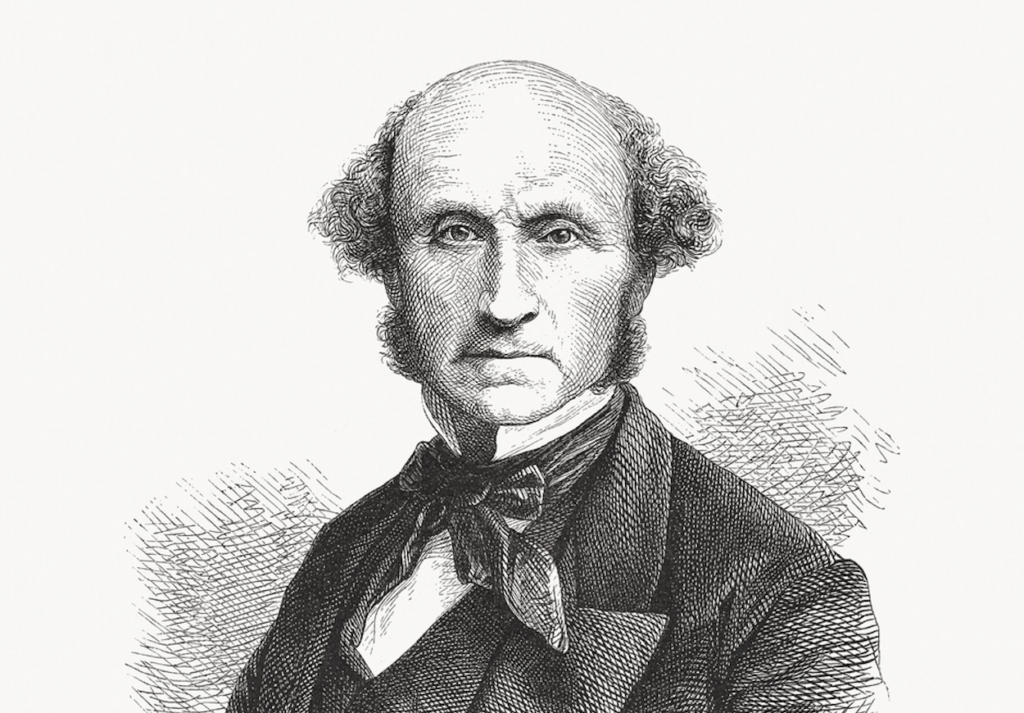
On 20 May 1867, the seminal philosopher and Liberal MP John Stuart Mill made the first substantive case for women’s suffrage in the UK parliament, proposing an amendment during the committee stage debates on the Representation of the People Bill (known as the Second Reform Act after its passage).
***
The first reform act (1832) was the first time a distinction in the franchise had been explicitly defined along the lines of sex. The Great Reform Act, therefore, in clarifying the country’s complex and somewhat informal franchise arrangements, legally codified the exclusion of women from the reformed parliamentary system. Prior to the 1832 act, women’s names did appear on election indentures, documents recording the candidates voters had chosen to represent them in parliament.
In 1866, the Women’s Suffrage Petition Committee led by Barbara Bodichon collected 1521 signatures on a petition calling for the elective franchise to be extended to all householders “without distinction of sex”.
The petition referred to the “evident anomaly that some holders of property are allowed to use their right, while others, forming no less a constituent part of the nation, and equally qualified by law to hold property, are not able to exercise this privilege.”
It argued that “participation of women in the government is consistent with the principles of the British constitution, inasmuch as women in these islands have always been held capable of sovereignty and women are eligible to various public offices.”
The signatories included Frances Buss, Frances Power Cobbe, Josephine Butler, Priscilla Bright McLaren, Harriet Martineau, and Bessie Rayner Parkes – some of the most prominent 19th century campaigners for women’s rights.
The petition was presented to parliament by John Stuart Mill on 7 June 1866.
On 17 July, Mill spoke to the merits of the petition, styling his contribution a ‘humble address’ – a communication from one House of parliament to the monarch, requesting the production of documents. He moved for the “Return of the number of Freeholders, Householders, and others in England and Wales who, fulfilling the conditions of property or rental prescribed by Law as the qualification for the Electoral Franchise, are excluded.”
Mill’s speech centred on countering the “chief practical argument” against female suffrage, the claim that “few, if any, women desire it.” The petition, he pointed out, originated “entirely with ladies, without the instigation… of any person of the male sex” – which he described as an “unexpected” sign that the proposal was “ripe for being taken into serious consideration.”
He framed the petition as the “accustomed sign that the time has arrived when a proposal of a public nature is ripe for being taken into serious consideration.”
***
On 20 May 1867, Mill proposed an amendment to the Second Reform Act, seeking to replace the word “man” with “person”. He contended that the exclusion of women was a “solitary case” in the constitution, as “no other example of an exclusion which is absolute.”
Mill argued that a prima facie case for inclusion was already made, as “it is not just to make distinctions, in rights and privileges, without a positive reason”. He stated that the only grounds for refusal were “personal unfitness or public danger”, dismissing both.
He asked if any parliamentarian could pretend that “women who manage an estate or conduct a business… are not capable of a function of which every male householder is capable”, or suggest that they would somehow “revolutionise the state”?
He argued that excluding women “is also repugnant to the particular principles of the British constitution”, specifically that “taxation and representation should be co-extensive.”
He asked: “Do not women pay taxes?”
Mill maintained that the “notion of a hard and fast line of separation between women’s occupations and men’s – of forbidding women to take interest in the things which interest men – belongs to a gone-by state of society which is receding further and further into the past.”
Mill then systematically dismantled the common “practical arguments” against female suffrage.
To the idea that politics is “not women’s business, and would distract them from their proper duties”, Mill countered that the vast majority of male electors “have each his own business which absorbs nearly the whole of his time”.
He added: “But I have not heard that the few hours occupied, once in a few years, in attending at a polling booth, even if we throw in the time spent in reading newspapers and political treatises, ever causes them to neglect their shops or their counting houses.
“I have never understood that those who have votes are worse merchants, or worse lawyers, or worse physicians, or even worse clergymen than other people.
“One would almost suppose that the British constitution denied a vote to every one who could not give the greater part of his time to politics; if this were the case we should have a very limited constituency.
“But allow me to ask, what is the meaning of political freedom? Is it anything but the control of those who do make their business of politics, by those who do not? Is it not the very essence of constitutional liberty, that men come from their looms and their forges to decide, and decide well, whether they are properly governed, and whom they will be governed by?”
He insisted that the “notion of a hard and fast line of separation between women’s occupations and men’s – of forbidding women to take interest in the things which interest men – belongs to a gone-by state of society which is receding further and further into the past.”
Finally, Mill responded to the claim that women’s interests were safe with their male relatives. He called this the exact “what is said of all unrepresented classes”.
Male-only legislatures, he said, had consistently passed legislation detrimental to the commons interests of women, when it came to domestic violence, education and employment.
He proposed that MPs seek a return “of the number of women who are annually beaten to death, kicked to death, or trampled to death by their male protectors; and, in an opposite column, the amount of the sentences passed in those cases in which the dastardly criminals did not get off altogether”.
Mill saved his strongest critique for the common law of marriage, which gave the husband absolute control of “all that a wife has”, which he could “squander every penny of it in debauchery, leave her to support by her labour herself and her children, and if by heroic exertion and self-sacrifice she is able to put by something for their future wants, unless she is judicially separated from him he can pounce down upon her savings, and leave her penniless.”
While may protect the rich, he said, it fails “the daughters of the poor”.
He concluded: “We ought not to deny to [women], what we are conceding to everybody else – a right to be consulted; the ordinary chance of placing in the great council of the nation a few organs of their sentiments – of having, what every petty trade or profession has, a few members who feel specially called on to attend to their interests, and to point out how those interests are affected by the law, or by any proposed changes in it.
“No more is asked by this motion; and when the time comes, as it certainly will come, when this will be granted, I feel the firmest conviction that you will never repent of the concession.”
***
Speaking during the debate, Conservative MP Edward Karslake voiced his strong opposition to women’s suffrage. He stated that for 500 years, English law had “deliberately settled that the wife should be absolutely and entirely under the control of the husband, not only in respect of her property, but of her personal movements.”
He described his experience canvassing, where wives often held opposing views to their voting husbands. “Oh, I am blue; but my husband votes yellow”, Karslake recalled as a typical reply. He challenged Mill on how he proposed to “deal with these differences of opinion between the head of the family and her whom the poet called ‘the lesser man?’”
He ridiculed Mill’s idea that the vote would “promote logical discussion” in the home, mockingly suggesting MPs would have had to spend their Sundays “discussing with their wives the question of the compound-householder.”
The vote, he insisted, would debase women, causing them to lose their “admirable attributes… her gentleness, her affection, and her domesticity”.
Karslake concluded with the claim that “not a lady in Essex had asked him to support the proposition in favour of a female franchise”, suggesting such “indifference” was shared throughout the country.
On 25 July, Karslake presented a petition from 129 women in Colchester (his constituency) in favour of women’s suffrage – organised by campaigners Cobbe, Lydia Becker and Helen Taylor.
Liberal MP and leading barrister George Denman, following Karslake, argued that the unamended bill might already – accidentally – grant women the vote. He pointed out that clause I of the bill granted the vote to every “man” who meets the qualifications; he contrasted that with the 1832 Great Reform Act, which had used the specific term “male persons.”
He referenced a piece of legislation passed since the Great Reform Act parliament which specifically stipulated that words “importing the masculine gender should be deemed to include females, unless it was specifically stated to the contrary.”
Denman concluded that if the bill passed as written, the “Court of Queen’s Bench… would be constrained to hold that they conferred the suffrage upon female persons as well as males.”
In the end, Mill’s amendment was rejected by 196 votes to 73 – a majority of 123.
Nonetheless, Mill later described his campaigning on women’s suffrage as “perhaps the only really important public service I performed in the capacity as a member of parliament.”
William Gladstone, the Liberal statesman, was one of those who voted against the amendment.
***
Five months after Mill’s amendment was rejected, Manchester shopkeeper Lily Maxwell was mistakenly added to the electoral register and cast a vote for Jacob Bright (younger brother of John) in a by-election. Her sex aside, Maxwell was otherwise qualified to vote under the requirements set out in the latest reform act.
Bright, as it happened, was a prominent supporter of widening the franchise. After Mill’s defeat at the 1868 general election, he effectively inherited the mantle of leading parliamentary champion for women’s suffrage.
During his time as an MP, Bright secured the right for women to vote in municipal elections from 1869. His Women’s Disabilities Removal Bill, introduced in 1870, would have extended the parliamentary franchise to women on the same terms as men – had it not been defeated in the commons by 220 votes to 151.
In the years 1870 to 1914, bills providing for women’s suffrage were introduced most years. But women would only achieve electoral parity with men in the Equal Franchise Act of 1928.
***
Mill lost his seat at the 1868 general election, the first conducted on the Second Reform Act franchise.
He would later expand on his arguments for the expansion of the franchise in his influential 1869 essay, The Subjection of Women. Developed over many years and heavily influenced by his wife, Harriet Taylor Mill, the work marked a further comprehensive attack on the legal and social subordination of women.

Politics.co.uk Newsletters
DAILY
Politics@Lunch
WEEKLY
Week in Review