Heath declares state of emergency as miners’ strike escalates
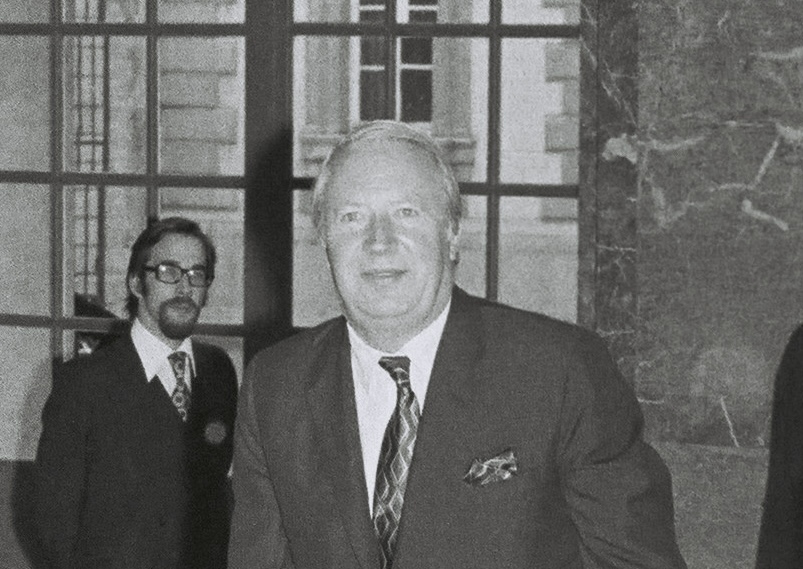
On 9 February 1972, the Conservative government led by Edward Heath declared a state of emergency as the first official national miners’ strike since 1926 threatened to bring the country’s power supply to a critical low.
The strike, reported to involve 280,000 miners, had begun one month earlier on 9 January after negotiations between the National Union of Mineworkers (NUM) and the National Coal Board (NCB) broke down. Three months of talks ended in deadlock with an offer of 7.9% on the table. The mineworkers were asking for an increase of up to £9 a week – on an average take home wage of £25.
***
The industrial action proved highly effective. All 289 coal mines in the country ceased production as flying pickets dispersed to persuade other workers to strike in solidarity. Within 48 hours of the strike’s beginning, a total 17 schools in Shropshire – all dependent on coal-fired heating – were forced to shut.
On 3 February, Fred Matthews, a miner from the Doncaster area, was killed after being struck by a lorry leaving Keadby Power Station. Labour MP Thomas Swain raised the incident in the commons. Swain said that if there was not an “immediate statement from the responsible minister, I shall go back to my constituency tonight and advocate violence”.
Some days later, with the situation deteriorating and coal stocks dwindling – raising the prospect of a complete shutdown of the electricity grid – the government invoked emergency powers under the terms of the Emergency Powers Act 1920.
The proclamation of the state of emergency was read in the House of Commons by the speaker.
It read: “We counsellors of state, to whom have been delegated certain royal functions as specified in letters patent dated the 4th day of February 1972, being of opinion that the present industrial dispute affecting persons employed in the coal mines and the production and distribution of fuel constitutes a state of emergency within the meaning of the said Act of 1920 as so amended, have in pursuance thereof made on Her Majesty’s behalf a proclamation dated the 9th day of February, 1972, declaring that a state of emergency exists.”
The home secretary, Reginald Maudling, rose to explain the government’s actions. He stated that, faced with the disruption of coal and electricity supplies, the government would take “steps to discharge their responsibility to maintain essential services and to minimise the threat to the life of the community.”
Maudling added: “They have therefore thought it right to advise the proclamation of an emergency under Section 1 of the Emergency Powers Act 1920.”
The home secretary confirmed that the emergency regulations would come into operation at midnight.
Shirley Williams, the shadow home secretary, said Labour regarded the “emergency as being very much of the government’s own creation, with the worsening position for employment in the steel, textiles and other industries as a result of falling stocks of coal.”
Under questioning from Williams, Maudling responded that the government would “contemplate the use of the armed forces only if that were absolutely essential to maintain vital services to the nation.”
Roy Jenkins, the shadow chancellor, raised the case of the Saltley fuel storage depot, expressing concern over the risk of violence. He asked whether Maudling was aware that “there is here a grave danger of injury both to police and pickets.”
Jenkins added: “There is great danger of this becoming a semi-local battleground, and there is great local concern.”
On the eve of the emergency declaration, thousands of pickets had converged on Saltley, the largest coke depot in the country, forcing its closure. The confrontation has become known as the “Battle of Saltley Gate”.
Maudling insisted that the police stationed at Saltley were “doing their constitutional duty of allowing peaceful picketing but preventing illegal picketing.”
The emergency powers gave ministers the authority to take action without needing agreement from parliament. The government responded by rationing electricity, leading to widespread power cuts, and introduced a three-day working week for most of British industry in an effort to conserve fuel.
A Times headline, published on 16 February, reported that 1.2 million workers had been laid off as a result of the strike.
Shortly after the declaration of a state of emergency, Robert Carr, the employment secretary, set up a committee of inquiry under Lord Wilberforce on 11 February to investigate the miners’ demands. It reported a week later, recommending pay increases of between £4.50 and £6 per week – a 27% pay rise.
The report concluded: “The large group of men underground do work which is heavy, dirty, hot and frequently cramped. Other occupations have their dangers and inconveniences, but we know of none in which there is such a combination of danger, health hazard, discomfort in working conditions, social inconvenience and community isolation.”
On 19 February, following talks with Carr and Heath, miners’ leaders agreed a £95 million pay package. The settlement was described as a “notable victory” for the miners. Six days later on 25 February, the miners voted to return to work.
The 1972 miners’ strike saw the government set up a new cabinet committee called COBR (Cabinet Office Briefing Rooms). COBR, or Cobra, is still used to respond to civil threats and other national emergencies by the British government.
***
But industrial conflict continued to hobble Heath’s government.
The 1973 oil crisis exacerbated the industrial situation. The price of oil quadrupled between October 1973 and February 1974.
Uncertainty over oil supplies strengthened the miners’ position in negotiating with the government.
By 1973, miners’ wages had plunged to eighteenth in the industrial wage league. Runaway inflation meant that miners’ pay was now lagging 2.3% behind the recommendations of the Wilberforce inquiry. On 12 November 1973, the miners began an overtime ban which cut coal production by 40%.
On 13 November, the government once again declared a state of emergency.
In the commons, Shirley Williams responded: “This is the fifth emergency to have been declared in just over three years under this government compared with one state of emergency declared in the whole of the previous 15 years.”
The following month, on 13 December, Heath announced that from midnight on 31 December, commercial consumption of electricity would be limited to three consecutive days each week. It was also announced that all television broadcasting after 10:30pm would be banned, excepting the Christmas and New Year holidays.
Heath stated that the country would “have to postpone some of the hopes and aims we have set for ourselves for expansion and for our standard of living.”
He added: “In terms of comfort we shall have a harder Christmas than we have known since the war.”
Patrick Jenkin, the financial secretary to the Treasury, famously urged the British people to clean their teeth in the dark. It later emerged that Jenkin himself used an electric toothbrush; his north London home was also photographed with lights on in every room.
On 24 January, NUM members voted overwhelmingly in favour of strike action, rejecting the government’s latest pay offer. Heath responded on 7 February – with the country still in the dark and working three days a week – by calling a snap election.
Heath appealed to the nation: “This time the strife has got to stop. Only you can stop it. It is time for you to speak, with your vote”.
The prime minister asked: “Do you want a strong government that has a clear authority in the future to take decisions that will be needed? Do you want parliament and an elected government to continue to fight strenuously against inflation?
“Or do you want a government which will abandon the struggle against rising prices under pressure from one particular powerful group, of workers?”
Harold Wilson, the Labour leader of the opposition, responded: “The government called this election in panic… They are unable to govern and dare not tell the people the truth.”
Jeremy Thorpe, the leader of the Liberal Party, condemned Heath for calling “a bitterly divisive election.”
The campaign was the first fought during a major economic crisis since 1931. The miners refused to postpone their strike during the election campaign.
The Conservative reelection bid was famously framed around the question: “Who governs Britain?”. The electorate’s inconclusive answer, a hung parliament with Labour as the largest party, led to Heath’s downfall as prime minister.
The Conservative manifesto, Firm Action for a Fair Britain, referred to the “dominance of a small group of power-hungry trade union leaders”. But during the campaign, Heath’s position was undermined by a report from the government’s own Pay Board, published on 21 February, which suggested the miners’ pay claim was justified.
Labour’s manifesto had touted a “social contract” with the trade unions that would define its approach to industrial relations. Within days of taking office, Michael Foot, the new employment secretary, settled the miners’ pay claim. On 6 March 1974, the coal miners called off their four-week strike after accepting a wage increase of 35% – more than double the amount offered under Heath’s government.
The three-day working week ended on 8 March.
Joe Gormley, the president of the NUM, responded: “We have proved that when the spirit and willingness is there, a settlement can be achieved in one day rather than the long drawn out exercise we have been involved in unnecessarily.”
Heath’s record of five declarations of emergency proclaimed under the Emergency Powers Act 1920 – by far the most any government – remains intact. In 2004, the 1920 act was superseded by the Civil Contingencies Act 2004.
***
Margaret Thatcher, the prime minister at the time of the 1984 miners’ strike, was determined to avoid a repeat of Heath’s defeats at the hands of the miners.
In 1977, while Thatcher’s party remained in opposition, Conservative MP Nicholas Ridley drew up a report – known as the ‘Ridley Plan’ – on how to defeat the NUM. Following the 1979 general election, the Final Report of the Nationalised Industries Policy Group was operationalised: the government stockpiled coal and prepared new trade union legislation to ensure it could withstand a prolonged dispute.

Politics.co.uk Newsletters
DAILY
Politics@Lunch
WEEKLY
Week in Review