Government U-turns on A-level results, scraps algorithm for teacher grades
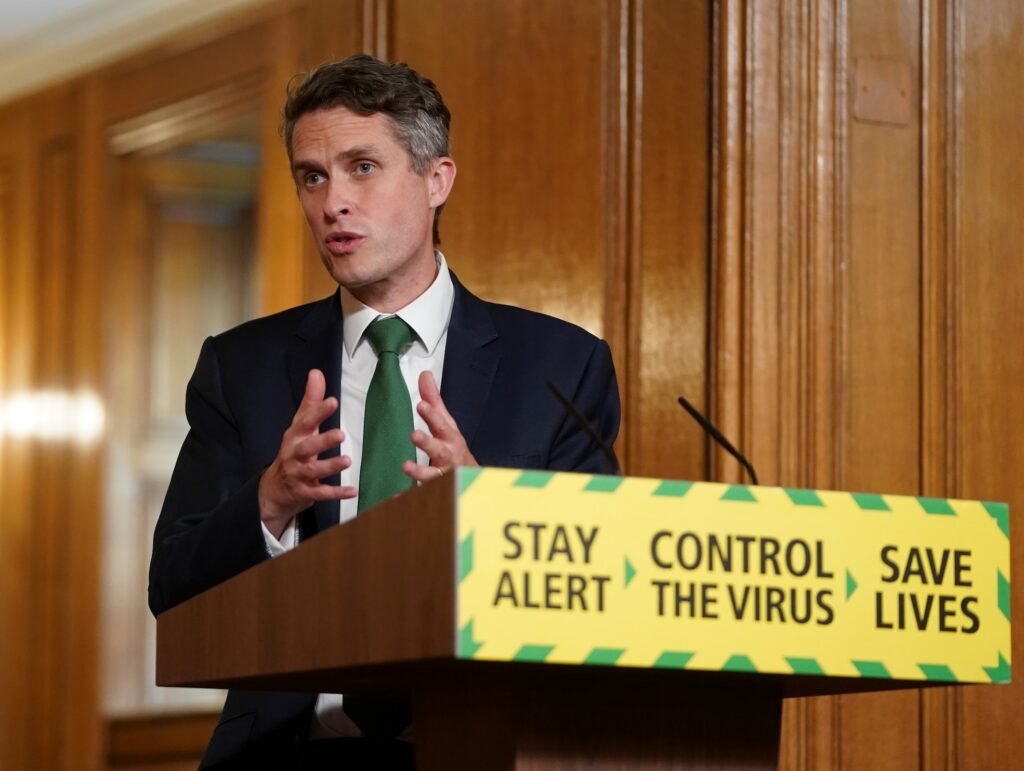
On 17 August 2020, the government performed a major U-turn on the grading of A-level and GCSE results in England, announcing that students would receive grades based on teacher assessments rather than marks generated by a controversial algorithm.
The decision, made by the exams regulator Ofqual and the education secretary, Gavin Williamson, followed student protests over results that were perceived as unfair and discriminatory.
***
On 18 March 2020, the government announced that all examinations in England would be cancelled due to the Covid-19 pandemic. In their place, Ofqual developed a standardisation algorithm to moderate existing teacher-predicted grades (Centre Assessed Grades or CAGs). The model weighted schools’ historical performance data to prevent grade inflation.
Williamson maintained that this measure was a “vital but unprecedented step in the country’s efforts to stop the spread of coronavirus.”
He added: “I have asked exam boards to work closely with the teachers who know their pupils best to ensure their hard work and dedication is rewarded and fairly recognised.”
When A-level results were released on 13 August, nearly 36% of grades awarded by the algorithm were one grade lower than teachers’ predictions. 3% were down two grades. (In 2019, 79% of university entrants did not achieve their predicted grades).
The downgrading disproportionately affected high-achieving students in schools with historically lower results. It sparked accusations that the algorithm entrenched educational inequality.
Facing widespread criticism, on 15 August, Williamson said that the grading system would remain in place, and there would be “no U-turn, no change”. The education secretary also criticised Scottish ministers for U-turning the week prior. He insisted that awarding unmoderated grades would be “unwise” and cause “rampant grade inflation”.
But faced with mounting pressure and the release of GCSE results imminent, the government U-turned.
On 17 August, Williamson announced that both A-level and GCSE students in England would be awarded the CAG submitted by their school or college, unless the algorithm had produced a higher grade.
Williamson apologised for the “distress” caused but defended the initial aim of maintaining standards.
In a statement, he said: “This has been an extraordinarily difficult year for young people who were unable to take their exams.
“We worked with Ofqual to construct the fairest possible model, but it is clear that the process of allocating grades has resulted in more inconsistency and unfairness than can be reasonably resolved through an appeals process.
“We now believe it is better to offer young people and parents certainty by moving to teacher assessed grades for both A and AS level and GCSE results.
“I am sorry for the distress this has caused young people and their parents but hope this announcement will now provide the certainty and reassurance they deserve.”
The decision to revert to CAGs did result in significant grade inflation, with the proportion of A* and A grades at A-level rising by over 12 percentage points compared to 2019 (from 25.2% to an estimated 37.7%).
***
On 19 August, Lord Falconer, a former attorney general, argued that the exam results algorithm was unlawful.
In a letter to Williamson and Ofqual’s chief regulator, Sally Collier, Lord Falconer said the saga “should never have come down to this, so late on, when Ofqual and the SoS [the secretary of state, Williamson] have been fully in the knowledge that the standardisation formula that was being used was unlawful.”
On 20 August, the GCSE results were released.
On 25 August, Sally Collier resigned from the position of chief regulator of Ofqual.
On 26 August, Jonathan Slater, the most senior civil servant in the Department for Education (DfE), left his post.
Dave Penman, the general secretary of the FDA, the senior civil servants’ union, said Slater’s departure was proof that “ministerial accountability is dead and the message to civil servants is that they are expendable the moment life gets tough for a minister. This administration will throw civil service leaders under bus without a moment’s hesitation.”
Williamson was ultimately dismissed as education secretary in the 2021 cabinet reshuffle and replaced by Nadhim Zahawi.
In October 2025, the UK Covid-19 Inquiry heard that the prime minister, Boris Johnson, considered sacking Williamson over the results fiasco.
Giving evidence to the inquiry, Johnson acknowledged that the system had “failed” and the government had “got the wrong initial model”.
Asked whether he should have sacked Williamson, Johnson told the Covid Inquiry: “I think if I look back at my handling of my beloved colleagues over the three-and-a-bit years I was in government, I can think of all sorts of changes I might have made.
“But I don’t think there’s any point in speculating about it now, except I think that on the whole, given the difficulties that we faced, I think that the department under Gavin did a pretty heroic job in trying to cope with Covid, and that was my judgment.”

Politics.co.uk Newsletters
DAILY
Politics@Lunch
WEEKLY
Week in Review
