Blair wins historic vote to rewrite Labour’s Clause IV
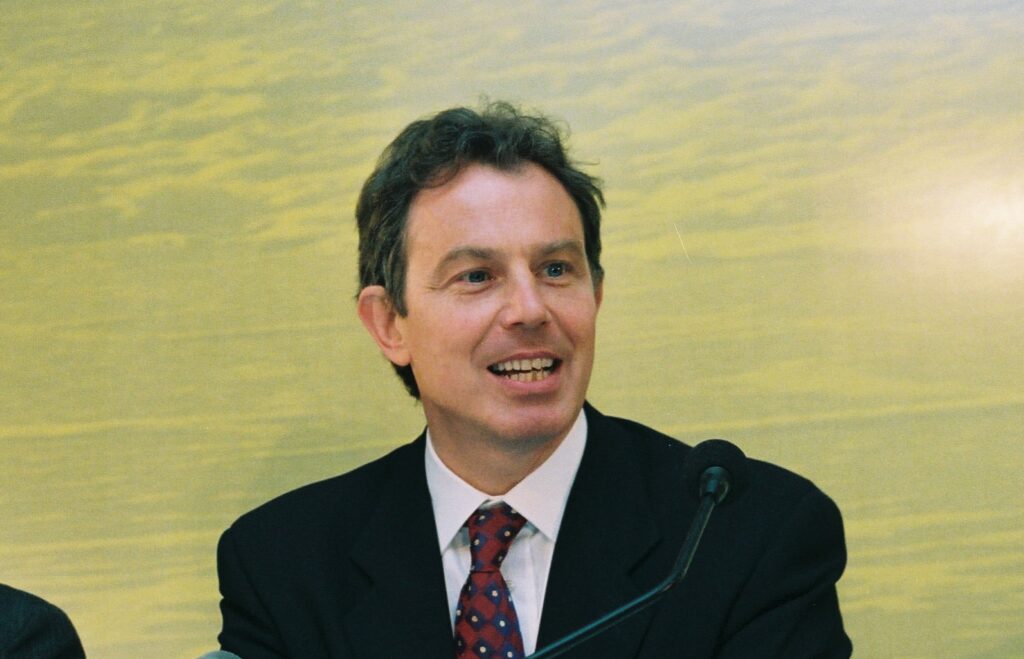
On 29 April 1995, the Labour Party voted to rewrite Clause IV of its constitution, a defining moment in Tony Blair’s creation of “New Labour”. At a special conference held at Methodist Central Hall in Westminster, delegates voted by 65% to 34% to replace the party’s historic commitment to mass nationalisation with a new statement.
***
The original Clause IV, adopted in 1918, committed the party to securing for workers “the common ownership of the means of production, distribution, and exchange”.
It stated: “To secure for the workers by hand or by brain the full fruits of their industry and the most equitable distribution thereof that may be possible upon the basis of the common ownership of the means of production, distribution, and exchange, and the best obtainable system of popular administration and control of each industry or service.”
For decades, the clause was seen as a symbolic expression of the party’s democratic socialist identity.
But Blair was not the first Labour leader to turn on the totemic commitment. In the wake of Labour’s defeat at the 1959 general election, Hugh Gaitskell argued that it should be revised. The 1959 Labour election manifesto had been somewhat equivocal on nationalisation. It said that nationalised industries “have played a great part in Britain’s postwar development” and proposed to extend public ownership to steel, but added that Labour had “no other plans for further nationalisation” except where an industry was found “after thorough enquiry, to be failing the nation”.
Addressing Labour conference in November 1959, Gaitskell said Clause IV implied a “continual misrepresentation”. But the move provoked considerable opposition from the major trade unions and the left, and Gaitskell was forced to withdraw the proposal in March 1960. This symbolic row formed part of the backdrop to the November 1960 Labour leadership contest and Harold Wilson’s unsuccessful campaign.
Blair was elected leader of the Labour Party in July 1994. He unapologetically embraced the mantle of modernisation, promising to go further than his predecessors John Smith (1992-1994) and Neil Kinnock (1983-1992). Blair ultimately won a commanding 57.0% of the electoral college vote, securing majorities in all three sections.
He soon turned to Clause IV. The traditional totem was seen as an electoral liability that alienated moderate voters and tethered the party to an outdated “Old Labour” ideology.
Blair announced his intention to rewrite the clause in his first conference speech as leader. The move was a political gamble, triggering a fierce internal battle with the party’s left-wing and some trade unions. The Labour leader stood accused of abandoning Labour’s core principles.
Speaking in January 1995, Blair framed the debate over revising Clause IV as a “process not of destruction but rebirth”, which would “replace an icon fashioned by human hands for one age, with the spirit that motivates us and which lasts for all ages.”
In a speech in his Sedgefield constituency, Blair insisted that Britain required “both dynamic markets and strong public services; and that both public and private sectors should be properly responsible to the public good.”
The comments were an indication as to the form the revised version of Clause IV would take.
***
Some months later, with labour delegates gathered for a special conference, Blair beseeched his party to sweep away its 77-year-old commitment to state ownership.
Speaking at the special conference, the Labour leader said: “I wasn’t born into this party. I chose it. I’ve never joined another political party. I believe in it. I’m proud to be the leader of it and it’s the party I’ll always live in and I’ll die in.”
He added: “I did not come into the Labour Party to join a pressure group. I didn’t become leader of this party to lead a protest movement.
“Power without principle is barren. But principle without power is futile. This is a party of government and I will lead it as a party of government.”
Blair also argued that scrapping the original Clause IV commitment was just part of a wider platform centred around “change and modernisation”.
He said: “Change and modernisation does not stop at 4:00 pm this afternoon. It goes on in the development of the party, in the development of policy…
“If sometimes I seem a little overhasty and overurgent, it’s for one reason and one reason only: I can’t stand these people, these Tories, being in government over our country.”
The new clause committed the party to building “a dynamic economy, serving the public interest”, in which “the enterprise of the market and the rigour of competition are joined with the forces of partnership and co-operation”.
This model, the clause states, can produce the “wealth the nation needs and the opportunity for all to work and prosper with a thriving private sector and high-quality public services”.
The revision of the original Clause IV was a landmark victory for Blair, signalling a symbolic break with “Old Labour” and doctrinaire socialism. The new clause committed the party to a “dynamic economy” and a society where “power, wealth and opportunity are in the hands of the many, not the few”.
Speaking after the vote, Blair said: “Let no one say radical politics is dead. Today a new Labour Party is being born.”
The Defend Clause IV campaign said: “There is little in Blair’s proposed new clause to which Liberal Democrats or even many Tories could not subscribe.”
***
On 1 May 1997, the Labour Party won a landslide general election victory, ending 18 years of Conservative rule. The result was the most decisive for any party since 1945, with Blair’s party securing a House of Commons majority of 179 seats.
Labour won 418 seats, its highest ever total, while the Conservatives were reduced to just 165 seats – their worst result since 1906. The landslide represented a swing of 10.3% from the Conservative to Labour.
In an August 2015 interview with the Independent on Sunday, Jeremy Corbyn suggested that he could consider bringing back the original Clause IV as part of a commitment to take some “necessary things” into public ownership.
He argued that Labour should not “shy away from public participation, public investment in industry and public control of the railways.”
A spokesperson later sought to play down Corbyn’s remarks; during his tenure as Labour leader from 2015 to 2020, no meaningful attempt was made to alter the revised text of Clause IV.
During the 2016 Labour leadership election, which was triggered by the bitter internal fallout following the 2016 Brexit referendum, Owen Smith called for a symbolic re-edit of Clause IV of Labour’s constitution, which advocated the “fight against inequality”.
Smith said: “I want to re-write clause four to put tackling inequality right at the heart of everything we do.”

Politics.co.uk Newsletters
DAILY
Politics@Lunch
WEEKLY
Week in Review
