Blair leads Labour to landslide victory in general election
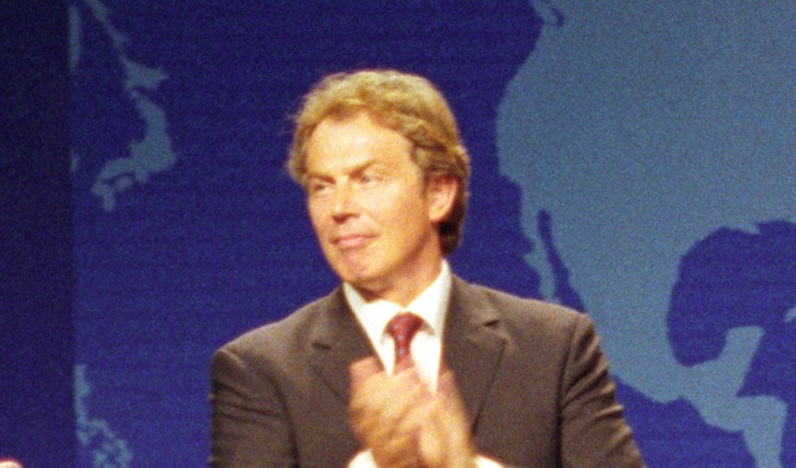
On 1 May 1997, the Labour Party, led by Tony Blair, won a landslide general election victory, ending 18 years of Conservative rule. The result was the most decisive for any party since 1945, with Labour securing a House of Commons majority of 179 seats.
Blair’s party won 418 seats, its highest ever total, while the Conservatives were reduced to just 165 seats – their worst result since 1906. The landslide represented a swing of 10.3 points from the Conservative to Labour, and saw a record 120 women voted in as MPs, up from 60 (102 of which were Labour MPs).
The Liberal Democrats, having abandoned “equidistance” and embraced cooperation with Blair, won 46 seats – the best showing for a third party in over 60 years.
***
The 1997 general election marked the culmination of the “New Labour” project, a process of rapid modernisation and ideological repositioning undertaken by the party following Blair’s election as leader in July 1994.
Blair famously revised Clause IV of the Labour Party’s constitution. The traditional totem, which committed the party to sweeping state-ownership, was seen as an electoral liability that alienated moderate voters and tethered the party to an outdated “Old Labour” ideology.
John Major, the incumbent prime minister, led his party to a surprise victory in the 1992 general election. However, his standing was severely damaged by “Black Wednesday” in September 1992, which forced Britain out of the Exchange Rate Mechanism (ERM). As chancellor, Major had convinced the cabinet to sign Britain up to the ERM. But the leading political casualty of the currency crisis was the Conservative Party’s reputation for economic competence.
Major, meanwhile, struggled to manage deep divisions within his party – especially over Europe. The parliamentary battles over the Maastricht Treaty had bitterly divided Conservative MPs, with a group of eurosceptic backbenchers (the “Maastricht rebels” or “euro-rebels”) repeatedly challenging the government’s position. Major’s majority stood at around 20 after the 1992 general election – meaning internal party discipline was crucial to the proper function of government.
Major’s attempt to reunite his party with a classically conservative strategy – his “back to basics” campaign – basically backfired. His focus on traditional moral and social values was undermined by a litany of egregious sleaze scandals implicating Conservative MPs. Each story of Tory impropriety – from financial sleaze to sexual indiscretion – reinforced the narrative of a tired, arguably exhausted government.
In June 1995, Major resigned as leader of the Conservative Party, triggering an immediate leadership contest. Speaking in the garden of 10 Downing Street, Major said his patience had been exhausted with the constant division and speculation surrounding his leadership. Tory MPs ultimately backed Major, but the so-called “put up or shut up” exercise failed to address the Conservative Party’s deep ideological wounds.
Blair made Major’s relative lack of political strength a central theme of his communications strategy. On 30 January 1997, during a notable session of prime minister’s questions, the Labour leader famously derided Major as “Weak. Weak. Weak.”
Major had previously outscored Neil Kinnock, who led Labour into the 1992 election, as “best prime minister” by 15 points. By 1997, however, Blair outscored Major by 14 points.
That said, in the years leading into the 1997 election, Major and the Conservatives presided over a period of steady growth, low inflation and falling unemployment.
The Tory manifesto, entitled You can only be sure with the Conservatives, stated: “We have turned around our economic fortunes. We have fewer people out of work and more in work than any other major European economy. British people now have the opportunity of a prosperous future.”
But the political damage was done.
***
Labour ran a highly disciplined and professional campaign, masterminded by Peter Mandelson. Labour’s message of change was summed up by its campaign anthem, D:Ream’s “Things Can Only Get Better”.
The party’s manifesto, New Labour, New Life for Britain, was distilled into five pledges.
- Cut class sizes to 30 or under for 5, 6 and 7 year olds by using money from the assisted places scheme
- Fast-track punishment for persistent young offenders by halving the time from arrest to sentencing
- Cut NHS waiting lists by treating an extra 100,000 patients as first step by releasing £100 million saved from NHS red tape
- Get 250,000 under-25 year-olds off benefit and into work by using money from a windfall levy on the privatised utilities
- No rise in income tax rates, cut VAT on heating to 5% and inflation and interest rates as low as possible
https://x.com/faisalislam/status/543010936060391424
Labour also set out to defuse the “tax bombshell” that Conservative strategists dropped on Kinnock’s 1992 campaign by committing, in the immediate term, to Tory spending plans. Labour’s manifesto, entitled New Labour, New Life for Britain, conceded that the Conservatives got “some things” right.
It added: “We will not change them. It is where they got things wrong that we will make change. We have no intention or desire to replace one set of dogmas by another… We have modernised the Labour Party and we will modernise Britain.”
Major was also under siege on his right flank.
The new Referendum Party, led by James Goldsmith, campaigned for a referendum on the United Kingdom’s relationship with the European Union. Despite securing no seats, the party finished fourth overall in terms of vote share on 2.7%. It acted as a “spoiler” option in many constituencies Conservative candidates were defending. Notably, Goldsmith’s party only stood against those it deemed ‘europhiles’, including Major and chancellor Kenneth Clarke.
The issue of Europe continued to divide the Conservative Party throughout the campaign.
A total of 200 Tory candidates broke with official Conservative policy to oppose British membership of the single European currency. The move forced Major to respond: “Whether you agree with me or disagree with me; like me or loathe me, don’t bind my hands when I am negotiating on behalf of the British nation.”
On top of this, the Conservative argument that New Labour was a facade concealing “Old Labour” instincts – symbolised by the famous ‘New Labour, New Danger’ poster – did not cut through.
https://x.com/CDCHistory/status/948903110143029248
***
The scale of the 1997 defeat for the Conservatives was immense.
The party lost all its parliamentary seats in Scotland and Wales; and seven cabinet ministers were turfed out by the electorate, including the foreign secretary, Malcolm Rifkind; the trade and industry secretary, Ian Lang; the Scottish secretary, Michael Forsyth; the leader of the House of Commons, William Waldegrave; the former chancellor, Norman Lamont; and perhaps most famously, the defence secretary, Michael Portillo.
Portillo’s defeat in Enfield South became a symbol of the New Labour landslide win. The question “Were you still up for Portillo?” crossed the lips of many an astonished politico on 2 May.
High-profile electoral scalps are now often discussed in reference to this original “Portillo moment”.
Portillo’s defeat also had major implications for the forthcoming Conservative leadership contest. His surprise defenestration cleared the field of the favourite to succeed Major.
As expected, Major responded to the seismic defeat by resigning as Tory leader. In a statement, he said it had been an “immense privilege to serve as prime minister of the United Kingdom over the past six and a half years.”
The outgoing prime minister added: “I hope, as I leave Downing Street this morning, that I can say with some accuracy that the country is in far better shape than it was when I entered Downing Street.
“The economy is booming, interest rates are low and inflation is low and unemployment is falling…
“When the curtain falls it is time to get off the stage and that is what I propose to do.
“I shall, therefore, advise my parliamentary colleagues that it would be appropriate for them to consider the selection of a new leader of the Conservative Party to lead the party through opposition through the years that lie immediately ahead.”
In his victory speech, Blair declared that “a new dawn has broken, has it not?”.
On 2 May, Blair was appointed as the youngest British prime minister since the early 19th century. Gordon Brown was appointed as the new chancellor, Robin Cook as foreign secretary and Jack Straw as home secretary. John Prescott, the deputy Labour leader, was appointed deputy prime minister and head of a new “super-ministry”, combining parts of the environment and transport departments.
William Hague was elected leader of the Conservative Party in June, becoming, at the age of 36, its youngest leader since William Pitt the Younger in 1783.

Politics.co.uk Newsletters
DAILY
Politics@Lunch
WEEKLY
Week in Review