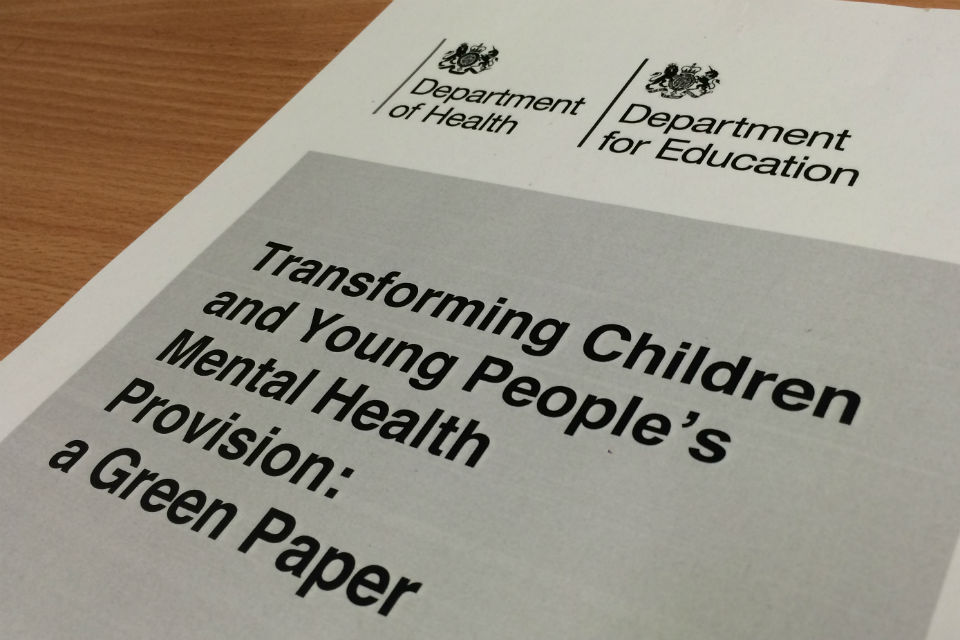
A Green paper is an official consultation document issued by the UK government. Its primary purpose is to stimulate public discussion and gather views on a specific policy area at an early, formative stage, before the government has committed to a particular course of action.
Green papers, named for the colour of their covers, are tentative by nature. They set out a government’s initial thoughts on a policy problem, outline a range of potential options for reform, and invite responses from interested parties.
They are seen as a way of gathering knowledge and gauging the political and public appetite for change. By inviting a wide range of views at an early stage, green papers are seen as a means of creating more robust and well-informed policy.
The term “green paper” is often said to originate from the publication in 1941 of proposals for educational reform by Herwald Ramsbotham, the then president of the Board of Education. The document was issued in a green cover and became known as the “Green Book”.
How green papers fit in the policy-making process
Green papers are the first step in a formal policy-making process that often leads to new legislation.
The process of producing a green paper, followed by a white paper, can be lengthy, and governments working to a tighter political timescale may sometimes proceed directly to the white paper stage. But the policy-making process generally follows a common sequence.
The green paper
When facing a complex policy challenge, the government may first publish a green paper. This discussion document will analyse the problem, set out the government’s objectives and present a number of different options or ideas for how to proceed. Its purpose is to stimulate debate and gather a wide range of views on a new policy idea before the government has formed a firm position.
The publication of a green paper is typically announced in parliament by the relevant government minister, who will then take questions from MPs, beginning the scrutiny process.
Public consultation
A government consultation is a formal process through which the public and interested organisations can provide their views on proposed government policy, changes to the law, or regulations.
Governments can consult on almost any element of policy. There is also no set format for consultations, and departments can consult at different stages in the process of policy development.
Consultations may range from broad, open-ended discussions on a new policy idea to specific, technical questions about specific regulations. The government department leading the policy will publish a consultation document and invite responses from individuals, businesses, charities, academics and public bodies.
After the consultation period closes, civil servants in the relevant department analyse all the responses submitted. They summarise the key arguments, identify areas of consensus and disagreement and assess the evidence provided by respondents. The department will then publish an overview of the responses to the consultation.
It is expected that the responses would then inform the next stages of the policy-making process.
The white paper
After analysing the feedback from the consultation, the government will develop a firm policy position. This is then published in a white paper. A white paper is a more authoritative document that sets out the government’s settled policy proposals. Its publication signals the government’s intention to legislate. They may include a draft version of a bill. This can allow for further consultation with stakeholders before a bill is formally presented to parliament.
The bill
If the proposals in a white paper require new law, the next step is the drafting of a bill. The contents of the white paper will form the direct basis for the new bill, which is then introduced to parliament to begin its legislative journey to becoming an act of parliament.
The Every Child Matters (ECM) green paper
In September 2003, the Blair government published the Every Child Matters green paper.
Its publication followed a public inquiry, led by Lord Laming, into the murder of eight-year-old Victoria Climbié. The inquiry had identified failures of communication and cooperation between the different public agencies responsible for child protection.
The green paper was therefore created to begin the process of overhauling children’s services. The document explicitly sought views on how to improve information sharing and create more integrated services focused on the well-being of the child.
In the paper’s foreword, the prime minister, Tony Blair, cited Victoria Climbié’s death as a “shocking example from a list of children terribly mistreated and abused.”
He added: “Sadly, nothing can ever absolutely guarantee that no child will ever be at risk again from abuse and violence from within their own family. But we all desperately want to see people, practices and policies in place to make sure that the risk is as small as is humanly possible.
“I believe that the proposals we are putting forward here constitute a significant step towards that goal.”
The document proposed to reorganise all services for children around five key outcomes: being healthy, staying safe, enjoying and achieving, making a positive contribution and economic well-being.
To deliver this, it proposed major structural changes, including the creation of a children’s commissioner for England “to act as an independent champion for children, particularly those suffering disadvantage”, and requiring local authorities to establish integrated Children’s Trusts.
The government stated its intention to legislate at the next available opportunity to “require all local authorities to appoint a director of children’s services.” The responsibilities of the director of children’s services would include children’s social services and education. The proposed trusts would report to the director of children’s services.
The government also outlined its plan (subject to consultation) to introduce a “new duty to safeguard children, promote their well- being and work together through these partnership arrangements”.
Following its publication, the government embarked on a wide-ranging public consultation.
The feedback received was then used to develop firm proposals, which were set out in the Every Child Matters: The Next Steps (2004) paper.
In the foreword to the document, the children’s minister, Margaret Hodge, said the previous green paper had yielded “the richest and most significant debate on children’s services for over a generation.”
The document described the new Children Bill, informed by the consultation, as “the first step in a long-term programme of change”.
The Children Act, which received royal assent on 15 November 2004, established the children’s commissioner post. The legislation generally aimed to promote co-ordination between official bodies to improve the overall well-being of children.

