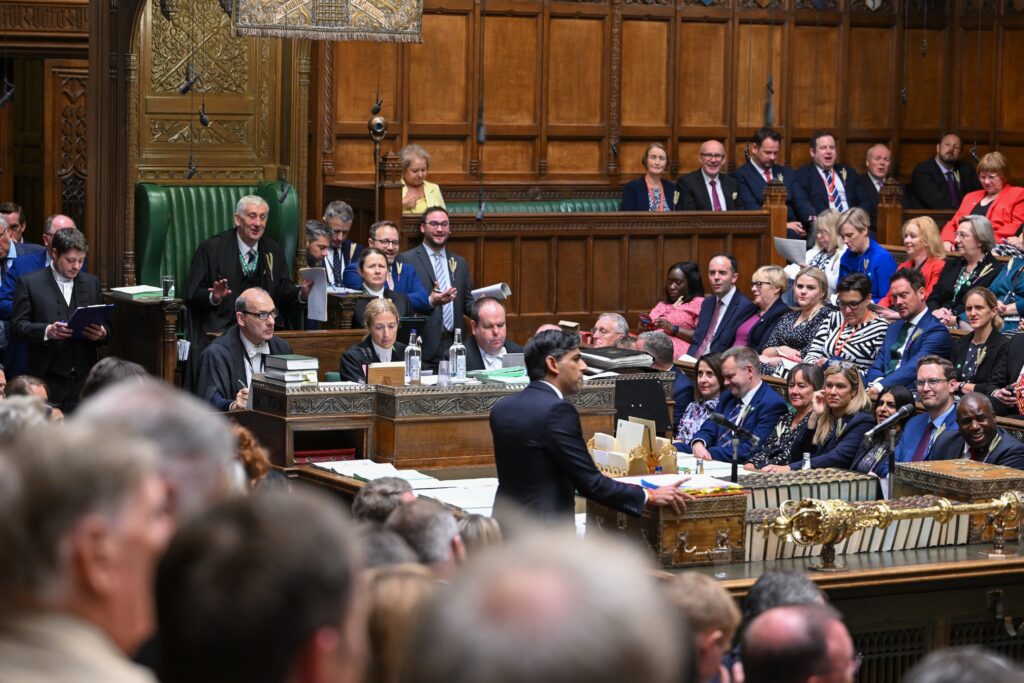
The clerk of the House of Commons is the chief procedural adviser to the House and its most senior permanent official. Appointed by the monarch by letters patent, the clerk is a politically impartial figure responsible for advising the speaker and all MPs on the rules, practices, and privileges of the House.
The role is ancient, dating back to 1363, and is central to the smooth and effective functioning of the House of Commons. The clerk is also the chief executive of the House of Commons service, leading the thousands of staff who support the work of parliament.
The first clerk, Robert de Melton, was appointed by the king to serve the lower House.
The clerk of the House of Commons is Tom Goldsmith.
Procedural and advisory role
The Clerk’s primary and most visible function is to provide expert, impartial advice on parliamentary procedure and practice.
Adviser to the speaker
The clerk and their team (the clerk assistant and the principal clerk of the table office) sit at the table in the centre of the commons chamber, directly in front of the speaker’s chair. They provide instant advice to the speaker and their deputies on how to interpret the rules of the House and handle procedural challenges as they arise during debates.
Adviser to MPs
Any MP, from a government minister to a backbencher, can seek impartial advice from the clerk and the staff of the ‘clerk’s department’ on any aspect of parliamentary procedure. This can include advice on how to draft a Bill, table a question, or raise a point of order.
Official record
The clerk is responsible for preparing and signing the official record of the House’s decisions, known as the Votes and Proceedings, which is published after each sitting day. They also endorse all bills that are sent from the commons to the House of Lords.
Administrative role
Beyond the chamber, the clerk of the House holds significant corporate responsibilities.
Chief executive
As chief executive of the House of Commons Service (since July 2000), the clerk leads the administration that provides all the services MPs need to do their jobs. This includes everything from the security of the parliamentary estate and human resources to catering and digital services.
Accounting officer
The clerk is the accounting officer for the House of Commons, meaning they are personally responsible to parliament for the proper use of the funds allocated to the House’s administration.
Additional resources
- UK parliament – Tom Goldsmith appointed as Clerk of the House of Commons: https://www.parliament.uk/business/news/2023/march-2023/tom-goldsmith-appointed-as-clerk-of-the-house-of-commons/
- W4MP – ‘Servants of the House’ – what the Clerks do: https://w4mp.org/w4mp-guides/whos-who/servants-of-the-house-what-the-clerks-do/

