Civil liberties are the fundamental rights and freedoms that protect individuals from arbitrary or unwarranted action by the state. They are typically established in a country’s common law and statute.
Key civil liberties include freedom of speech, freedom of assembly, freedom of association, freedom of movement and freedom from arbitrary arrest. These principles form the basis of a democratic society.
Civil liberties are distinct from human rights. Human rights are considered universal and inherent to all people, whereas civil liberties are specific legal protections granted to citizens of a particular state and can be amended or limited by law.
The central tension in the debate over civil liberties is the balance between individual freedom and the state’s duty to maintain national security and public order.
History and key milestones
Magna Carta (1215)
The Magna Carta is the earliest and likely most famous assertion of rights in English law. Issued by King John to appease rebellious barons, it established for the first time that the monarch was subject to the rule of law, not above it.
Magna Carta, the product of five days of intensive negotiations at Runnymede, was designed to protect the feudal rights of free men. Its 63 clauses placed restrictions on the king’s ability to levy taxes without baronial consent, protected the church from royal interference, and sought to prevent abuses of justice by the king’s officials.
Of the original clauses, only three remain valid. The first supports the freedom, rights and liberties of the Church of England; the second confirms the liberties and customs of the City of London and grants liberties and customs to other cities, boroughs and towns. The third remaining clause is the most well-known. Originally written in Latin a modern translation reads:
“No free man shall be seized or imprisoned, or stripped of his rights or possessions, or outlawed or exiled; nor will we proceed with force against him except by the lawful judgement of his equals or by the law of the land. To no one will we sell, to no one deny or delay right or justice.”
It is this clause which has been interpreted widely as confirming the right to trial by jury and habeas corpus, and its influence is seen in various pieces of subsequent legislation including the United States Constitution.
Evaluation question
Is Magna Carta’s status as the cornerstone of British civil liberties based more on romanticised political myth than legal reality?
Bill of Rights (1689)
This act further limited the power of the monarch and established the supremacy of parliament.
Its clauses include provisions for free parliamentary elections, for parliaments “to be held frequently” and for freedom of speech within parliament (parliamentary privilege). In relation to the courts, the bill stated that “excessive bail ought not to be required, nor excessive fines imposed, nor cruel and unusual punishments inflicted.”
The Bill of Rights, which was drawn up at the time of the accession of William and Mary, remains in force today. Like Magna Carta, its influence can be seen in other legislation relating to the rights and freedoms of individuals, in particular the US Bill of Rights 1789, and also the UN Declaration of Human Rights adopted by the General Assembly in 1948, and the European Convention on Human Rights (ECHR) in force 1953, which includes both human rights and civil liberties.
European Convention on Human Rights (ECHR) (1953)
The UK helped draft and is a signatory to the ECHR (also the Convention for the Protection of Human Rights and Fundamental Freedoms). Signatories undertake to protect rights and freedoms within their own countries. Residents of these countries who have a grievance under the terms of the Convention may take their case to the European Court of Human Rights (ECHR) in Strasbourg.
The Human Rights Act (1998)
For decades, a citizen with a grievance under the ECHR had to pursue a lengthy and expensive case at the European Court of Human Rights in Strasbourg.
The Human Rights Act 1998, introduced by the Labour government, incorporated most ECHR rights directly into UK domestic law. This allows individuals to have their human rights cases heard in UK courts.
The Freedom of Information Act (2000)
This Act created a public “right of access” to information held by public authorities. It requires public bodies, from central government departments to local councils, to publish certain information about their activities and allows members of the public to request information.
The Equality Act (2010)
The Equality Act consolidated existing anti-discrimination laws into a single piece of legislation. It provides legal protection from discrimination in the workplace and in wider society for nine “protected characteristics”: age, disability, gender reassignment, marriage and civil partnership, pregnancy and maternity, race, religion or belief, sex and sexual orientation.
Civil liberties: controversies and debates
The Regulation of Investigatory Powers Act 2000 (RIPA)
The Regulation of Investigatory Powers Act 2000 (RIPA) provided a regulatory framework to govern the way public bodies, such as the police and security and intelligence services, operated. It allowed the use of covert techniques when investigating terrorist threats and other serious crimes. The government-stated purpose was to ensure investigatory powers are used in accordance with human rights.
These powers are: the interception of communications; the acquisition of communications data (e.g. billing data); intrusive surveillance (on residential premises/in private vehicles); covert surveillance in the course of specific operations; the use of covert human intelligence sources (agents, informants, undercover officers); and access to encrypted data.
Initially, only nine organisations were allowed to use RIPA powers and attempts by the Government in 2002 to extend their use to hundreds more public bodies were defeated by civil liberties campaigners and cross-party MPs. Nevertheless, the number of public bodies using covert surveillance continued to grow. A 2016 report by the Guardian found that 186 councils were given permission to carry out more than 55,000 days of covert surveillance over five years. This included spying on people over trivial offences like dog fouling or fly-tipping.
Also in 2009, the House of Lords constitution select committee recommended that the government introduce a system of judicial oversight for surveillance carried out by public authorities, and that compensation be made available to those subject to unlawful surveillance. The committee also urged the government to take steps to ensure that these powers were “only exercised where strictly necessary, and in an appropriate and proportionate manner.”
New Labour
The Labour government elected in 1997 was frequently accused of running a “nanny state” and by the time of the 2010 general election, criticisms increased to more serious accusations of excessive state interference and state control, infringements of civil liberties and a gradual erosion of the political rights of the individual.
One of the main concerns was the enormous number of new criminal offences brought in by Labour. Between 1997 and 2009, an estimated 4,289 new criminal offences were created, approximately one for every day the party was in power; and the number continued to increase, rising from 27 new offences a month under Tony Blair, to 33 a month under Gordon Brown.
The Liberal Democrats roundly condemned this frenzied approach to law-making, stating: “The legacy of Labour is hyperactive law making that has spread confusion among police officers, judges and every other professional who has to deal with this cascade of nonsense.”
The government’s proposed introduction of ID cards together with an accompanying national identity register sparked significant opposition, as did the increased retention of data on the DNA national database, particularly the decision to store the DNA of large numbers of innocent people.
In November 2005, Tony Blair suffered his first major commons defeat as prime minister, when MPs rejected a government amendment to the Terrorism Bill. The defeat came over Blair’s proposal to allow police to detain suspects arrested under suspicion of having conducted, or being engaged in planning, terrorist crimes for up to 90 days without charge. The 90-day amendment, introduced at report stage, was defeated by 322 votes to 291 – a majority of 31. A total of 49 Labour MPs defied the government’s three-line whip and sided with the opposition.
Blair’s proposals were conceived as a response to heightened national security concerns following the 7 July 2005 London bombings. The government, backed by the police and security services, argued that modern terrorist conspiracies, and the volume of evidence that needed to be examined, required an extended pre-charge detention period. The existing 14 days detention before charge, under the Criminal Justice Act 2003, was said to be insufficient.
Blair threw his full political weight behind the proposal, rejecting calls to compromise.
In October 2008, the Gordon Brown government abandoned proposals for 42-day pre-charge detention in the face of opposition from the House of Lords.
The Protection of Freedoms Act (2012)
The Protection of Freedoms Act, passed in May 2012 by the Conservative-Liberal Democrat coalition government, included a new framework for police retention of fingerprints and DNA data, a code of practice for surveillance cameras and a new regime for police “stop and search”.
‘The snoopers’ charter’
The Draft Communications Data Bill, published in June 2012, proposed to allow security services access to all communications data – i.e. records of all emails, texts and phone calls – and for communications service providers (CSPs) to collect the data which will be stored for 12 months.
The proposals attracted widespread criticism from a variety of sources.
Liberal Democrat MP Julian Huppert warned: “But the Home Office proposals go way beyond the current rules with virtually no safeguards, asking for powers for the home secretary to insist on any information about any communications being kept, via secret notices.
“Our committee has looked into this, and concludes ‘the draft Bill pays insufficient attention to the duty to respect the right to privacy, and goes much further than it need or should’”.
The 2012 proposals were dropped, but in 2015, the then home secretary Theresa May announced a new investigatory powers bill. This was dubbed the “new snoopers’ charter”. The Investigatory Powers Act of 2016 greatly expanded electronic surveillance powers of the British intelligence agencies. Civil liberties pressure group, Liberty, has made getting rid of the Investigatory Powers Act 2016 one of their key campaigns – and even sued the government for its repeal. In 2019, a British court ruled against Liberty saying the ‘bulk powers’ of the Act don’t breach privacy and free expression rights. The organisation is appealing against that decision. The 2016 act was justified on the basis of safety and security.
The Covid-19 pandemic
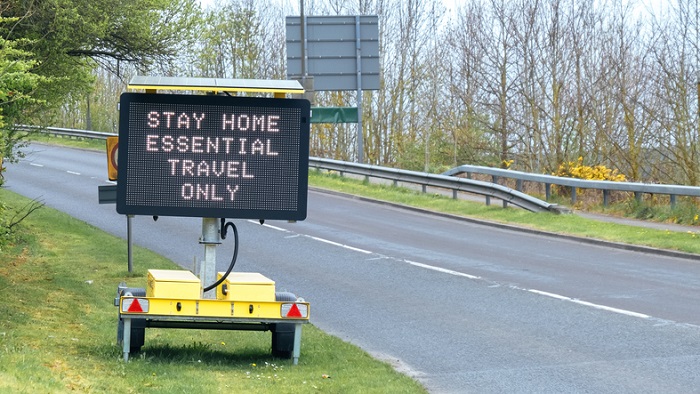
The coronavirus pandemic of 2020-22 saw an unprecedented restriction of civil liberties in the UK. In March 2020, the government introduced and began enforcing national ‘stay-at-home’ lockdowns designed to break the chains of transmission of a novel Coronavirus: Covid-19. By one year later, the government had enforced three national lockdowns as well as several ‘local lockdowns’ across Britain.
Under lockdowns – local and national – police have been granted extensive powers to break up meetings, stop protests and issue fines. The act also reportedly included potential jail terms for anyone spreading ‘misinformation and fake news’.
While the government argued these measures were essential to protect public health, critics raised concerns about the scale of state power and the limited parliamentary scrutiny. The measures were criticised by civil liberty campaign groups as excessive and prolonged.
The government was given such powers through the UK Coronavirus Act 2020.
The legislation, introduced to parliament on 19 March, was fast-tracked through the House of Commons and the Lords with cross-party support.
The Department of Health and Social Care (DHSC) stated that these measures were “temporary, proportionate to the threat we face, will only be used when strictly necessary and be in place for as long as required to respond to the situation”.
However, the act was met with immediate concern from civil liberties groups. Big Brother Watch described the act as containing the “most draconian powers in peace-time Britain”.
Amnesty International warned that “emergency powers can sometimes be misused, and this must not give a green light to trample on our basic human rights and liberties”.
During the bill’s passage through parliament, Conservative MP and former cabinet minister David Davis tabled an amendment to restrict the time limit of the bill to one year.
He told the Times: “There is nobody who can scrutinise a 300-page bill in one day. The government itself will have made mistakes, it’s a fact of life. We need an absolute, brick-wall stop on this legislation at 12 months.”
To address these concerns and in the face of a possible commons rebellion, the legislation was time-limited with a two-year sunset clause. A requirement for its renewal by a parliamentary vote every six months was also agreed.
Some opposition MPs argued it should be 30 days.
Conservative backbencher Steve Baker reluctantly supported the bill but said that it was ushering in a “dystopian society”.
The organisation Freedom House argued that “Governments have responded [to COVID-19] by engaging in abuses of power, silencing their critics, and weakening or shuttering important institutions, often undermining the very systems of accountability needed to protect public health”.
They suggest that global democracy has grown weaker in 80 countries during the COVID-19 pandemic.
The right to protest
The right to peaceful protest has been the subject of significant legislative change. The Police, Crime, Sentencing and Courts Act 2022 expanded police powers to impose conditions on static protests, such as noise limits.
This was followed by the Public Order Act 2023, which created new criminal offences aimed at deterring disruptive protest tactics. These include “locking on” to objects or buildings and interfering with key national infrastructure, with penalties of up to 12 months in prison.
The act was motivated by the disruption caused by Just Stop Oil protestors, who glued themselves to the top of trains and dangled from the Queen Elizabeth II bridge at the Dartford Crossing, causing it to temporarily close.
The government argued these laws were necessary to prevent serious disruption caused by groups such as Just Stop Oil and Extinction Rebellion.
Critics, including Amnesty International, argue the legislation has a chilling effect on free expression and gives police disproportionate powers, risking a slide towards authoritarianism.
Achieving royal assent just a few days before Charles III’s coronation, the new powers from the Bill were focused on anyone suspicious of conspiracy to cause a public nuisance, and to seize “lock-on devices” – which protestors can use to secure themselves to things like railings.
On the arrests, Graham Smith, the leader of the anti-monarchist group, Republic, said: “We no longer have the right to protest. Our protest is a freedom which is contingent on political decisions made by senior police officers and members of the government. So, if they wish to stop a protest from carrying on, they have now the means to stop it without any serious evidence or concern.”
Smith added: “The law is so broad and their power so ill-defined, they can simply decide to stop a protest”.
The role of pressure groups
Founded in 1934, Liberty is a cross-party advocacy group that campaigns to protect civil liberties and human rights in the UK. It challenges unjust laws, provides legal advice, and campaigns on issues including state surveillance, the right to protest, and discrimination.
Liberty has been a leading critic of the Investigatory Powers Act 2016, pursuing legal action against the government over its surveillance powers. It also campaigned heavily against the expansion of police powers in the Public Order Act 2023.
Amnesty International is a global human rights organisation. Its UK section focuses on issues within the United Kingdom, including the rights of refugees, freedom of expression, and the impact of counter-terrorism legislation on civil liberties.
Amnesty was highly critical of the Police, Crime, Sentencing and Courts Act 2022 and the Public Order Act 2023, arguing they represent a serious threat to the right to protest.
A civil liberties by-election (2008)
In July 2008, the former shadow home secretary, David Davis, was comfortably re-elected in the Haltemprice and Howden by-election, a contest he had triggered as a protest against the “slow strangulation of fundamental British freedoms”.
Davis stunned Westminster on 12 June 2008 when he announced he was resigning his safe seat and his shadow cabinet post. The decision came a day after Gordon Brown’s Labour government had narrowly won a House of Commons vote (by a margin of nine) to extend the maximum pre-charge detention period for terror suspects from 28 to 42 days.
Davis, a libertarian Conservative, viewed this as a dangerous expansion of state power. Speaking outside parliament (the speaker would not let him make the statement in the commons), Davis said the attempt to block the 42-day terror detention proposals was a “noble endeavour”.
“We defended the freedoms of the British people – or we did, up until yesterday. This Sunday is the anniversary of the Magna Carta [sic] – the right not to be imprisoned by the state without charge or reason.
“The counterterrorism bill will in all probability be rejected by the House of Lords very firmly. But because the impetus behind this is essentially political not security the government will be tempted to use the Parliament Act to overrule the lords. It has no democratic mandate to do this since 42 days was not in the manifesto.”
He described the 42-day pre-charge detention proposals as the most salient example of the “insidious, surreptitious and relentless erosion of fundamental British freedoms”, also citing the national DNA database, the proposed identity card system and the proliferation of CCTV.
As shadow home secretary, David had led his party in opposing 42-day pre-charge detention. But his decision to stand down came without the approval of the shadow cabinet. The Conservative leader, David Cameron, said he thought Davis had made a “very courageous and brave decision”, but maintained it had been a “personal” one.
Davis stood on a “David Davis for Freedom” platform – an attempt to turn the contest into a referendum on civil liberties. This left Davis to face a record 26 independent and fringe candidates.
He attracted a relatively broad spectrum of support, including from left-wing former Labour cabinet minister Tony Benn. Cameron visited the constituency to campaign alongside Davis, saying that he was “delighted” to do so.
Davis secured an overwhelming victory, winning 17,113 votes, or 72% of the total. The turnout was 34.5%, which exceeded expectations.
In October 2008, the Brown government abandoned the proposals, as Davis had predicted.
Wartime Emergency Powers Act (1939)
On 24 August 1939, the House of Commons was recalled from its summer recess to pass the Emergency Powers (Defence) Act – legislation that granted the government broad authority in response to the imminent threat of war.
The Emergency Powers (Defence) Bill was introduced by the home secretary, Sir Samuel Hoare. It was designed to empower the government to enact ‘defence regulations’, created by Orders in Council – decrees issued by the sovereign on the advice of senior politicians (King-in-Council). The act therefore amounted to a considerable extension of executive power.
Hoare described its measures as “very wide, very drastic and very comprehensive”. These powers ultimately provided the legal basis for the requisition of property, the control of industry, widespread censorship, as well as the detention of individuals – the imposition, effectively, of ‘martial law’.
The act formed the legislative foundation for the entire home front war effort, such as the blackout, rationing, censorship and the Defence Regulation 18B.
This 18B regulation provided for the internment of individuals suspected of being Nazi sympathisers, suspending their right to habeas corpus. Sir Oswald Mosley and his wife Lady Diana Mosley were both interned under 18B, as well as other members of the British Union of Fascists (BUF).
Evaluation question
Can the temporary suspension of civil liberties by established democracies be justified when confronting severe threats to national security?
A group of Labour and Liberal MPs, led by Dingle Foot, attempted to have the defence regulations annulled on 31 October 1939. Addressing the House, Foot described aspects of the regulations as showing “Nazi tendencies”.
Archibald Maule Ramsay, a vehement antisemite, was the only MP to be interned under Defence Regulation 18B.
The Emergency Powers (Defence) Act, initially valid for one year, was renewed annually throughout the war. The regulations therein were periodically revised.
The powers were also extended beyond the war. The Emergency Laws (Repeal) Act 1959 repealed most, but not all, of the regulations.
Regulation 6 empowered the government to employ soldiers “in agricultural work or in other work, being urgent work of national importance”, was made permanent by the Emergency Powers Act 1964.
Quotes
“Peaceful protest is clearly protected under international law, yet alarmingly it seems the UK has entered a dangerous new era of authoritarian policing which seeks to undermine our right to free speech. Amnesty urges MPs to attend the Second Reading debate on the Crime and Policing Bill and to raise serious concerns about the inclusion of yet more unnecessary anti-protest measures.” – Kerry Moscogiuri, Amnesty International UK’s Director of Campaigns, speaking after the Public Order Act 2023 comes into force, March 2025
“The public has a democratic right to protest and this government will always uphold that. However, recent months have shown certain individuals are just dedicated to wreaking havoc and causing severe disruption to the everyday lives of the public. This is why we have introduced these new powers to ensure that anyone who ignores warnings from our law enforcement cannot continue to cause turmoil unpunished.” – James Clervely, then-Home Secretary, as part of the Public Order Act 2023 comes into force, April 2024
“Any party happy to support [the Public Order Act 2023 and the Conservatives] is no supporter of civil liberties and should think again. The Conservative government’s anti-democratic attempts to silence any opposition to its policies is deeply troubling and the Liberal Democrats will fiercely resist them, as all progressive parties should do.” – Alistair Carmichael, Liberal Democrats’ home affairs spokesperson, talking about newly enacted protest laws, May 2023
Additional resources
- The Human Rights Act 1998: https://www.legislation.gov.uk/ukpga/1998/42/contents
- The Equality Act 2010: https://www.legislation.gov.uk/ukpga/2010/15/contents
- Liberty: https://www.libertyhumanrights.org.uk/
- Amnesty International UK: https://www.amnesty.org.uk/