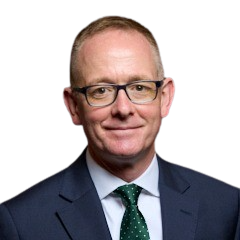
John Lamont is the Conservative MP for Berwickshire, Roxburgh and Selkirk, first elected to parliament at the 2017 election.
In the 2024 general election, Lamont received 18,872 votes, representing 40.5% of the vote share in the Berwickshire, Roxburgh and Selkirk constituency. The Scottish National Party candidate, David Wilson, received 12,273 votes (26.4%), while the Labour candidate, Caitlin Stott, secured 6,311 votes (13.6%). Lamont was duly elected with a majority of 6,599.
The Berwickshire, Roxburgh and Selkirk constituency is a large, predominantly rural seat located in the Scottish Borders council area in the south of Scotland. It includes the towns of Galashiels, Hawick, Selkirk, Kelso and Eyemouth.
The area has a history of Liberal Democrat representation, including former Liberal leader David Steel (until 1997) and Michael Moore (2005-2015). The SNP held the seat from 2015 to 2017 (Calum Kerr), before Lamont gained it for the Conservatives in 2017.
Political Career
Lamont was appointed as shadow deputy leader of the House of Commons following Badenoch’s July 2025 shadow ministerial reshuffle.
Lamont is a member of the House of Commons petitions committee (since November 2024) – the committee responsible for considering e-petitions submitted on parliament’s petitions website and public (paper) petitions presented to the commons.
Lamont is also a member of the House of Commons public administration and constitutional affairs committee (since December 2024). PACAC examines how the country is run, covering both the machinery of government and the UK’s constitutional rules. It is the principal select committee to which Cabinet Office ministers are accountable.
Additionally, Lamont is a member of the House of Commons procedure committee (since September 2025) – the committee responsible for considering the practice and procedure of the House in the conduct of its public business. It can make recommendations to the House about the operation of the House’s Standing Orders for public business.
Moreover, Lamont is a member of the House of Commons modernisation committee (since September 2025). The modernisation committee is a cross-party committee of MPs that considers reforms to House of Commons procedures, standards, and working practices.
Lamont previously served as shadow secretary of state for Scotland from July to November 2024 in the interim/caretaker shadow cabinet created after the general election of that year under Rishi Sunak’s leadership.
Prior to the 2024 general election, he served in government as the parliamentary under-secretary of state for Scotland from October 2022 to July 2024. He was also parliamentary private secretary (PPS) to Liz Truss as foreign secretary from November 2021 until June 2022. He resigned in order to vote against Johnson in the Conservative “no-confidence vote” in his leadership.
In his resignation letter, Lamont stated: “The events in Downing Street during the lockdown were unacceptable. People across the country have been rightly deeply angered by what went on.”
He added: “Whilst I recognise that changes have been made in Downing Street, the unfortunate reality is that the government has become overwhelmed by these events, to the detriment of my constituents and people across the United Kingdom.
“The amazing work that this government is doing in Scotland and across the UK is increasingly being overshadowed.”
In May 2022, Lamont stated that he found the parties in Downing Street during Covid lockdowns – the Partygate scandal – “sickening” to read about”.
He told the Border Telegraph: “Reading about these events that took place in Downing Street is sickening, especially for those of us who were unable to be with loved ones during lockdowns.
“It is absolutely right that the police have issued fines to those involved. No one can be above the law.
“It is also right that the House of Commons investigates potential breaches of the ministerial code, and I await their findings.”
Lamont is listed as a member of the all-party parliamentary groups (APPGs) for blockchain technologies, ethics and sustainability in fashion and fairtrade.
Lamont delivered his maiden speech in the House of Commons on 22 June 2017 during a debate on housing and social security.
In it, he stated: “The rural and diverse nature of the constituency provides us with many challenges. I will make it my mission in this place to improve broadband connectivity, thus ensuring that businesses can thrive and compete with the more urban areas of these islands.
“Similarly, I will make the creation of an environment that allows for job creation a priority. In my view, creating good and well-paid jobs is the best way of lifting people out of poverty.”
He added: “Speaking in this great chamber today, I am struck by the importance of effective parliamentary democracy. Most of all, though, I am reminded of the significant contributions that my predecessors have made to this place. I know that my immediate predecessor, Calum Kerr, worked hard to ensure that the voice of borderers was heard.
“We had differing views on big political issues of the day, but he is proud of his border roots and his contributions here were evidence of that.”
Before entering the UK parliament, Lamont was the MSP for Roxburgh and Berwickshire (2007-2011) and then for the revised seat of Ettrick, Roxburgh and Berwickshire (2011-2017).
During his time at Holyrood, he served as the Scottish Conservative chief whip and briefly as convener of the justice committee in 2011. He resigned his seat in the Scottish Parliament in May 2017 specifically to contest the successful 2017 general election campaign.
Lamont stood unsuccessfully for the Westminster seat of Berwickshire, Roxburgh and Selkirk three times (in 2005, 2010 and 2015) before winning it in 2017.
Political Views
Leadership elections and loyalty
Tory leadership 2024: Lamont supported Robert Jenrick’s candidacy in the 2024 Conservative Party leadership election. The contest was triggered by the resignation of Rishi Sunak following the party’s defeat in the 2024 general election.
Jenrick, a former immigration minister, positioned himself on the right wing of the party, advocating for the UK to leave the European Convention on Human Rights (ECHR). He emerged as an early frontrunner, topping the first two parliamentary ballots. After reaching the final two, he was defeated in the membership vote by Kemi Badenoch, receiving 41,388 votes (43.5%) compared to Badenoch’s 53,806 (56.5%).
Tory leadership 2022 (I): Lamont supported Penny Mordaunt’s candidacy in the Conservative Party’s July-September 2022 leadership election. The contest was triggered by the resignation of Boris Johnson, following the mass exodus of more than 60 frontbenchers.
Mordaunt, the international trade minister, was described as a “socially liberal Brexiteer”. She was narrowly overtaken by Liz Truss in the final round. Mordaunt was thereby eliminated in the fifth parliamentary ballot on 20 July after receiving 105 votes.
Lamont subsequently shifted his support to Rishi Sunak’s candidacy. Sunak, the former chancellor, warned against “comforting fairytales” regarding unfunded tax cuts. Although he won every round of the parliamentary ballots, securing 137 votes in the final stage, Sunak was defeated by Truss in the membership vote, finishing with 60,399 votes (42.6%).
Tory leadership 2022 (II): Lamont again supported Mordaunt’s candidacy in the Conservative Party’s October 2022 leadership election. The contest was triggered by the resignation of Truss after just 45 days in office, following the financial and political tailspin triggered by her “mini-budget”. Unlike the summer contest, this election featured an expedited process requiring each candidate to secure at least 100 nominations from MPs to proceed. Mordaunt withdrew from the contest on 24 October, shortly before the deadline, after being unable to secure the required number of nominations.
Tory leadership 2019: Lamont supported Jeremy Hunt, the then-foreign secretary, for the party’s leadership in 2019. The election was triggered by the resignation of Theresa May following her inability to secure a Brexit deal acceptable to the Conservative Party.
Hunt, campaigning as a “unity candidate”, secured 77 votes from MPs in the final parliamentary round and thereby reached the final head-to-head ballot against Boris Johnson. In the subsequent vote by the party membership, Hunt finished as runner-up with 46,656 votes (33.6%) compared to Johnson’s 92,153 (66.4%).
Factional identity and party tradition
Mass deportation: In May 2025, Lamont signed an early day motion (EDM) concerning the mass deportation of illegal migrants. The motion, tabled by the independent MP Rupert Lowe, expressed “grave concern at the continued presence of over one million illegal migrants in the United Kingdom”.
The EDM urged the government to “implement a comprehensive national strategy to identify, detain, and deport all individuals found to be residing in the United Kingdom illegally, and to ensure that such policies are backed by the necessary legislative, diplomatic, logistical and financial resources to restore confidence in the rule of law and the security of our borders.”
Tory Reform Group: Lamont is listed as a member of the Tory Reform Group (TRG) – a pressure group within the Conservative Party that represents the “one nation” tradition of political thought. Historically associated with senior party figures such as Kenneth Clarke and Michael Heseltine, the TRG was established in 1975 to champion socially progressive and centrist policies – acting as an intellectual counterweight to the emerging free-market, Thatcherite wing of the party.
Conservative Environment Network: Lamont is listed as a member of the Conservative Environment Network (CEN) parliamentary caucus. CEN is an independent forum for conservatives that supports conservation and decarbonisation. It calls for the environment to be given a higher profile at the heart of policy making, describing “biodiversity loss, climate change, and wasteful resource use are threats to our national security”, and promotes “market-based policies” to environmental challenges. Members of its parliamentary caucus, such as Lamont, are thought to generally align with the group’s “green” message and environmentalism.
Bright Blue: Lamont has been listed as a parliamentary supporter of Bright Blue, an independent centre-right think tank and membership organisation that champions liberal conservatism in the UK. Since its founding in 2014, the organisation has expanded its reach through a new cross-party strategy.
Blue Collar Conservatives: Lamont was previously listed as a member of the Blue Collar Conservatives group. This faction within the Conservative party was founded in 2012 by the former cabinet minister Esther McVey, but came to greater prominence following the 2019 general election. The group aimed to “champion working people and develop a conservative agenda to benefit the voters and communities most neglected by Labour”. In October 2022, McVey was succeeded by Lee Anderson as the group’s chair.
Brexit and Europe
Brexit referendum: Lamont supported Remain in the 2016 Brexit referendum, and therefore agreed with a majority of his constituents, 56.7% of whom also voted to Remain.
Customs union vote (2025): In December 2025, Lamont voted against the UK-EU Customs Union (Duty to Negotiate) Bill. The bill, introduced under the ten-minute rule procedure by Liberal Democrat Europe spokesperson Al Pinkerton, sought to mandate the government to enter into negotiations with the European Union to establish a bespoke customs union.
Assisted dying
Lamont voted against the Terminally Ill Adults (End of Life) Bill, better known as the assisted dying bill, at both second reading (November 2024) and third reading (June 2025).
Social values and conscience issues
Abortion decriminalisation (2025): Lamont voted against a backbench amendment to the Crime and Policing Bill that sought to decriminalise abortion in England and Wales in June 2025. The amendment, which was passed by a majority of 242 votes, removed women from the threat of prosecution for ending a pregnancy at any stage. As an issue of conscience, MPs were allowed to vote according to their personal beliefs.
Foreign policy and security
Sanctioned (Russia): In April 2022, Lamont was among the group of MPs placed on a sanctions list by the Russian government. The measure barred them from entering Russia and was presented by Moscow as a retaliatory response to the UK’s stance on the invasion of Ukraine.
Before Politics
Born in Kilwinning, North Ayrshire, on 15 April 1976, John Lamont was educated at Kilwinning Academy. He went on to study Law at the University of Glasgow, graduating with a first-class honours degree.
Prior to his political career, Lamont worked as a solicitor, initially for Freshfields in London and subsequently for Brodies in Edinburgh.
He stood as a candidate to be a councillor in Brixton in 2002.
Personal Life
Lamont is the son of a Berwickshire farmer and a former local teacher. He lives in Coldstream in his constituency.
Trivia
Lamont became the first MP to complete an Ironman Triathlon in 2014.
He was recorded as the fastest MP running the London Marathon in 2018. He has participated in the annual marathon multiple times, raising funds for charities including MND Scotland, the My Name’s Doddie Foundation, and Marie Curie.

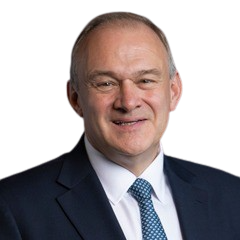

John Lamont: ‘Pupils, parents and the public purse will pay for Labour’s ideological VAT plan’
3 March 2025