Chilcot report delivers damning critique of Iraq war decisions
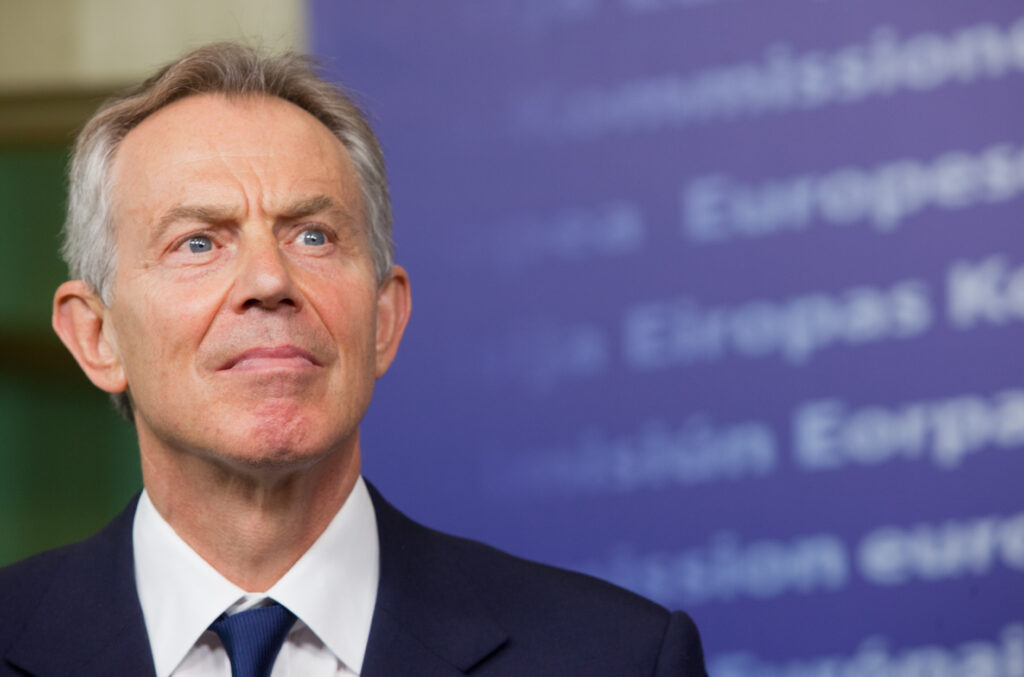
On 6 July 2016, the findings of the Iraq Inquiry, chaired by Sir John Chilcot, were published after seven years of investigation.
The 2.6 million-word report – longer than the King James Version of the Bible, the complete works of William Shakespeare, and Tolstoy’s War and Peace put together – provided a searing indictment of the intelligence failures, shaky legal rationale, miscalculations, inadequate military preparation and exaggerated public statements that led to the UK’s involvement in the 2003 invasion of Iraq.
***
The inquiry was established by Gordon Brown as prime minister in 2009 to examine the period from 2001 to 2009, covering the run-up to the war and its aftermath.
In a statement to the commons, Brown explained that, with the final British combat troops about to return from Iraq, it was “the right time” to ensure a “proper process in place to enable us to learn the lessons of the complex and often controversial events of the last six years.”
He had been advised the inquiry would “take a year” to complete.
The committee of inquiry was composed of Chilcot, a career diplomat and senior civil servant; Sir Lawrence Freedman, a military historian and analyst; Sir Martin Gilbert, a historian; Sir Roderic Lyne, a former diplomat; and Baroness Prashar (crossbench), a member of the Joint Committee on Human Rights.
The Iraq Inquiry was officially launched on 30 July 2009. Tony Blair, the prime minister from 1997 to 2007, was publicly questioned by the inquiry on 29 January 2010, and again on 21 January 2011.
On 21 January 2015, Chilcot announced that his report would not be published before the upcoming general election. In a letter to the prime minister, David Cameron, Chilcot stated that the process of allowing individuals facing criticism in the report to respond was still ongoing.
Chilcot wrote: “That is an essential and confidential process. We intend to finish our work as soon as it is possible to do so whilst being fair to all those involved.”
In his response, Cameron said he would have liked to have seen the report “published already”.
He added: “Had the previous government established this inquiry when I first called for it we would not be in this position today. But that cannot now be undone.”
Nick Clegg, the deputy prime minister, described the delay as “incomprehensible”. He said the public would assume the delay was caused by those criticised in the report attempting to “sex it down”.
***
The Chilcot inquiry published its findings on 6 July 2016 after seven years and a total cost of over £13 million. The report’s central conclusion was that the UK had chosen to join the invasion before all peaceful options had been explored.
In a key, coruscating passage, Chilcot stated: “We have concluded that the UK chose to join the invasion of Iraq before the peaceful options for disarmament had been exhausted. Military action at that time was not a last resort.”
Moreover, the inquiry found that “judgments about the severity of the threat posed by Iraq’s weapons of mass destruction were presented with a certainty that was not justified”.
Blair’s personal conviction and his relationship with the US president, George W Bush, were said to have been pivotal. The report published a private note from Blair to Bush from 28 July 2002, in which he wrote “I will be with you, whatever”.
The former prime minister was also deemed to have “overestimated his ability to influence US decisions on Iraq”.
The report added: “If the UK had refused to join the US in the war it would not have led to a fundamental or lasting change in the UK’s relationship with the US.”
Chilcot did not reach a view on the legality of the war, saying this could only be assessed by a “properly constituted and internationally recognised court”. But the report found “that the circumstances in which it was decided that there was a legal basis for UK military action were far from satisfactory.”
The Ministry of Defence was accused of being “slow in responding to the developing threat in Iraq from improvised explosive devices [IEDs]”, and Chilcot concluded that the post-invasion planning was “wholly inadequate”.
Blair had told the inquiry that he could not have foreseen the difficulties after the fall of Saddam Hussein.
But in a public statement, Chilcot said: “We do not agree that hindsight is required. The risks of internal strife in Iraq, active Iranian pursuit of its interests, regional instability and Al-Qaeda activity in Iraq, were each explicitly identified before the invasion.”
He added: “The government’s preparations failed to take account of the magnitude of the task of stabilising, administering and reconstructing Iraq, and of the responsibilities which were likely to fall to the UK.”
Chilcot explicitly criticised Blair for claiming that Saddam possessed “vast stocks” of weapons of mass destruction (WMDs) when there was no definitive evidence to support that conclusion.
He said: “It is now clear that policy on Iraq was made on the basis of flawed intelligence and assessments. They were not challenged, and they should have been.”
Concluding, Chilcot said: “Above all, the lesson is that all aspects of any intervention need to be calculated, debated and challenged with the utmost rigour.
“And, when decisions have been made, they need to be implemented fully. Sadly, neither was the case in relation to the UK Government’s actions in Iraq.”
***
In a statement issued in response to the report, Blair said the decision to go to war in Iraq was the “hardest, most momentous and agonising decision I took in my 10 years as British prime minister.”
He said he took full responsibility for any mistakes, “without exception or excuse”.
Blair conceded that the intelligence statements “made at the time of going to war turned out to be wrong” and that the aftermath turned “out more hostile, protracted and bloody than we ever imagined.”
He said: “A nation whose people we wanted to see free and secure from the evil of Saddam became instead victim of sectarian terrorism. For all of this I express more sorrow, regret and apology and in greater measure than you can know or may believe.”
But Blair said that he “profoundly” disagreed with the suggestion that removing Saddam unleashed terrorism in the Middle East.
He added: “Today this report puts some allegations which have poisoned the well of debate on this issue – those of bad faith, of lying or deceit or deliberate misrepresentation – to rest.
“As the report makes clear, there were no lies, parliament and cabinet were not misled, there was no ‘secret deal’ with America, intelligence was not falsified, and the decision was made in good faith.
“However, I accept that the report makes serious criticisms of the way decisions were taken. Again I accept full responsibility for those points of criticism including where I do not agree fully with them.”
Blair asked his critics to put themselves in his shoes as he assessed evidence pointing towards Iraq’s development of weapons of mass destruction. “You have at least to consider the possibility of a 9/11 here in Britain”, he said.
“And your primary responsibility as PM is to protect your country. These were my considerations at the time.”
The former prime minister, who left office in 2007, stated: “So, on 18 March, we had come to the point of binary decision. Right to remove Saddam or not? With America or not? As the report says it was a ‘stark choice’.
“I thought of Saddam, his record and the character of his regime. I thought of our alliance with America and its importance to us in the post 9/11 world. I weighed it carefully. I took this decision with the heaviest of hearts…
“A decision had to be taken. It was mine to take as prime minister of our nation. I took it. I accept full responsibility for it. I stand by it.”
***
David Cameron, who succeeded Brown as prime minister after the 2010 general election, addressed the report in a statement to the House of Commons.
Cameron said that while the inquiry did not express a view on the war’s legality, it was “highly critical of the processes” used to obtain the legal advice.
Cameron told MPs that all who voted for the war, himself included, must “take our fair share of the responsibility.”
The prime minister said: “Of course, the decision to go to war came to a vote in this House, and members on all sides who voted for military action will have to take our fair share of the responsibility.
“We cannot turn the clock back, but we can ensure that lessons are learned and acted on.”
But he added: “We should not conclude that intervention is always wrong. There are unquestionably times when it is right to intervene, as this country did successfully in Sierra Leone and Kosovo.
“I am sure that many in this House would agree that there have been times in the recent past when we should have intervened but did not, such as in failing to prevent the genocides in Rwanda and Srebrenica.
“Intervention is hard. War fighting is not always the most difficult part. Often, the state-building that follows is a much more complex challenge. We should not be naive to think that just because we have the best prepared plans, in the real world things cannot go wrong.
“Equally, just because intervention is difficult, it does not mean that there are not times when it is right and necessary.”

Politics.co.uk Newsletters
DAILY
Politics@Lunch
WEEKLY
Week in Review
