Iraq War legal advice leaked during election campaign
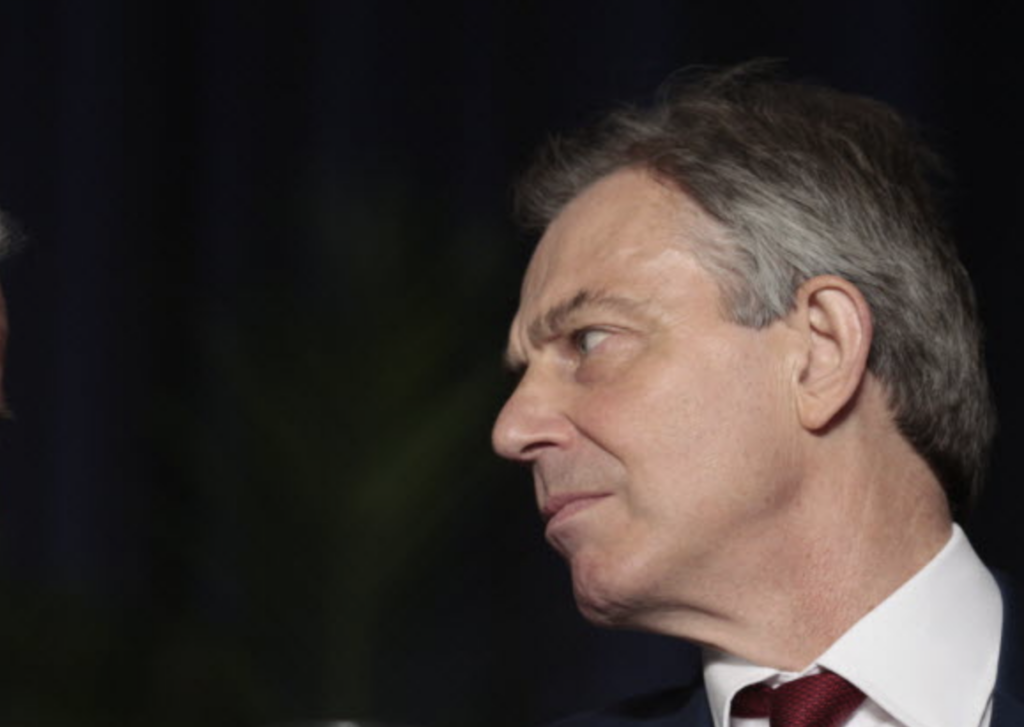
On 28 April 2005, the confidential 13-page legal advice provided by the attorney general, Lord Goldsmith, to the prime minister in 2003 regarding the legality of the Iraq war, was published in full.
The disclosure, which came at the height of the 2005 general election campaign, revealed the attorney general had privately counselled that a court “might well conclude” military action in Iraq was illegal without a second UN resolution.
***
After the 9/11 attacks in 2001, a US-led coalition including the UK began military action in Afghanistan as part of the ‘war on terror’. In January 2002, US president George W Bush identified Iraq as part of the “axis of evil”.
In his state of union address, Bush declared: “By seeking weapons of mass destruction, these regimes pose a grave and growing danger. They could provide these arms to terrorists, giving them the means to match their hatred…
“Our war on terror is well begun, but it is only begun. This campaign may not be finished on our watch, yet it must be and it will be waged on our watch.”
In September 2002, Bush addressed the United Nations General Assembly and warned Iraq that military action would be unavoidable if it did not comply with UN resolutions on disarmament.
Mere weeks later, the UK published a dossier which claimed that Iraq held weapons of mass destruction. It claimed that Iraq could deploy weapons of mass destruction within 45 minutes of an order to do so. In the foreword, Blair declared that the issue was a “current and serious threat to the UK national interest”.
He added: “We must ensure that he does not get to use the weapons he has, or get hold of the weapons he wants.”
In November 2002, the UN Security Council unanimously passed resolution 1441 to give Iraq “a final opportunity to comply with its disarmament obligations”. From November 2002 to March 2003, however, the UN failed to find any weapons of mass destruction after 700 inspections.
On 25 February 2003, the US and the UK submitted a draft resolution to the UN arguing that Iraq had missed its “final opportunity” to disarm peacefully. It declared that Iraq had “failed to take the final opportunity afforded to it in resolution 1441.” France, Germany and Russia submitted a rival proposal to the council calling for further weapons inspections as an alternative to military action.
In March, France announced it would join Russia in vetoing a re-drafted UN resolution which gave Iraq until 17 March to disarm.
Britain, the United States and Spain, having all promoted the proposed resolution, later abandoned it in the face of opposition. Bush responded by giving Iraq leader Saddam Hussein and his sons 48 hours to leave Iraq or face war.
The central legal question therefore became whether military action against Iraq was lawful without a second, explicit United Nations Security Council resolution (UNSCR) authorising the use of force. The legal case for war rested on the interpretation of existing resolutions, primarily UNSCR 1441; this resolution had offered Iraq a “final opportunity to comply” with its disarmament obligations.
Lord Goldsmith’s confidential advice, delivered to the prime minister on 7 March 2003, raised doubts about the legality of war without a second resolution, stating this was the safest legal course.
This advice warned that the “language of resolution 1441… leaves the position unclear”. Goldsmith advised that while he could make a “reasonable case” for military action, “the safest legal course would be to secure the adoption of a further resolution to authorise the use of force”.
He stated: “I accept that a reasonable case can be made that resolution 1441 is capable in principle of reviving the authorisation in 678 without a further resolution…
“However, the argument that resolution 1441 alone has revived the authorisation to use force in resolution 678 will only be sustainable if there are strong factual grounds for concluding that Iraq has failed to take the final opportunity.”
This advice, which was not shared with the cabinet, did not become public until April 2005.
Goldsmith’s final piece of public advice, provided to parliament in a written answer on 17 March 2003 on the eve of the invasion, was unequivocal. It stated that: “Authority to use force against Iraq exists from the combined effect of Resolutions 678, 687 and 1441. All of these resolutions were adopted under Chapter VII of the UN Charter which allows the use of force for the express purpose of restoring international peace and security.”
Goldsmith’s nine-paragraph statement was considered crucial in persuading many MPs to vote in favour of authorising military action on 18 March.
The government’s motion, approved by 412 votes to 149, noted “the opinion of the attorney general that, Iraq having failed to comply and Iraq being at the time of Resolution 1441 and continuing to be in material breach, the authority to use force under Resolution 678 has revived and so continues today”.
The invasion of Iraq – Operation Iraqi Freedom – began on 20 March 2003.
***
The leak of Goldsmith’s confidential advice on 28 April 2005, during the general election campaign, represented a damaging blow to Blair’s government. BBC News reported that Goldsmith had “cast doubt on the legality of the war against Iraq without a second UN resolution”.
Goldsmith, who remained in post as attorney general, issued a statement saying that the document “stands up the case that the government has been making all along”.
He added: “What this document does, as in any legal advice, is to go through the complicated arguments that led me to this view.
“Far from showing I reached the conclusion that to go to war would be unlawful, it shows how I took account of all the arguments before reaching my conclusion.”
The Liberal Democrat leader, Charles Kennedy, argued the account given by the prime minister in the build-up to war did “not square” with the latest revelations.
On the evening of 28 April, all three leaders of the main parties, including Kennedy, Blair and Michael Howard, leader of the Conservative Party, faced a Question Time election special programme.
Blair denied that the advice amounted to a declaration that the Iraq War was illegal, and defended the decision not to circulate it to the cabinet.
The prime minister said: “We had the attorney general there at cabinet, and he was able to tell people his opinion and explain his reasoning, answer any questions that they had.”
The prime minister added: “Now I totally understand why there are people in the audience who very, very strongly disagree with my decision to take this country to war in Iraq.
“All I can say to you is this: it’s not a matter of the attorney general’s advice, because it has been shown that the advice said that it was lawful, neither is it a matter of misusing the intelligence, there have been four inquiries into that.
“It is, however, a question of a difficult decision that I had to take. Was it better to leave Saddam in power, or put him in prison? I think it was better to put him in prison.”
Kennedy challenged Blair’s description of the findings as a “damp squib”, telling him to “go and describe these findings as a damp squib to the families of the service personnel who gave their lives in Iraq.”
The Labour Party’s commons majority was reduced to 66 at the 2005 general election – down from the 167-seat landslide recorded in 2001. The Conservative Party and the Liberal Democrats both made gains. Kennedy’s party secured 62 seats, a notional increase of 11 from 2001 (accounting for boundary changes).
***
On 6 July 2016, the findings of the Iraq Inquiry, chaired by Sir John Chilcot, were published after seven years of investigation. The 2.6 million-word report – longer than the King James Version of the Bible, the complete works of William Shakespeare, and Tolstoy’s War and Peace put together – provided a searing indictment of the intelligence failures, shaky legal rationale, miscalculations, inadequate military preparation and exaggerated public statements that led to the UK’s involvement in the 2003 invasion of Iraq.
Chilcot did not reach a view on the legality of the war, saying this could only be assessed by a “properly constituted and internationally recognised court”. But the report found “that the circumstances in which it was decided that there was a legal basis for UK military action were far from satisfactory.”

Politics.co.uk Newsletters
DAILY
Politics@Lunch
WEEKLY
Week in Review
